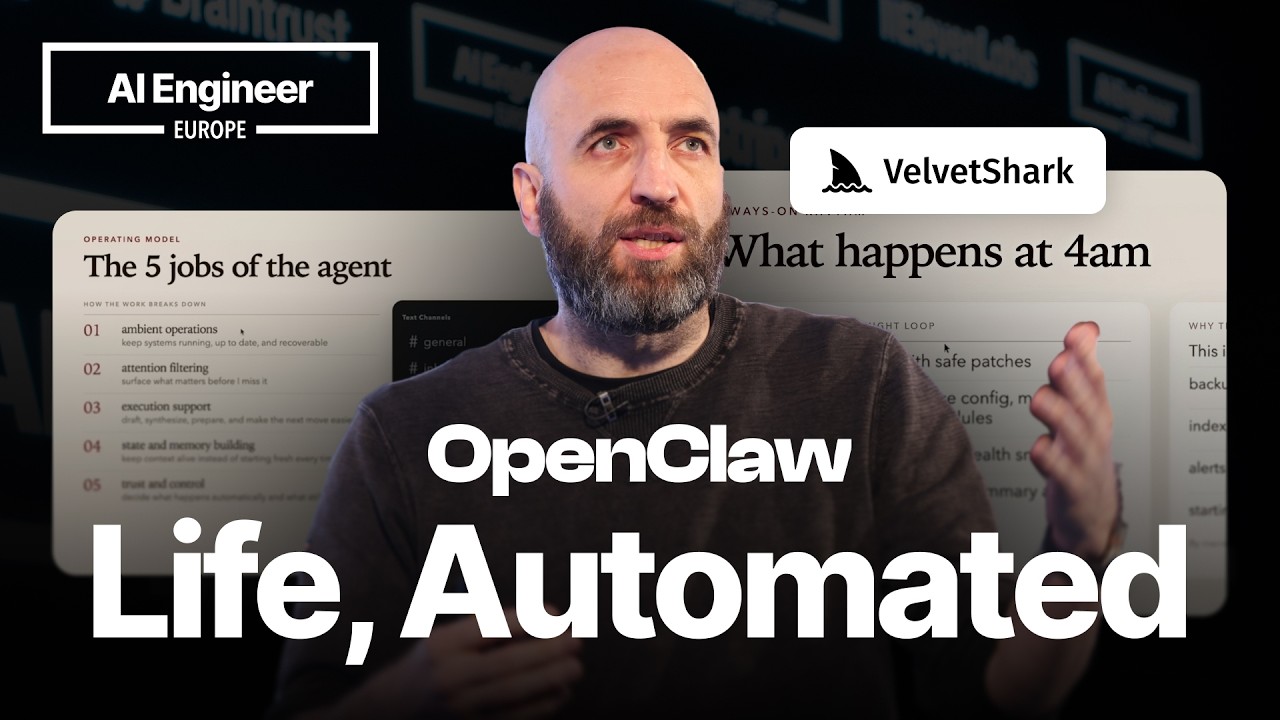
Radek Sienkiewicz, an OpenClaw maintainer, shares his journey of gradually integrating an AI agent, OpenClaw, into managing various aspects of his life. He emphasizes that the process was incremental, starting with simple tasks like managing chats on platforms such as WhatsApp, Telegram, and Discord. Over time, he expanded the agent’s capabilities to handle emails, notes, files, calendars, and even operating system automations. This step-by-step approach allowed him to build trust in the system and avoid major disruptions, as he could easily troubleshoot and fix issues by reverting small changes.
A significant turning point in Radek’s experience was when he connected OpenClaw to his extensive knowledge base stored in Obsidian, which contains around 3,000 pages of notes covering work, personal projects, research, and more. The AI agent not only accesses this information but also intelligently analyzes and links new inputs, such as bookmarks or articles, to existing knowledge, enriching the context and surfacing relevant connections. This dynamic knowledge management transformed his previously passive collection of bookmarks into an active, insightful resource that supports his thinking and decision-making.
Radek also highlights how OpenClaw operates autonomously during his sleep hours, performing essential maintenance tasks like indexing, backing up data, and updating software. This ensures that he starts each day with an up-to-date system and a summary of important information, such as emails and calendar events. The automation extends to managing updates carefully to prevent system failures, demonstrating a robust and reliable setup that supports his daily workflow without constant manual intervention.
He categorizes the AI agent’s functions into five main areas: ambient operations (system maintenance), attention filtering (prioritizing important information), execution support (drafting replies and managing tasks), and specialized channels for different types of work such as client consulting, video research, and social media management. Radek stresses the importance of optimizing memory files and maintaining clean, manageable automation workflows to prevent issues like brittle automations or noisy data nodes. The system’s modular and inspectable design, using markdown files, allows for continuous refinement and adaptation to his evolving needs.
In conclusion, Radek encourages others to start small by addressing one recurring pain point and gradually building trust in their AI agent. He advocates for moving as much information as possible into accessible, interconnected markdown files and continuously optimizing the system. His ultimate goal is to empower his “future self” through the AI agent, enabling it to handle tasks proactively so that each new day begins with progress already made. This vision of collaboration between present and future selves through AI highlights the transformative potential of personalized automation in managing life and work.