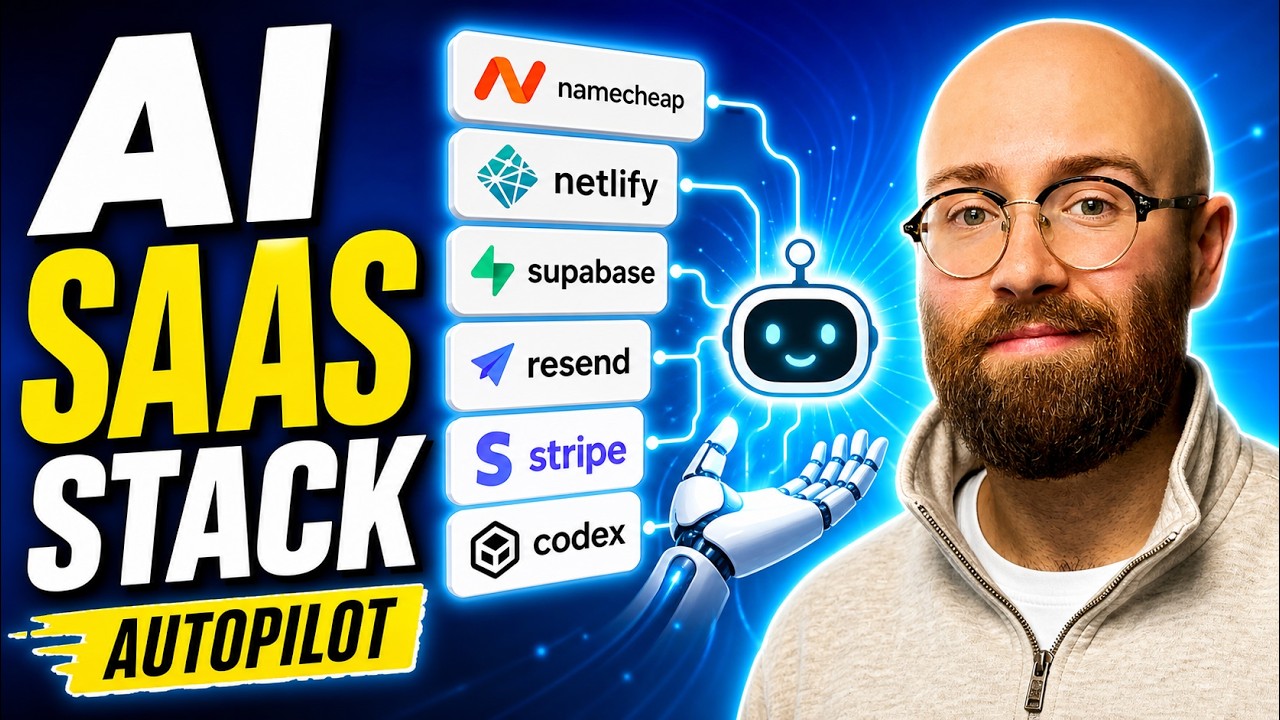
In this video, the creator demonstrates a streamlined text stack that enables building a full SaaS product by simply providing five API keys to an AI agent. This AI agent can handle everything from purchasing domain names, sending emails, accepting payments, to hosting the website, requiring minimal input beyond design preferences and desired functionalities. The presenter shares personal examples of projects built using this stack, such as LaunchMate.io, a platform connecting builders with marketers, and Scripy, a YouTube script pre-production tool, highlighting the versatility and efficiency of this approach.
The core components of the stack include Namecheap for domain management, Supabase for database and authentication, Resend for email delivery, Stripe for payment processing, and Netlify for hosting and running backend functions. Additionally, Codex acts as the central orchestrator, integrating all these services seamlessly. The video explains the role of each service in detail, emphasizing how they collectively cover all essential aspects of a SaaS application, from DNS handling and user data storage to email notifications and payment workflows.
A significant portion of the video is dedicated to explaining API keys, their importance, and best practices for managing them securely using environment files (.env). The presenter stresses the distinction between public and secret keys, advising viewers never to expose secret keys publicly. The environment file ensures that sensitive credentials remain local and are not uploaded to public repositories like GitHub, enhancing security while enabling the AI agent to access necessary credentials during development and deployment.
The tutorial then walks through the process of obtaining and configuring API keys for each service, including generating tokens in Namecheap, Netlify, Supabase, Resend, and Stripe. The presenter demonstrates how to input these keys into Codex, authenticate the connections, and set up the environment for development. Plugins like GitHub integration are also mentioned to facilitate code management. Once configured, the AI agent can automatically build the SaaS application, including setting up DNS records, hosting, backend functions, database connections, email sending capabilities, and payment products.
Finally, the video concludes by showcasing the practical outcome of this setup with the LaunchMate application, encouraging viewers to try it out. The presenter invites those interested in deeper learning about cloud code, Codex, and AI-driven coding to join a skill community offering a comprehensive roadmap to building SaaS products. The overall message is that with the right tools and API integrations, building and launching a SaaS product can be significantly simplified and accelerated using AI agents.