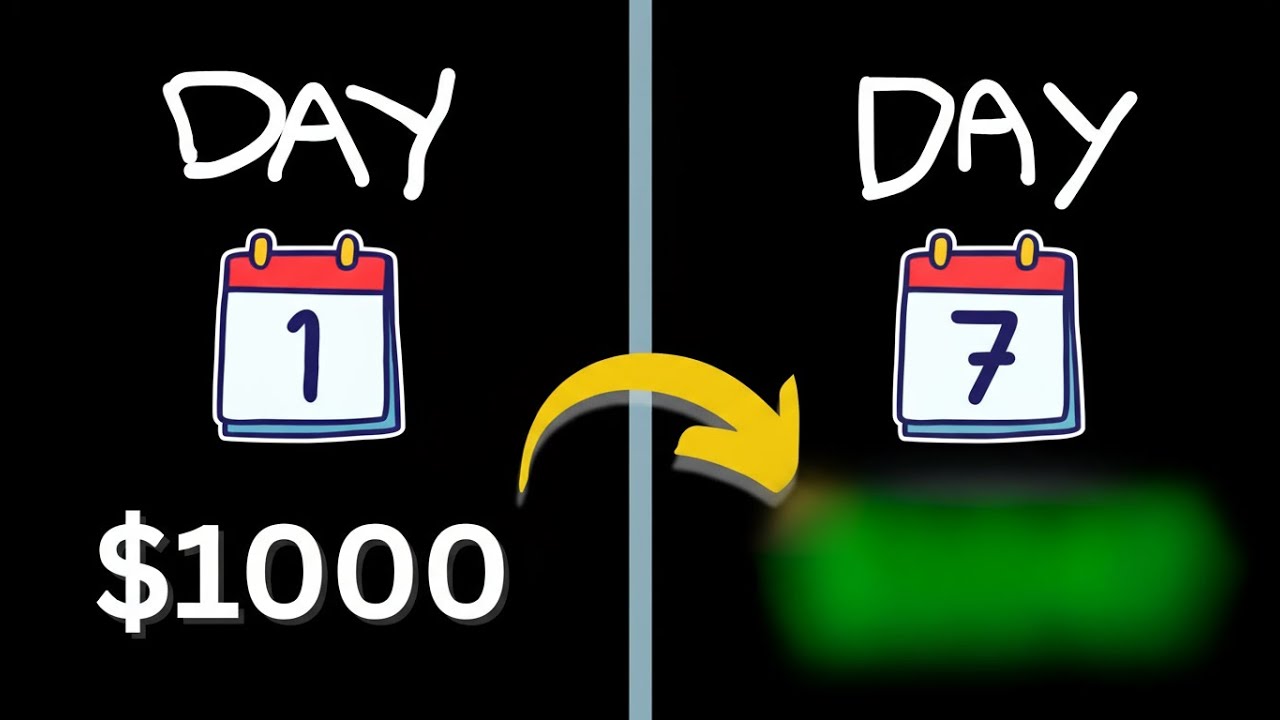
The creator conducted a week-long experiment allowing an AI agent powered by Claude code to trade stocks using CFDs, evolving the strategy from individual trades to a long-short hedge approach, ultimately achieving a modest net profit while learning from both successes and setbacks. Emphasizing the experiment as a learning process rather than a profit-driven venture, the creator plans to refine the AI trading strategy further and share ongoing results with viewers.
In this video, the creator shares the results of a week-long experiment where they allowed an AI agent, powered by Claude code, to trade stocks using CFDs (Contracts for Difference). The goal was not to develop a genius trading strategy but to explore how an AI might perform in real stock trading scenarios. The video picks up from the initial trades discussed in a previous video, showing the progression and outcomes of trades over the week. The creator emphasizes that this is a learning process with many flaws and plans to iterate on the approach in the coming weeks.
The trading strategy evolved over the week, starting with individual trades on stocks like Beyond Meat and SoFi, using leverage to amplify exposure. Early trades showed modest profits and some losses, with the creator tracking performance daily. By day three, the approach shifted to a long-short hedge strategy, where the AI would simultaneously take a long position on one stock and a short position on another within the same sector. This was intended to reduce risk and volatility, and initial results showed some promise, with the hedge trades helping to offset losses from other positions.
Despite some setbacks, including a missed trade and a significant loss on a UPS trade, the AI agent managed to secure several winning trades throughout the week. The creator noted that while the overall performance was still slightly negative at one point, the hedging strategy helped improve results. By the end of the week, the AI had completed eight trades with five winners and three losers, culminating in a net profit of around $47. The creator acknowledged that luck played a role and that the strategy was still very basic without any proven edge.
The creator also shared insights gained during the experiment, such as incorporating market news from sources like CNBC, Bloomberg, and Yahoo Finance into the AI’s context before trading. This was intended to provide the AI with up-to-date information that might influence market movements. The plan moving forward is to continue using the long-short hedge strategy, refining the approach based on observations, and recording daily updates to better track performance and learn from the AI’s decisions.
In conclusion, the experiment was primarily for fun and learning rather than generating significant profits. The creator enjoyed the process and found value in exploring how AI agents can be used in stock trading, even if the current strategy lacks sophistication or a clear edge. They plan to continue the experiment with improvements and share ongoing results, inviting viewers to follow along as they develop the AI trading approach further. The video ends with an optimistic outlook on future iterations and a call for viewers to engage with the content.