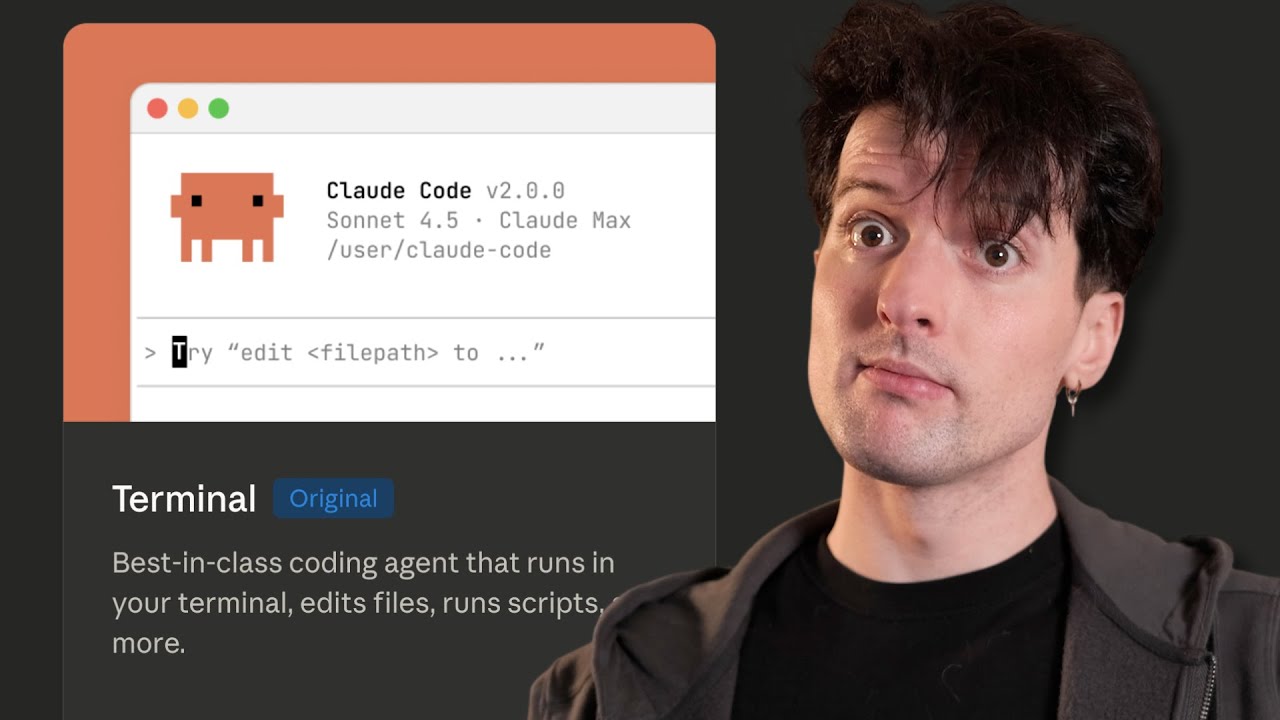
The creator shares their recent deep dive into using Anthropic’s Claude Code, especially after receiving a 2x increase in rate limits over the holiday break. They describe how this change led them to run multiple Claude Code instances in parallel, fundamentally altering their workflow. Instead of using a traditional IDE, they’ve been able to build more projects than ever, including two full projects from scratch—a web and mobile app, significant feature updates for T3 Chat, and even configuring their entire operating system—all through Claude Code. The creator emphasizes that this isn’t a sponsored endorsement; in fact, they upgraded to the $200/month subscription to enable this level of usage.
A significant portion of the video is dedicated to showcasing a new image studio app built entirely with Claude Code. The app serves as a prototyping playground for image generation features in T3 Chat, featuring both web and mobile interfaces managed in a monorepo. The creator demonstrates how Claude Code can handle complex tasks, like converting a project into a monorepo with shared backend logic, and how it manages context across long-running sessions. They note that while the tool is powerful, it’s most effective for users who already know how to code, as it still requires technical understanding to specify and debug tasks.
The creator also highlights the surprising capabilities of Claude Code by sharing examples of ambitious prompts—such as setting up a monorepo with Expo, React Native, TypeScript, and Convex—that the tool was able to execute successfully. They walk through the process, including how Claude Code handled errors, updated dependencies, and even adapted when initial approaches failed. The resulting code was substantial and received high confidence scores from automated code review tools, though the creator cautions that such code should still be audited before production use.
Beyond major projects, the creator discusses how Claude Code has enabled rapid prototyping and automation of smaller tasks, such as building a Chrome extension that locks them out of Twitter unless work is running in a Claude Code terminal. This shift has made it easier to pursue side projects and automate personal workflows, reducing the friction for experimenting with new ideas. The creator notes that while they still review code on GitHub, they rarely need to open an IDE, and the speed of iteration has made them more productive and willing to try new things.
Finally, the creator reflects on the broader implications of tools like Claude Code, acknowledging both its strengths and current limitations—such as incomplete plugin functionality, imperfect UX, and context management quirks. They compare it to other tools like Cursor and OpenCode, noting that while Claude Code excels in greenfield projects and experimentation, they still prefer traditional tools for established codebases. The video concludes with a discussion of subscription value, usage statistics, and the realization that AI-powered coding tools are fundamentally changing how developers approach building software, making previously impractical projects suddenly viable.