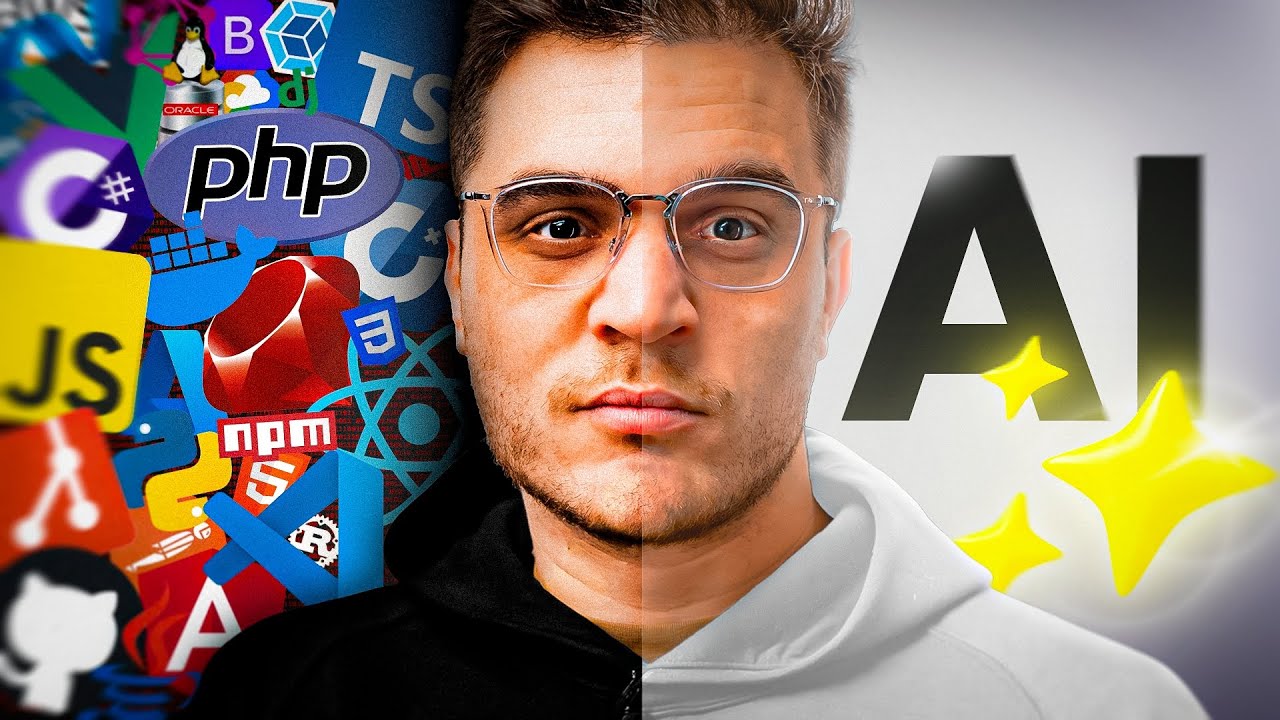
The video explains that AI has transformed software development by shifting the focus from writing code to deeply understanding and modeling problems through solid architecture, clean design, and foundational abstractions. It emphasizes that thriving alongside AI requires developers to strengthen traditional engineering skills, use deterministic tools, and plan deliberately to ensure AI-generated code integrates effectively and maintains software quality.
In the video, Daros and Bogdan discuss how AI has fundamentally changed the way software engineers code, but in ways that contrast with popular beliefs. Rather than simply automating code writing, AI has pushed developers to think more deeply about first principles and mental models. Since AI can generate large amounts of code quickly, understanding and managing that code requires boiling complex systems down to symbolic representations like UML and state diagrams. This approach helps developers maintain clarity and scalability in fast-changing codebases, emphasizing the importance of foundational abstractions over raw code output.
Secondly, AI has increased the need for clean architecture and disciplined software design. Because AI-generated code can be inconsistent and divergent, engineers must focus on stable abstractions, contracts, and interfaces to maintain cohesion and predictability. This shift means that software engineers are less about writing every line of code and more about modeling the problem space effectively, ensuring that AI-generated code fits into a well-structured system rather than creating spaghetti code.
The third major change is that AI has made developers rely more on thinking on paper before coding. Since AI can produce code rapidly, there is a temptation to bypass deep problem analysis, which often leads to unnecessary or low-quality features. Developers now need to be more intentional and deliberate in planning what to build, understanding the problem fully before involving AI. This discipline helps avoid the pitfalls of blindly adding features and ensures that the software delivers real value rather than just more code.
Fourth, AI has highlighted the importance of deterministic tools and debugging skills. With AI generating more code, developers face the challenge of managing and maintaining larger codebases that are not necessarily higher quality. Tools like TypeScript, static analyzers, linters, and debuggers have become essential to keep codebases manageable and error-free. Mastery of these tools is increasingly critical for senior developers, as they help mitigate the risks of AI-generated code and maintain software quality.
Finally, the video emphasizes a return to traditional software engineering principles as the best way to thrive alongside AI. While many focus on trendy AI-related buzzwords and new paradigms, the core of effective software development remains rooted in solid architecture, design patterns, and thoughtful problem modeling. The ability to leverage AI effectively is proportional to one’s foundational engineering skills. Daros and Bogdan encourage developers to strengthen their traditional software engineering knowledge to become better AI-augmented engineers, rather than relying solely on AI tools without deep understanding.