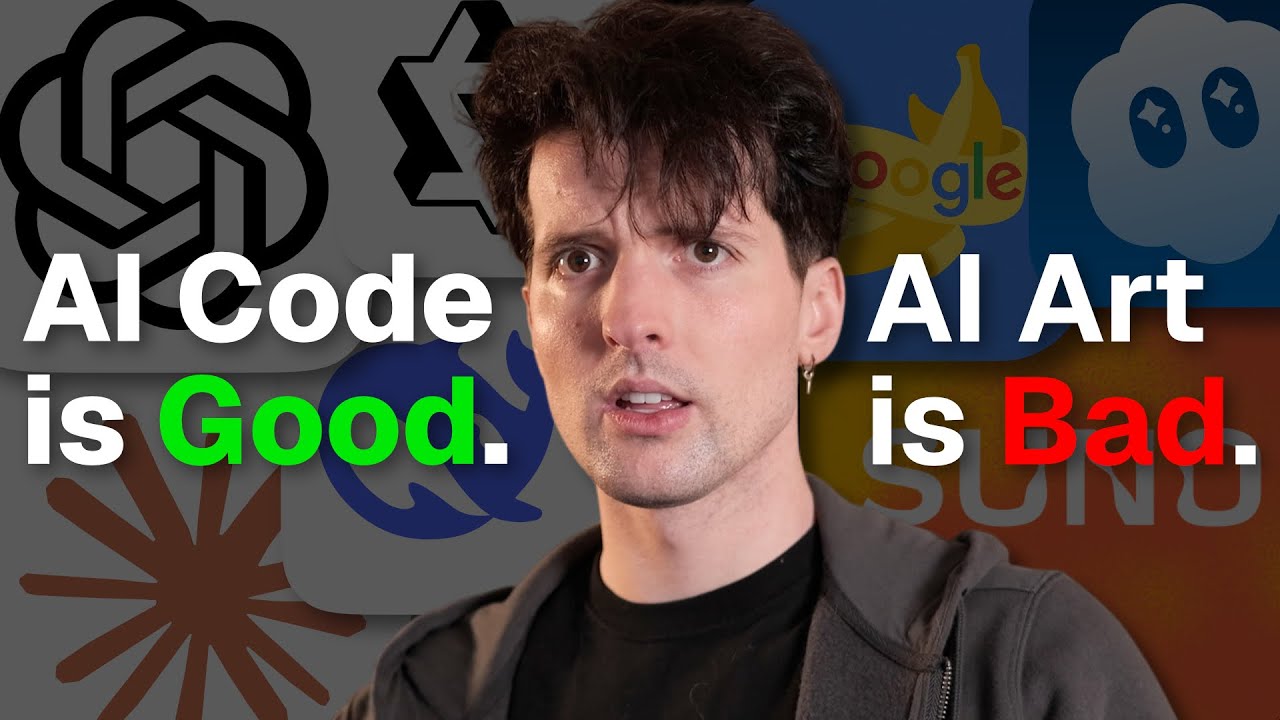
The video presents a nuanced critique of AI-generated media, particularly focusing on music, image, and video generation. The creator, who has a background in both coding and audio engineering, expresses frustration with the current state of AI media generation tools, arguing that many of these tools attempt to replace professional creative toolboxes rather than augment them. He contrasts this with AI tools in coding, like GitHub Copilot, which integrate seamlessly into existing workflows and enhance productivity without trying to replace the entire development environment. This distinction highlights a fundamental misunderstanding by many AI media companies of how creative professionals actually work and create.
A significant portion of the video is dedicated to the music industry, where the creator shares personal experiences and insights. He challenges the narrative that AI music generation democratizes music creation for those lacking resources, pointing out that many groundbreaking albums were produced with accessible tools like GarageBand on modest hardware. He argues that AI music tools primarily serve unmotivated individuals who want to appear as musicians without genuine passion or effort, rather than truly enabling aspiring artists. The creator also emphasizes the complexity and satisfaction involved in music creation, which AI-generated music fails to replicate, as it lacks the nuanced control and creative fulfillment that human musicians experience.
The video also delves into the economic realities of the music industry, highlighting how even successful musicians struggle to make a sustainable living from their work. The creator contrasts this with the inflated valuations of AI music companies, which seem disconnected from the actual value and viability of AI-generated media. He discusses the problematic relationships between major music labels and AI companies, noting that deals often benefit corporations rather than artists. This dynamic, combined with restrictive copyright enforcement, stifles artistic innovation and disproportionately harms emerging musicians, further complicating the landscape for genuine creators.
Another key point is the inherent difference between AI-generated text/code and AI-generated media. The creator explains that while AI-generated text and code can have value beyond direct human consumption—such as improving search rankings or automating background tasks—AI-generated music and video only have value when consumed by humans. This makes media generation less flexible and more challenging to integrate meaningfully into professional workflows. He illustrates this with examples of how AI-generated images can be partially salvaged and edited, whereas music and video are far less malleable, making AI-generated outputs less practical and satisfying for creators.
In conclusion, the creator advocates for AI tools that complement rather than replace existing creative toolboxes, citing examples like Co-create, which automates tedious video editing tasks without supplanting professional editors. He praises individuals like Daddy Kev, a seasoned audio engineer learning to code to build tools that genuinely support musicians. The video calls for a shift in focus from AI companies trying to automate entire creative processes to developing AI-powered tools that enhance and streamline the work of passionate professionals. Ultimately, the creator urges respect for the depth and complexity of creative fields and skepticism toward simplistic AI solutions that claim to replace human artistry.