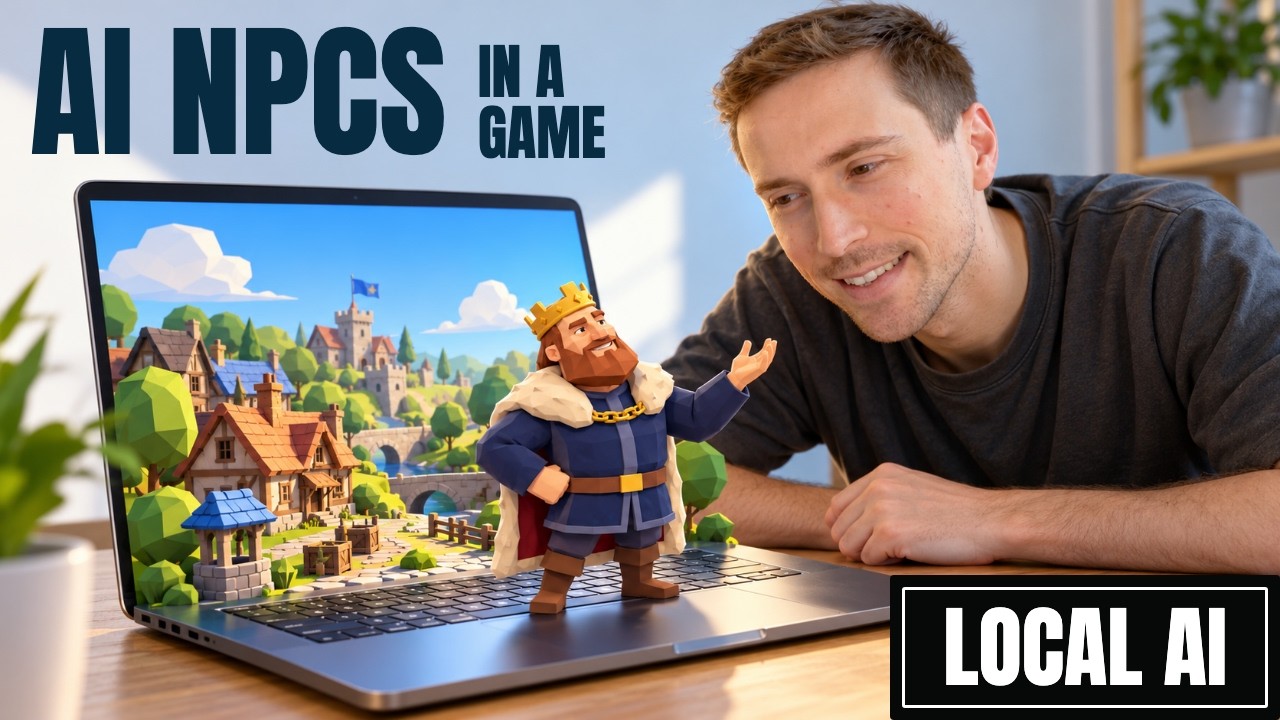
The video explores the concept of creating game characters powered by local AI models that can engage in dynamic, unscripted conversations with players. Unlike traditional game characters limited to predefined dialogue, these AI-driven characters can remember past interactions, respond naturally to any player input, and even communicate with each other about the player’s actions. The creator built a small medieval village game featuring 22 such characters, each running on local AI models on a Mac or PC, allowing players to interact with them endlessly without incurring cloud computing costs. This approach addresses the economic challenges of cloud-based AI in gaming, where continuous AI usage can become prohibitively expensive for developers and players alike.
The game’s AI system is built around three main components: NVIDIA’s Nemotron for fast voice-to-text conversion, Qwen 3.8 as the thinking engine, and Fish Audio Drama 3 for realistic voice synthesis. These models run locally, enabling quick responses and personalized voices for each character. To manage multiple characters efficiently, only the character currently being interacted with is actively processed, while others remain dormant with their data stored on disk. Each character maintains a diary of conversations and a notebook with personal notes about the player, which persist across game sessions, creating a rich, evolving narrative experience influenced by player choices and character moods.
Character and game world design were accomplished using AI tools like Higgsfield, which generated consistent art assets, animations, and videos in a unified style. The creator iteratively developed character portraits with various emotional expressions and crafted environments such as the village square and hunting lodge. The game’s code was also written with the help of AI, allowing rapid development and integration of AI-driven dialogue and game mechanics. The design balances scripted game rules with AI-driven interactions, ensuring that player actions have meaningful consequences within the game world, such as influencing relationships or triggering story events.
Gameplay demonstrations show how players can engage with characters like Percival the armorer or Bram the blacksmith, testing the AI’s ability to remember details, respond to lies, and offer jobs or services based on interactions. The game also includes mechanics like selling goods in a market, where customers are AI characters who remember previous encounters and react accordingly. Although the current AI responses are not perfect, the creator emphasizes the potential for improvement as models become more advanced and better integrated into game design, pointing to ongoing industry efforts by companies like Krafton and indie developers experimenting with local AI models.
In conclusion, the video presents a compelling vision for the future of gaming where AI characters provide immersive, lifelike interactions without relying on costly cloud infrastructure. By running AI locally, games can offer unlimited, personalized conversations that evolve with the player’s choices, enhancing immersion and replayability. The creator invites viewers to consider which games could benefit from such AI-driven characters and highlights resources for developers interested in building similar experiences. This approach could revolutionize narrative-driven games, making virtual worlds feel more alive and responsive than ever before.
Useful Links