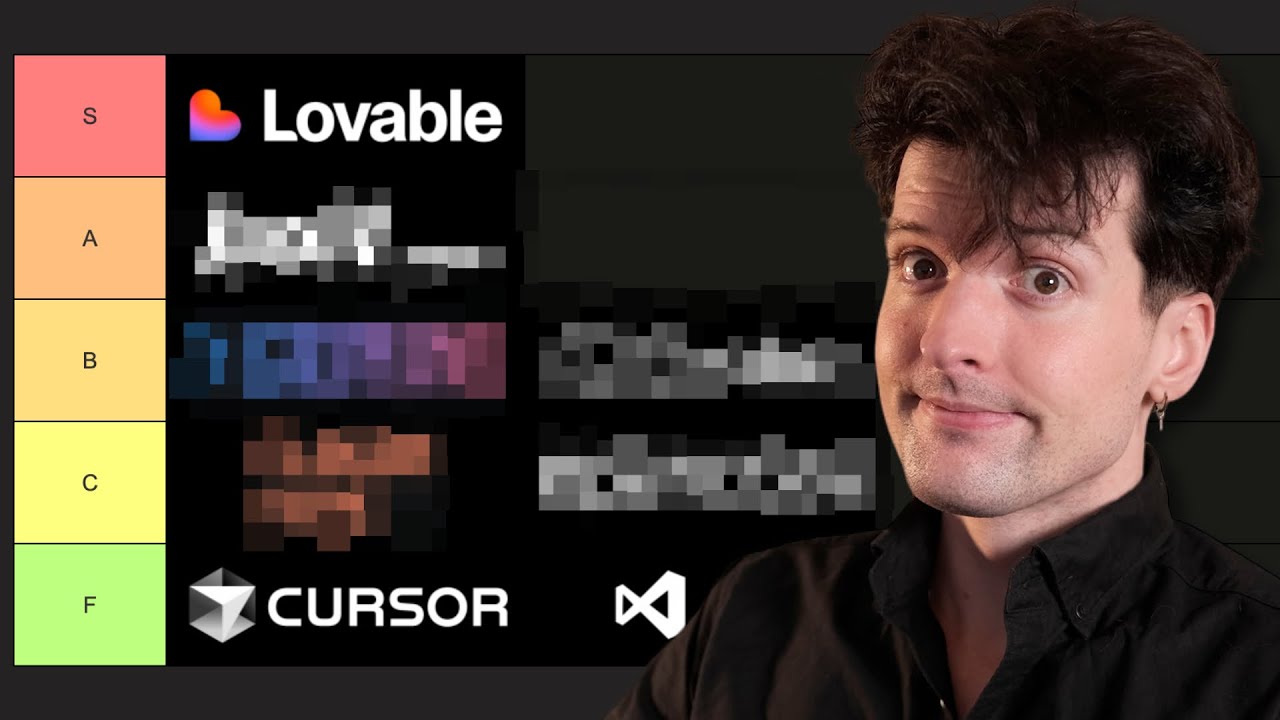
The video explores the growing landscape of “vibe coding” tools—software designed to enable coding with minimal technical detail, focusing instead on the overall experience or “vibe” of coding. The presenter emphasizes that these tools are not meant for deep technical work but for users who want to create without getting bogged down in code specifics. He references a tier list created by the Syntax team ranking various AI coding tools and decides to create his own tier list focused solely on the “vibe” aspect, evaluating tools like Cursor, Windsurf, Open Code, Codeex, V0ero, Lovable, Bolt, Trey, Kira, and others. The ranking is based on how well these tools cater to vibe coders rather than traditional developers.
Starting with Cursor, the presenter acknowledges it as his preferred IDE and a successful investment but notes that it is still very much an AI assistant requiring active user steering, making it less suitable for vibe coding. He places Cursor in the F tier for vibe coding because it shows a lot of code, which vibe coders typically want to avoid. Similarly, VS Code with Copilot, despite its revolutionary impact on AI-assisted coding, is also placed in the F tier because it is designed for developers who want to write and see code. Windsurf, on the other hand, is rated higher in the B tier due to its more autonomous agent mode and focus on helping less experienced developers, making it more aligned with vibe coding principles.
The video then discusses several other tools, including Kira, which uses spec-driven development and is more suited for large corporate codebases, placing it between Cursor and Windsurf. Trey is highlighted as a promising vibe coding tool with a unique “solo mode” that hides the editor and focuses on context engineering, earning it a B tier rating initially and later bumped to A tier due to its vibe-friendly features. Cloud Code and Codeex are also examined; Cloud Code is seen as an early example of vibe coding for developers but still requires terminal interaction, while Codeex, despite being open source and initially TypeScript-based, moved to Rust, which the presenter feels is less vibe-friendly, resulting in a low tier placement.
The presenter reviews other tools like V0ero, which evolved from a developer-focused component builder to a more vibe coding-friendly app with no coding needed, earning it an A tier. Bolt, Lovable, and Replet are also evaluated, with Bolt placed in the C tier due to its developer-centric design and technical requirements, Lovable in B tier for its vibe-friendly interface despite some usability issues, and Replet also in B tier for its spirit but cluttered experience. The video concludes with a mention of Chef by Convex, which, while powerful for full-stack applications, is too developer-focused for vibe coders and thus rated low.
Overall, the video provides a subjective but insightful ranking of various AI coding tools based on their suitability for vibe coding, emphasizing ease of use, minimal code exposure, and a focus on the creative experience rather than technical detail. The presenter encourages viewers to take the tier list as a fun, meme-like guide rather than a strict evaluation, inviting discussion and feedback on the evolving world of vibe coding tools.