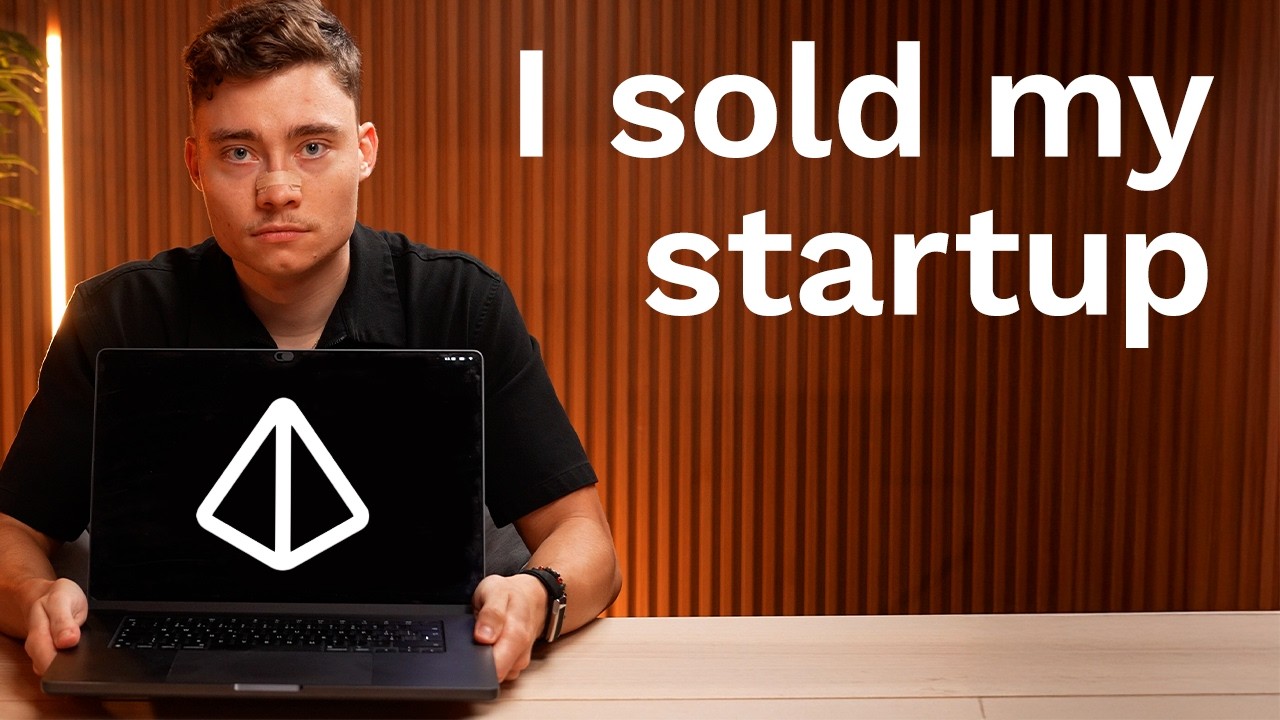
The video details the story of selling an AI startup, Vectal, for $1.8 million—not to a large corporation or private equity firm, but to an open-source project called Agent Zero, founded by Yan. The acquisition was announced as a merger of talent and technology, with both companies now operating under the Agent Zero name. The founder of Vectal explains that the deal originated from their shared AI community, The New Society, where Yan was an early and active member, building Agent Zero as an open-source AI agent framework. Both projects grew rapidly, but Agent Zero’s growth was especially impressive, fueled organically through community engagement and GitHub rather than paid advertising.
Vectal, described as a blend of ChatGPT and Notion, was designed to help entrepreneurs and busy individuals manage tasks, notes, and productivity with the help of multiple AI agents. Despite achieving over $155,000 in annual recurring revenue and amassing more than 70,000 customers, Vectal faced stiff competition from larger platforms like Notion and ClickUp, which quickly adopted similar features. Meanwhile, Agent Zero distinguished itself as an autonomous AI agent that operates on a virtual computer, requiring no coding or installation, and is fully open-source, private, and unrestricted.
The merger made sense for several reasons. The founders, David (Vectal) and Yan (Agent Zero), have complementary skill sets: David is an experienced entrepreneur and business strategist, while Yan is a highly technical developer. Their teams also complement each other, with Vectal’s team excelling in social media, marketing, and operations, and Agent Zero’s team focused on development and open-source contributions. The products themselves are synergistic—Vectal brings a monetized, full-stack app with a large user base, while Agent Zero offers a powerful, free, and open-source platform lacking in marketing reach.
Following the acquisition, the unified company will continue as Agent Zero, maintaining its commitment to being fully open-source, locally runnable, and free to access. The new strategy leverages David’s personal brand and marketing expertise to expand Agent Zero’s reach, aiming to create a flywheel effect: more users attract more contributors, which improves the product, leading to even more users. The ultimate goal is to establish Agent Zero as a leading open-source AI research company, supporting multiple projects and driving innovation in the field.
Looking ahead, the team plans to launch Agent Zero 1.0, moving out of beta in the second half of Q1 2026. The founder encourages viewers to try Agent Zero, highlighting its compatibility with various AI models, local data privacy, and lack of tracking or telemetry. The video concludes with reflections on the rapid journey from founding Vectal to its acquisition in just 14 months, and optimism about building Agent Zero into a major force in open-source AI.