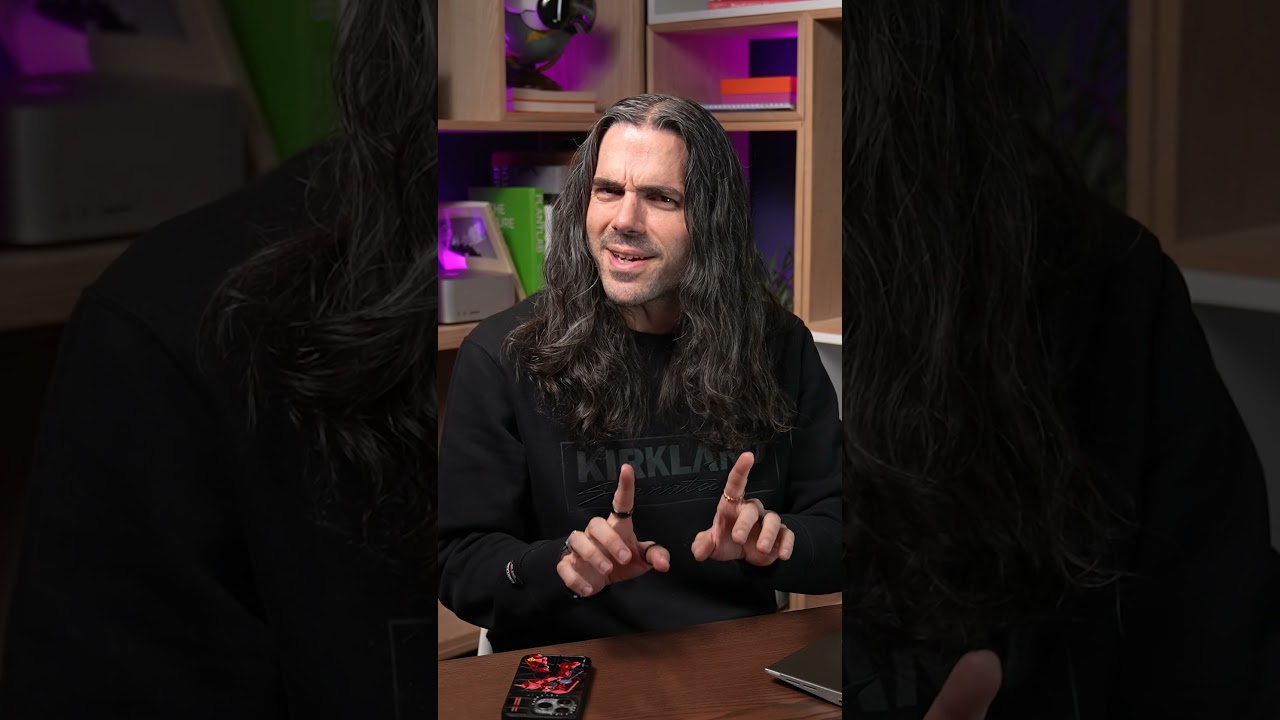
The video reviews a week-long experience with Microsoft’s Copilot AI in Windows 11, revealing that despite ambitious marketing and CEO Satya Nadella’s vision, the AI assistant often delivers inconsistent, inaccurate, and superficial responses that fall short of its promised capabilities. It highlights the gap between Microsoft’s AI aspirations and the current practical limitations users face, particularly in task execution, contextual understanding, and analytical abilities.
The video explores the experience of interacting with Microsoft’s Copilot AI in Windows 11 over the course of a week, testing whether the AI assistant lives up to the capabilities shown in Microsoft’s TV commercials. The user asks Copilot to find a product in stock, specifically a microphone, and is provided with a link to Best Buy, where the item is supposedly available for pickup or delivery. Despite these responses, the AI’s performance is inconsistent and often inaccurate, highlighting a gap between the advertised functionality and the current reality.
Microsoft CEO Satya Nadella envisions a future where AI models can operate computers as effectively as humans, transforming Microsoft’s business from primarily end-user tools to an infrastructure supporting autonomous AI agents. This vision is ambitious and forward-looking, but the current state of Copilot does not yet reflect this level of sophistication. The video contrasts Nadella’s vision with the actual user experience, which reveals limitations in Copilot’s understanding and execution of tasks.
Throughout the interaction, Copilot struggles with basic commands and contextual understanding. For example, when asked about travel directions or file locations, the AI provides generic or surface-level answers without deeper comprehension. It even misidentifies the location of a cave based solely on file names, demonstrating a lack of real-world knowledge or reasoning. This inconsistency undermines the promise of a seamless conversational interface for Windows.
The AI also fails to accurately identify hardware in videos or analyze simple benchmark data. Attempts to get Copilot to recognize a microphone model or compare laptop performance scores result in incorrect or confused responses. This highlights that Copilot cannot yet perform even straightforward analytical tasks or provide reliable product recommendations, which are key features promoted in Microsoft’s marketing.
In summary, while Microsoft is heavily investing in AI and positioning Copilot as a revolutionary assistant for Windows users, the current implementation falls short of expectations. The video emphasizes the disparity between the company’s ambitious AI goals and the practical limitations users face today. For a detailed account of all the frustrations encountered, viewers are directed to the full review on The Verge website.