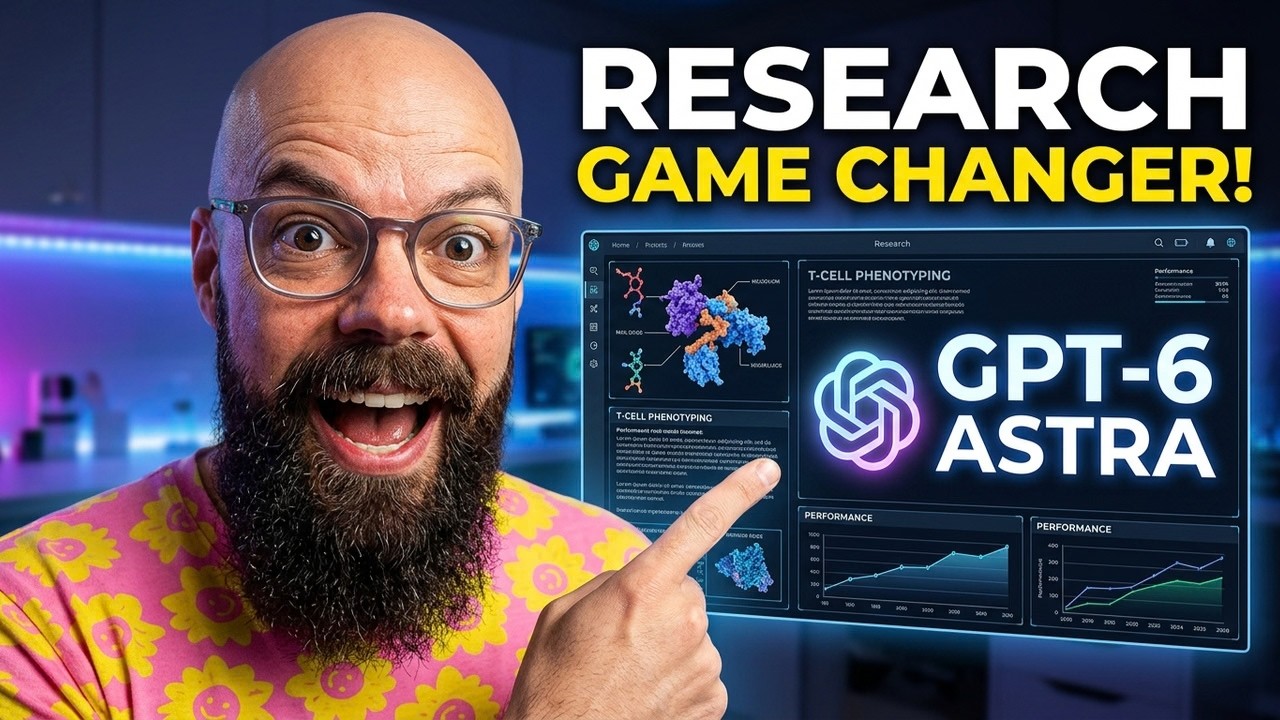
The video explores the capabilities of ChatGPT’s latest model, GPT-6 Astra, particularly focusing on its applications in science and academic research. The presenter highlights Astra’s intelligence and potential, noting that while it may not yet top all benchmark leaderboards, it shows promising performance, especially in academic tasks. Access to Astra varies between desktop and web interfaces, with the web version offering more powerful “max” level access. The presenter tests Astra’s ability to conduct complex research tasks, such as reviewing recent peer-reviewed literature on nanocomposite electrodes and organic photovoltaics, finding that Astra can generate comprehensive, publishable-quality literature reviews complete with references and tables.
One of the standout features demonstrated is Astra’s ability to process and analyze uploaded scientific PDFs, extracting detailed experimental data and creating interactive 3D models of research subjects like transparent electrodes. These models include features such as rotation, layer distribution, and simulation of physical properties, which can be embedded in websites or presentations. This capability represents a significant advancement, enabling researchers to visualize and communicate complex data interactively without requiring extensive technical skills or time investment.
The video also showcases impressive examples from the research community using Astra, including the creation of interactive desktops from videos, detailed 3D models of human cells and brains, and integration with other AI tools for enhanced visualization. These applications demonstrate how Astra can drastically reduce the time and cost associated with traditional scientific visualization and data analysis, potentially replacing expensive commercial software and streamlining lab workflows. The presenter emphasizes the transformative potential of these tools for scientific communication and education.
In addition to visualization, Astra shows promise in robotics and automation. The video highlights a demonstration where GPT-6 Astra controls a robotic arm to perform a new task on the first try, without human intervention, showcasing the model’s advanced agent capabilities. Furthermore, Astra is noted for its ability to generate educational content quickly and accurately, such as creating a five-minute video about T cells, which traditionally would require extensive human effort and expert review. These examples underline Astra’s versatility and efficiency in both research and science communication.
The presenter concludes with enthusiasm about Astra’s impact on academia and research, acknowledging some limitations but overall celebrating its breakthroughs. They encourage viewers to experiment with Astra for their own research and share their experiences. The video also briefly touches on broader concerns about AI’s rapid advancement and potential risks but remains optimistic about Astra’s role in advancing scientific knowledge and education. Overall, GPT-6 Astra is portrayed as a powerful, multifaceted tool that could significantly enhance research productivity, visualization, and communication in the scientific community.
Useful Links