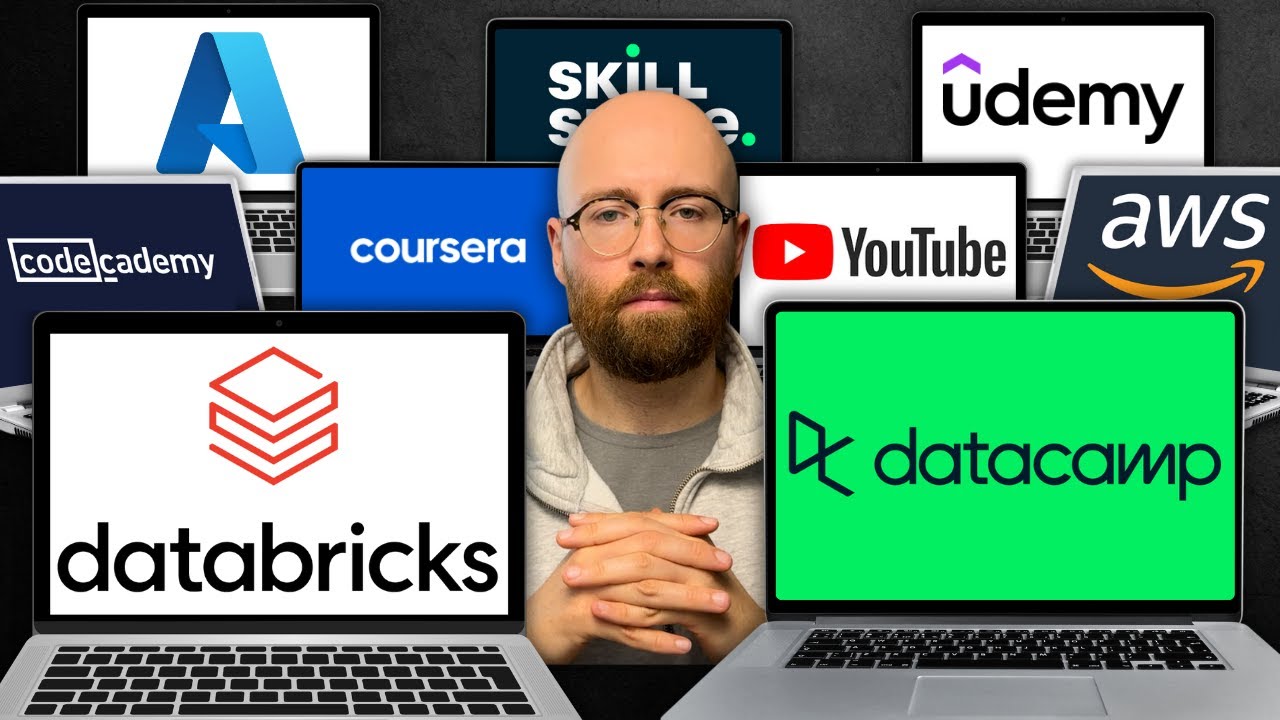
In the video, the presenter shares their experience of trying to learn data engineering through various courses and highlights the top five recommendations for anyone interested in this field. They emphasize the importance of choosing the right courses to avoid wasting time and money, especially after their own struggles with platforms like Azure and Databricks. The first course discussed is the Microsoft Certified Azure Data Engineer Associate certification, which provides a structured learning path and is recognized in the industry. However, the presenter points out significant drawbacks, such as the recent discontinuation of the certification in favor of a new focus on fabric data engineering, the reliance on multiple-choice questions that promote memorization rather than practical skills, and the lack of transferable skills like Python.
The second course highlighted is the Databricks Certified Data Engineer Associate certification. The presenter notes that Databricks is gaining popularity and has strong industry recognition due to partnerships with major cloud providers. The course offers a mix of theory and hands-on labs, which is beneficial for learners. However, the presenter warns that it can be expensive, both in terms of subscription costs and the platform’s usage fees. Similar to the Azure certification, the focus is primarily on using the Databricks platform rather than teaching fundamental data engineering skills.
Next, the video introduces DataCamp’s “Data Engineer in Python” course, which the presenter highly recommends. This course is project-based and covers essential topics such as SQL, Python, ETL, and cloud concepts. DataCamp offers a comprehensive learning path and an industry-recognized certification, along with a subscription model that provides access to multiple courses. The only downside mentioned is that it requires self-study, but the hands-on projects and interactive learning environment make it an effective option for mastering data engineering fundamentals.
The fourth course discussed is the Data Engineering Foundations Specialization on Coursera, offered by IBM. While it covers a wide range of topics and is taught by industry experts, the presenter criticizes it for being overly theoretical and lacking practical, hands-on experience. The course is also time-consuming, requiring a significant commitment to complete. Additionally, the certification provided is not as valuable as others, as it does not carry the same weight in the job market.
Finally, the presenter reviews a popular Udemy course titled “Data Engineering for Beginners,” which covers Python, SQL, and Spark. The course is affordable and offers hands-on projects, but the presenter notes concerns about the variability in instructor quality and the lack of certification. Furthermore, Udemy courses can sometimes be outdated, depending on the individual instructor’s updates. Overall, the presenter concludes that DataCamp is the best option for learning data engineering effectively, encouraging viewers to skip the frustration and start with a structured, hands-on approach.