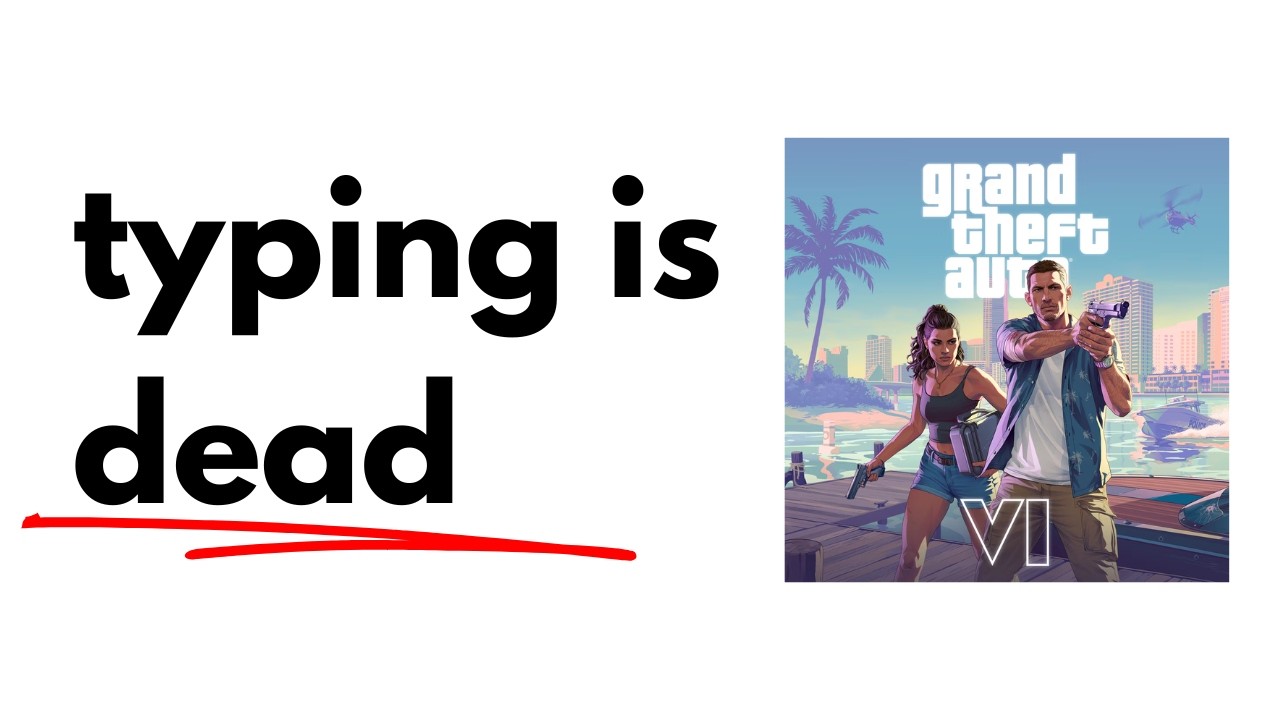
In this video, the creator demonstrates building a prototype of GTA 6 using voice commands instead of typing, leveraging a tool called Typeless alongside Codex. Typeless allows users to dictate code, emails, or any text by simply holding a function key, eliminating the need for typing, which can be cumbersome especially when walking or standing at a desk. The tool also automatically removes filler words, repetitions, and formats the text, making the workflow much faster and more efficient. The creator highlights how Typeless works seamlessly on both desktop and mobile, enabling coding or writing on the go.
The video showcases the process of starting a new project named GTA 6 and using Typeless to give instructions verbally to build game features such as cars, police chases, and character interactions. The creator tests the game prototype, noting that while it resembles a mix between GTA and other games like Pac-Man or Simpsons Hit & Run, it successfully includes basic gameplay elements like entering/exiting cars, punching, and police chases. Despite some control issues and graphical limitations, the prototype demonstrates the potential of voice-driven development.
Throughout the video, the creator emphasizes the advantages of voice input over traditional typing, especially when multitasking or moving around. They share personal experiences of struggling to type while walking and how Typeless solves this problem by allowing natural speech to be converted into well-formatted text instantly. The tool’s ability to understand accents and provide accurate transcription with proper punctuation is praised as superior to other speech-to-text solutions.
The creator also critiques the initial game build using Typeless, listing improvements such as fixing control directions, adding better police chase mechanics, and enhancing visual feedback for actions like punching. These critiques are given verbally and automatically formatted into a clear list by Typeless, showcasing its utility for iterative development and feedback. The video concludes with a demonstration of a more polished version of the game prototype, including UI elements like maps, health bars, and cash indicators, showing significant progress made through continuous voice-driven edits.
Finally, the creator encourages viewers to try Typeless themselves, offering a free trial and credits via a link in the description. They highlight how this tool can revolutionize workflows by enabling hands-free, efficient text input for coding, writing, and editing anywhere. The video ends with an invitation to stop typing and become “typeless,” underscoring the future potential of voice interfaces in software development and everyday tasks.