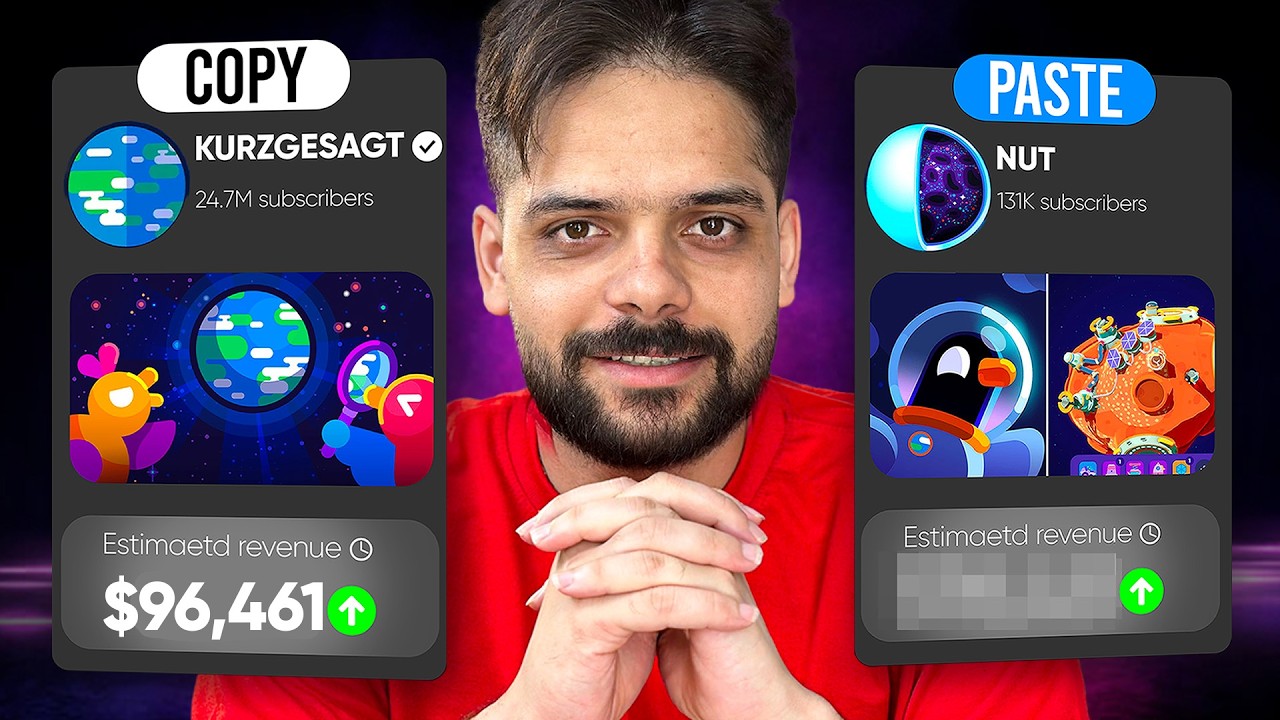
The video explores how AI technology can be used to replicate the success of a high-earning YouTube channel like Kurts Gazark, who has around 25 million subscribers and earns $200,000 per month from ad revenue with only 300 videos. It begins by reflecting on a profound truth about life on Earth: everything is made from a few basic ingredients arranged in endlessly creative ways, and despite atoms lacking consciousness, they come together to form beings capable of wondering about existence itself. This sets the tone for the type of content Kurts Gazark produces—big, complex ideas explained clearly and engagingly, often related to science, biology, space, and cosmology.
The first step in creating similar content is choosing a compelling topic and storyline that will attract viewers. The video uses the example of “the problem with immortality” as an intriguing subject. Research is conducted using ChatGPT, which helps gather detailed information across philosophical, biological, societal, and fictional perspectives. After thorough research, a script is developed in the style of Kurts Gazark, refined through multiple iterations. A crucial prompt then generates scene-by-scene descriptions of still images, which serve as the foundation for the visuals.
For visuals, the creator uses AI image generators, specifically multimodal AI models like ChatGPT’s image generation feature, enhanced by providing examples of the desired 2D animation style. This approach ensures the images match the intended aesthetic. The video also discusses common challenges such as style drift and how to address them by simplifying prompts or branching out from earlier points in the session. For scenes requiring specific characters, the process involves generating the base scene first and then adding characters separately using image editing tools, allowing for greater control and detail.
Next, the video covers animation and narration. Animation is achieved using image-to-video AI models, with a focus on maintaining a consistent 2D animation style and static camera angles to ensure visual coherence. Narration is created using text-to-voice models, with 11 Labs highlighted as the most powerful and accurate option. The video explains how to select voices, adjust tone and emotion, and even clone voices with premium accounts, emphasizing ethical considerations around voice cloning. Finally, all elements—visuals and narration—are assembled in video editing software like Premiere Pro, with added sound effects, background music, and transitions to enhance quality.
The video concludes with a detailed guide on tools and budget options for creators at different levels. The free path relies on ChatGPT and free image and video generators with some limitations. The middle path involves a ChatGPT Plus subscription and better video generation tools, while the professional path is recommended for scaling channels, combining ChatGPT Plus, advanced video generation services, and premium narration tools for a full production studio experience at around $60 per month. The video ends by showcasing the completed animation and inviting viewers to ask questions, reinforcing the idea that AI now enables anyone to create high-quality educational content inspired by successful channels like Kurts Gazark.