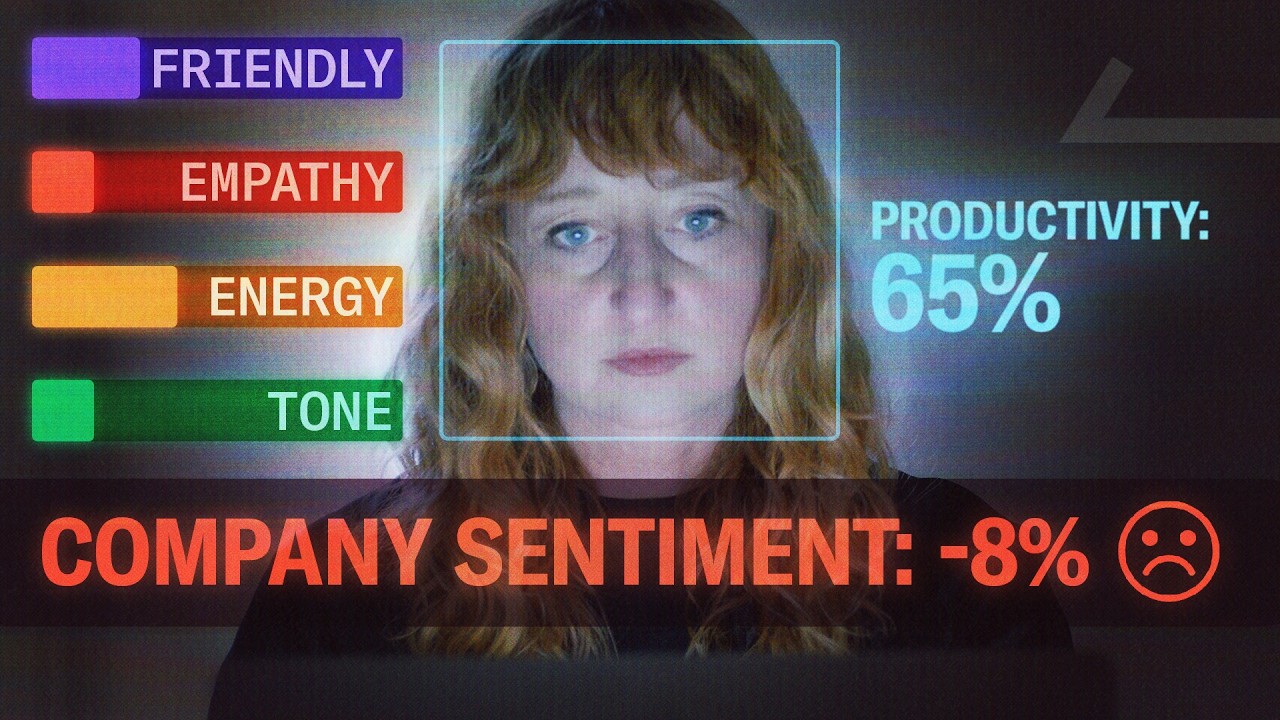
The video explores the growing use of AI-powered surveillance, known as “bossware,” in workplaces, highlighting its invasive impact on workers across various industries. Tech employees, including those at major companies like Meta, express deep disillusionment and frustration with being monitored constantly and the looming threat of AI replacing them. This surveillance extends beyond tech, affecting millions of workers in the U.S., with technologies tracking every click, keystroke, and even emotional tone during calls, all aimed at maximizing productivity often at the expense of worker well-being.
Nurses like Sherri Shaw describe how strict monitoring of call times and emotional AI assessments create unsafe and dehumanizing work conditions. Similarly, warehouse and delivery workers face relentless pressure from AI systems that can even trigger automatic firings. The video’s host experiments with self-surveillance software used by remote workers, revealing how opaque productivity scores are generated from data that often misrepresents legitimate work activities, raising concerns about fairness and transparency.
A significant focus is on Meta’s controversial Model Capability Initiative (MCI), which collected extensive employee data without consent to train AI systems intended to replace human jobs. This program sparked internal backlash, leading to a petition signed by over 1,800 employees and a temporary pause of the initiative. The video underscores how such surveillance data is not only used internally but can also be sold to third parties, fueling fears about privacy violations and the commodification of worker data.
Legislative efforts to regulate bossware are underway, with some progress in states like California, where laws now limit the use of AI in hiring and firing decisions and restrict invasive emotional monitoring. However, the video highlights the challenges posed by powerful tech industry lobbying, which hampers the advancement of comprehensive worker protections. Organized labor and unions emerge as crucial forces in advocating for workers’ rights and pushing back against exploitative surveillance practices.
Ultimately, the video paints a dystopian picture of the modern workplace where AI and surveillance threaten job security, privacy, and humane working conditions. It calls for greater transparency, stronger legal safeguards, and worker empowerment to ensure technology serves to assist rather than replace human labor. The host concludes by rejecting the invasive bossware on their own computer, emphasizing the need to reclaim control over personal work data and resist becoming mere cogs in an AI-driven machine.
Useful Links