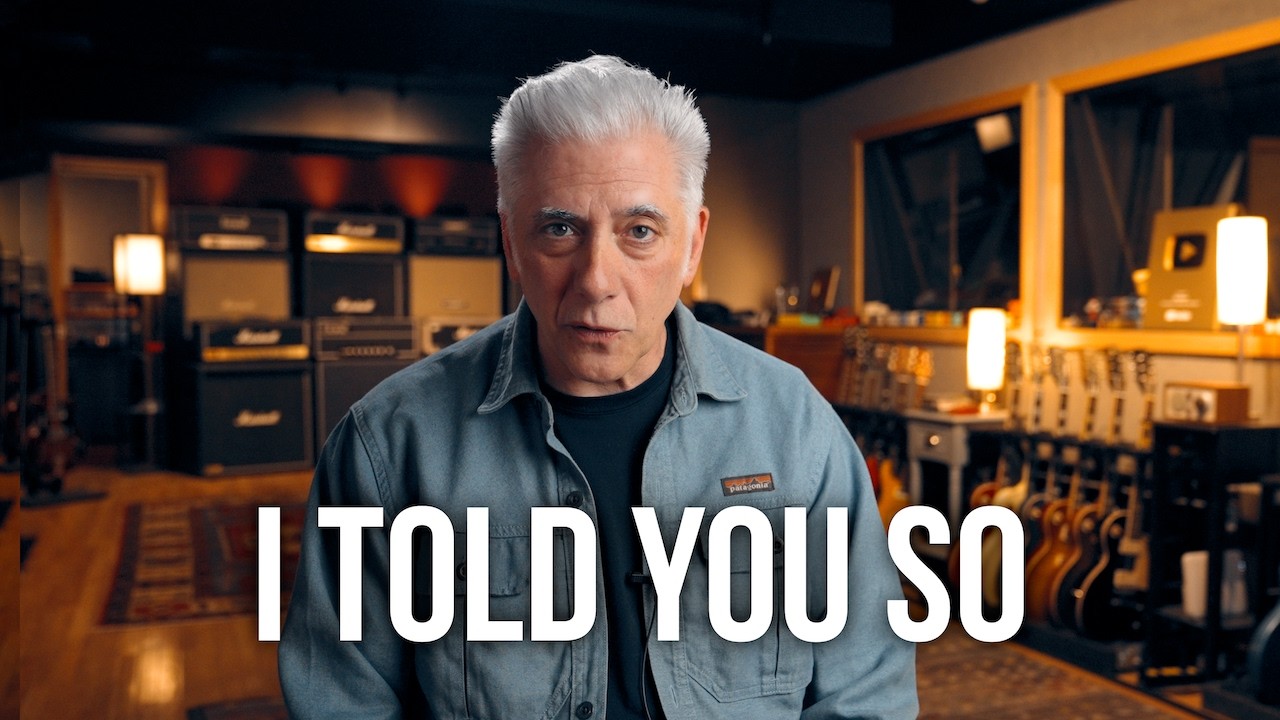
Rick Beato reflects on his earlier prediction that local large language models would reduce reliance on massive data centers, noting the current surge in hardware demand driven by AI but also the rise of computers optimized for running AI locally. He also discusses cultural resistance to AI among younger generations and questions the true purpose of enormous data centers, suggesting they may be heavily used for surveillance beyond AI training.
In this video, Rick Beato reflects on a prediction he made earlier in the year about the future of AI and data centers. He had anticipated that many of the massive data centers currently being built would become unnecessary because people would increasingly use local large language models (LLMs) running on their own computers, similar to how the music industry shifted from expensive recording studios to home recording setups as computer technology advanced. This shift would reduce reliance on centralized infrastructure, as local AI models become more capable and accessible.
Rick shares his recent experience trying to buy solid-state hard drives and RAM, only to find prices have skyrocketed—hard drives costing up to ten times more than before due to high demand from data centers. These components are being snapped up before they even hit the market, making it difficult for consumers to build or upgrade their own computers. This shortage and price surge underscore the massive scale at which data centers are expanding to support AI workloads.
Despite this, Rick points out a growing trend of new computers specifically designed to run powerful local AI models without needing internet connectivity. Companies like AMD, Microsoft, Nvidia, Apple, and Google are releasing hardware optimized for running large LLMs locally, some capable of handling models with hundreds of billions or even trillions of parameters. This development aligns with Rick’s earlier prediction that local AI processing would become mainstream, reducing dependence on cloud-based AI services.
Rick also highlights a cultural pushback against AI, especially among younger generations who express strong resistance to AI-generated content and the concept of AI itself. Many students and young people dislike AI music and videos and want to avoid AI-related technologies altogether. This anti-AI sentiment contrasts with the rapid technological advancements and widespread adoption of AI tools, creating an interesting dynamic in how AI is perceived and used.
Finally, Rick questions the purpose of the enormous data centers beyond AI training, suggesting that much of the data storage might be related to surveillance activities, such as facial recognition and license plate tracking by security cameras. He notes the pervasive nature of surveillance in everyday life and wonders why such vast storage capacity is needed. He concludes by inviting viewers to share their thoughts on these developments, emphasizing how quickly the AI landscape is evolving and how his initial predictions are unfolding in unexpected ways.