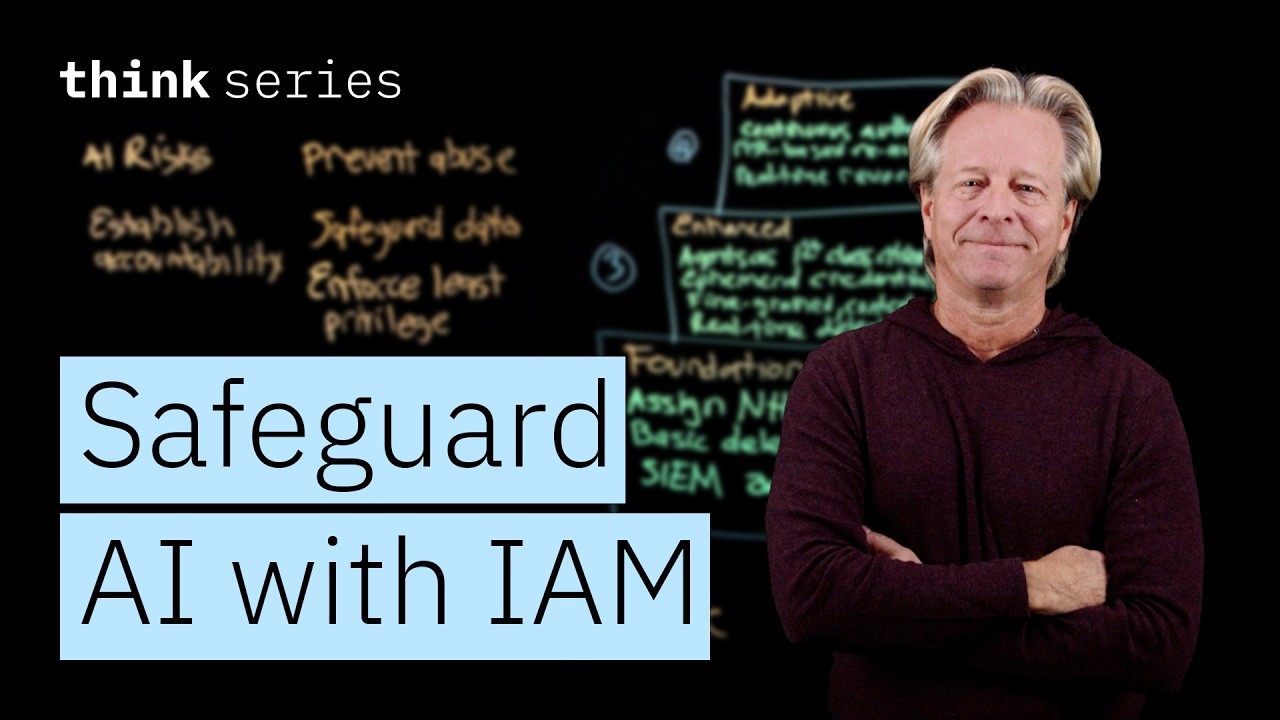
The video discusses advanced identity and access management (IAM) strategies tailored for AI agents and agentic systems, introducing a four-step maturity model to help organizations secure and futureproof their AI environments. The maturity model concept originates from the Capability Maturity Model developed in the 1980s, which categorizes system development into progressive levels of sophistication. This framework is applied here to manage the unique risks associated with AI agents, focusing on accountability, least privilege enforcement, abuse prevention, and data safeguarding.
The first step in the maturity model is the ad hoc stage, where organizations have minimal controls in place. At this level, AI agents are developed and deployed without much consideration for risk management or system governance. The second step, called the foundation stage, introduces basic but essential controls such as assigning non-human identities to agents, enabling delegation of rights on behalf of users or other agents, and implementing secure information and event management (SIEM) for auditability and compliance. This foundational level ensures that agents are identifiable and their actions traceable.
The third step, the enhanced stage, builds upon the foundation by treating agents as first-class citizens within the identity governance system. This means assigning unique, ephemeral credentials to agents that are valid only for specific tasks, thereby enforcing fine-grained, contextual access control. Additionally, real-time detection mechanisms are introduced to monitor agent behavior and identify anomalies, enhancing the system’s ability to respond to potential threats promptly.
The final step in the maturity model is the adaptive stage, which emphasizes continuous authentication and risk-based reauthentication throughout the agentic workflow. This dynamic approach ensures that agents are constantly verified as they perform tasks, with real-time revocation capabilities to immediately block access if suspicious activity is detected. This level of maturity allows organizations to respond swiftly to evolving risks in non-deterministic AI environments, maintaining robust security and operational integrity.
In summary, the video advocates a gradual, stepwise approach to securing AI agents, starting from basic identity assignment and logging, progressing through enhanced credential management and anomaly detection, and culminating in continuous, adaptive authentication and access control. By following this maturity model, organizations can effectively address key risks such as accountability, least privilege enforcement, abuse prevention, and data protection, thereby building resilient and trustworthy agentic AI systems.