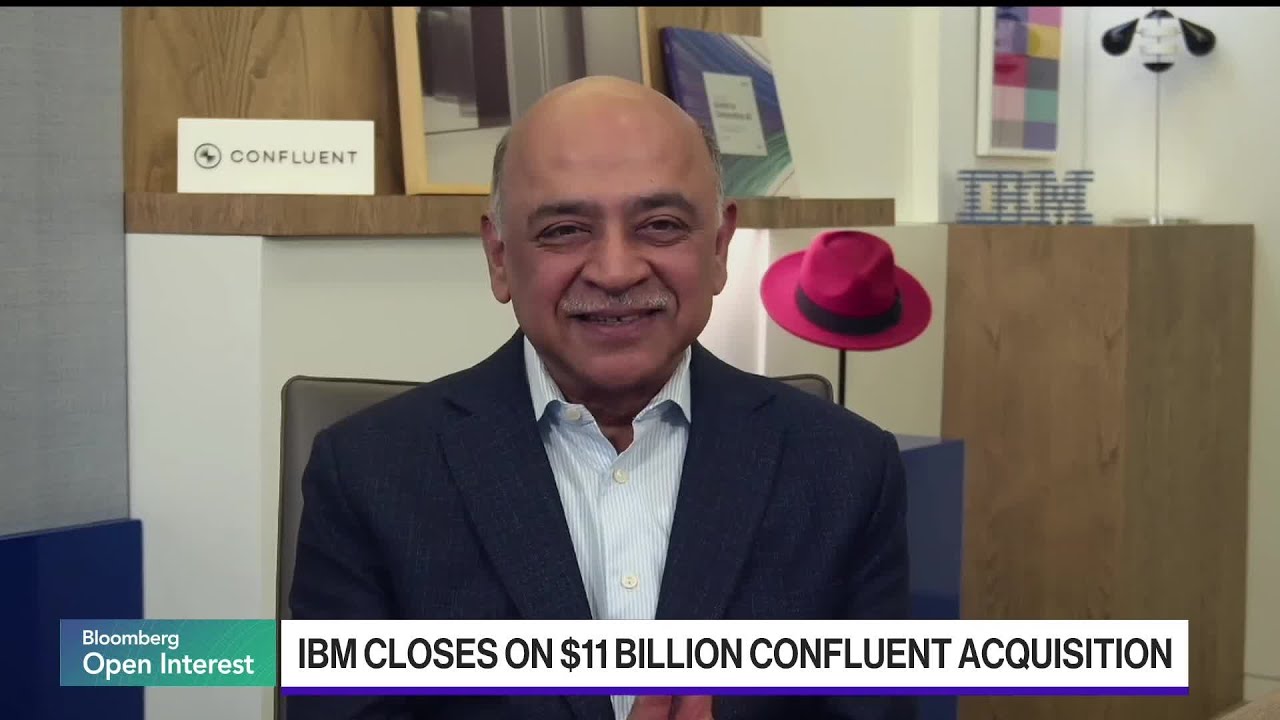
IBM CEO Arvind Krishna discussed the company’s recent acquisition of Confluent, emphasizing the importance of real-time data movement and analysis in the age of AI. He highlighted that Confluent’s technology enables enterprises and AI agents to access data wherever it resides—on-premise, in the cloud, or in SaaS environments—aligning with IBM’s focus on hybrid cloud and AI. Krishna noted that the regulatory environment for mergers and acquisitions has become more favorable, allowing deals like Confluent’s to close more quickly, and hinted at the possibility of further acquisitions in IBM’s core focus areas.
Krishna elaborated on IBM’s strategy of combining organic development with targeted acquisitions to strengthen its portfolio in hybrid cloud, AI, and automation. He cited the company’s Watsonx products and mainframe modernization efforts as examples of organic growth, supplemented by acquisitions like Confluent when they fit IBM’s strategy and can accelerate growth. He also discussed IBM’s deepening partnership with NVIDIA, which has resulted in significant performance improvements for clients like Nestlé by leveraging NVIDIA GPUs and open-source technologies for faster and more cost-effective data analysis.
Addressing the competitive landscape, Krishna explained that IBM’s approach is model-agnostic, helping clients integrate AI models from various providers—including Anthropic, OpenAI, and IBM itself—based on their needs. He believes that AI is a clear tailwind for IBM, not a threat, and that the market misunderstood previous concerns about competition in areas like COBOL modernization. IBM’s consultants focus on delivering tangible ROI for clients by using AI to drive efficiencies in functions such as procurement, HR, and finance, often integrating technologies from multiple vendors.
On the topic of AI’s impact on employment, Krishna acknowledged that IBM has used AI and automation to take $4.5 billion out of enterprise costs, but emphasized that much of these savings have been reinvested into R&D, sales, marketing, and client engineering. He stated that while there is some workforce reshaping—estimating a 5-10% displacement—IBM’s overall employment has remained stable, and the company plans to significantly increase entry-level hiring this year. Krishna stressed the importance of upskilling and retraining to adapt to the evolving job landscape.
Finally, Krishna addressed the effects of geopolitical instability, particularly in the Middle East, on IBM’s consulting business. While acknowledging some disruption for employees and clients in the region, he noted that the overall impact on IBM’s financials is limited due to the region’s small share of total business. Looking ahead, Krishna expects consulting growth to improve in the second half of the year. He also reaffirmed IBM’s commitment to quantum computing, stating that the company is on track to deliver fault-tolerant quantum supercomputers by 2029, with real-world use cases already emerging and strong partnerships with academic and research institutions.