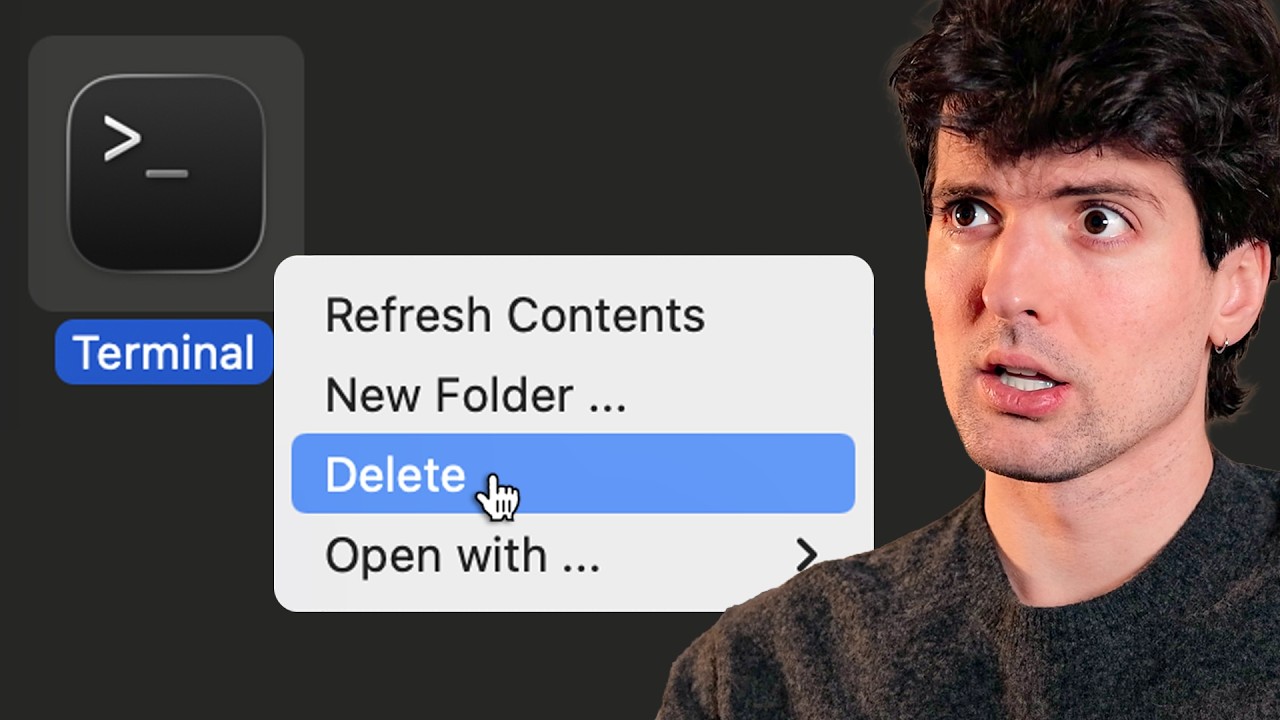
The speaker begins by reflecting on their long-standing relationship with terminals, having used them extensively since their early teens for various tasks like hosting Minecraft servers and SSHing into remote machines. Despite being known as a “terminal-first” developer and a fan of tools like T-Mux and GNU screen, they have recently realized that terminals no longer suit their current workflow. This realization came when they found themselves not needing to open a terminal for extended periods, signaling a shift in how they work. The speaker acknowledges their love for terminals but admits that the rigidity and mental overhead of managing multiple terminal sessions have become burdensome, especially as their projects and workflows have grown more complex.
The speaker then discusses the evolution of AI coding tools, highlighting their initial unimpressed experience with the anti-gravity app but noting its innovative agent manager feature that allowed monitoring multiple projects simultaneously. This concept inspired later tools like the Codex app, which significantly improved the coding experience by providing a graphical interface that made managing multiple projects and agents easier. The Codex app allowed for better navigation, easier text selection, and the ability to handle images, which terminals struggled with. Despite its closed-source nature and occasional regressions, the Codex app represented a major step forward in making AI-assisted coding more accessible and efficient.
However, the speaker points out the limitations of relying on closed-source GUIs like Codex and cloud code apps, which often lock users into specific providers and subscriptions. They contrast this with the open-source terminal tools available but note that these lack the user-friendly interfaces and features that GUIs provide. The speaker also highlights the challenges of using SSH, especially on unstable connections or mobile devices, which further complicates terminal-based workflows. These issues, combined with the desire for better performance, mobile support, and multi-project management, motivated the speaker and their collaborator Julius to develop T3 Code—an open-source GUI designed to unify and simplify AI coding workflows across different models and platforms.
T3 Code emerged as a solution to the frustrations with existing tools, offering a stable, reliable, and customizable interface that supports multiple AI providers and subsidized subscriptions. It features remote control capabilities, allowing users to run tasks on one machine and manage them from another device, including mobile phones, without relying on fragile SSH connections. This flexibility has transformed the speaker’s workflow, enabling them to work more efficiently and consistently, even when away from their primary computer. The speaker emphasizes that T3 Code is not a commercial venture but a passion project aimed at providing the best open-source AI coding environment, preserving the spirit of customization and control that once defined developer tools.
In conclusion, the speaker urges developers to reconsider the terminal as the default interface for modern AI-assisted development. While they still appreciate terminals and the skills associated with them, they argue that graphical interfaces better accommodate the complexity and multitasking demands of today’s workflows. They encourage developers to explore GUIs like T3 Code or Codex to enhance productivity and reduce mental overhead. The speaker acknowledges the nostalgia and utility of terminals but stresses that embracing new tools is essential for scaling up development work and fully leveraging AI capabilities. They close with a call to push beyond traditional boundaries and adopt interfaces that truly support the future of coding.
Useful Links