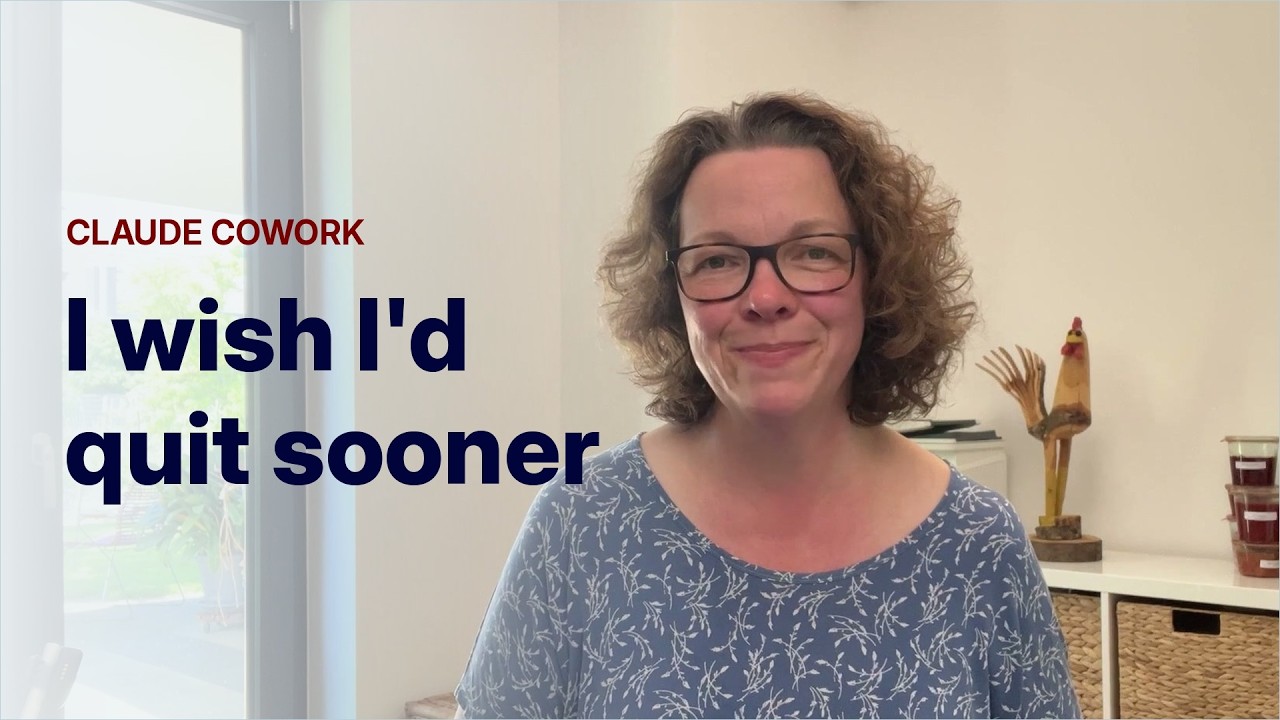
In this video, Julie, a freelance science writer with over three years of AI experience, shares her honest comparison between Claude CoWork and Claude Code, two AI tools by Anthropic. She explains that although she used Claude CoWork daily for several weeks and found it helpful in managing complex projects like building an online course, she ultimately decided to stop using it. Claude CoWork impressed her by handling files and flagging repetitive or tangential content, something no chatbot had done before. However, she encountered three major limitations that led her to switch to Claude Code.
The first major issue Julie faced with Claude CoWork was memory management. She found that copying documents and processes into different projects caused version drift, making it difficult to know which version was the most accurate or up-to-date. Additionally, Claude CoWork’s memory was siloed; it did not learn or transfer knowledge between chat sessions or projects, forcing her to repeatedly solve the same problems. This lack of integrated memory hindered her workflow significantly.
The second challenge was automation. Julie wanted Claude CoWork to help automate tasks proactively, but the tool required her to already have automations set up before it could assist. Since she didn’t know what automations were possible or how to start building them, she felt stuck in a loop where she couldn’t progress. This limitation made Claude CoWork feel like a tool with “training wheels” that prevented her from moving quickly or creatively.
The third and most important limitation was the inability to review and improve past sessions. Julie wanted a system where she could analyze what worked well and what didn’t across all her interactions, feeding that insight back into future sessions to continuously improve her workflow. Claude Code, unlike CoWork, supports this kind of iterative improvement, which Julie values highly. She describes Claude Code as part of a broader AI operating system she built, where all her files and workflows live in one place, enabling seamless, compounding progress.
Julie acknowledges that switching to Claude Code comes with some costs, such as a more intimidating terminal interface and the need for ongoing system upkeep. However, she emphasizes that Claude Code is included in existing paid plans and that the benefits far outweigh these downsides. She encourages users who want more power and flexibility not to be scared off by the word “code,” as interacting with Claude Code feels much like chatting with any AI. Ultimately, she recommends Claude CoWork for simple, safe tasks but advocates for Claude Code for anyone seeking a more capable, self-improving AI assistant.