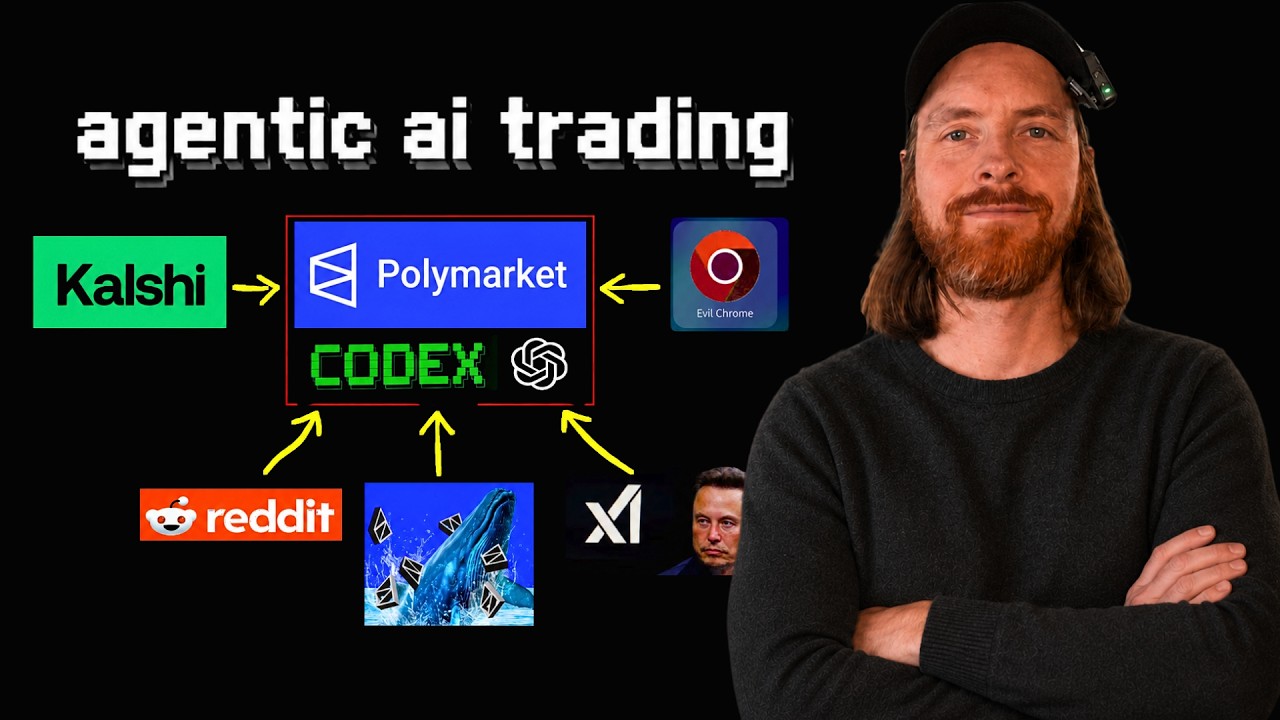
The video highlights the importance of a robust data pipeline combining multiple sources like market data, social media sentiment, and blockchain activity to provide fresh, relevant information for agentic AI trading models. By aggregating and analyzing this comprehensive data, the AI agent can identify high expected value trades, demonstrating that the quality of data input is more crucial to trading success than the AI model alone.
The video discusses the critical importance of having a robust data pipeline for agentic AI trading, particularly when using AI models like Codex from OpenAI to make informed bets on platforms such as Polymarket. The speaker emphasizes that AI models rely heavily on fresh, relevant data to function effectively, as they do not inherently understand real-world contexts without it. To illustrate this, the speaker walks through their own data pipeline setup, which integrates multiple data sources to provide comprehensive insights for trading decisions.
The data pipeline consists of five main sources: Kalshi for competitor market data, Reddit for sentiment analysis via browser automation, Polymarket whales to track large bets on the blockchain, Twitter (referred to as x.com) for social media sentiment, and Google searches for news and additional context. Each source feeds data into a master file, which consolidates all gathered information into a single unstructured text file. This aggregated data then serves as the foundation for the AI agent to analyze and identify promising trades based on calculated expected values.
The speaker demonstrates the pipeline in action by running a search for the keyword “Bitcoin,” showing how the system automatically collects and compiles data from all sources. The AI agent processes this data to generate a high-level trade context, noting mixed sentiments and significant activity from whales but no clear one-sided signal. The pipeline’s flexibility allows it to be adapted to various markets and keywords, making it a versatile tool for agentic AI trading.
An example trade on Formula 1 driver Kimmi Antonelli is shared, where the pipeline’s data-driven approach led to a successful bet with a 60% gain shortly after placement. Additionally, the AI agent identified a speculative trade on Bitcoin reaching $200k by the end of the year, which, despite being a long shot, was placed for fun to demonstrate the system’s capability to find high expected value opportunities. The speaker highlights that while the model is important, the quality and breadth of data feeding into it are what truly drive successful AI trading.
In conclusion, the video encourages viewers interested in AI automation and agentic trading to focus on building strong data pipelines that combine multiple data sources, including sentiment analysis and market activity. The speaker invites the audience to join their Discord community for further discussion and learning. The key takeaway is that success in AI trading hinges more on the data pipeline than on the AI model itself, as good data uncovers hidden opportunities and informs smarter trading decisions.