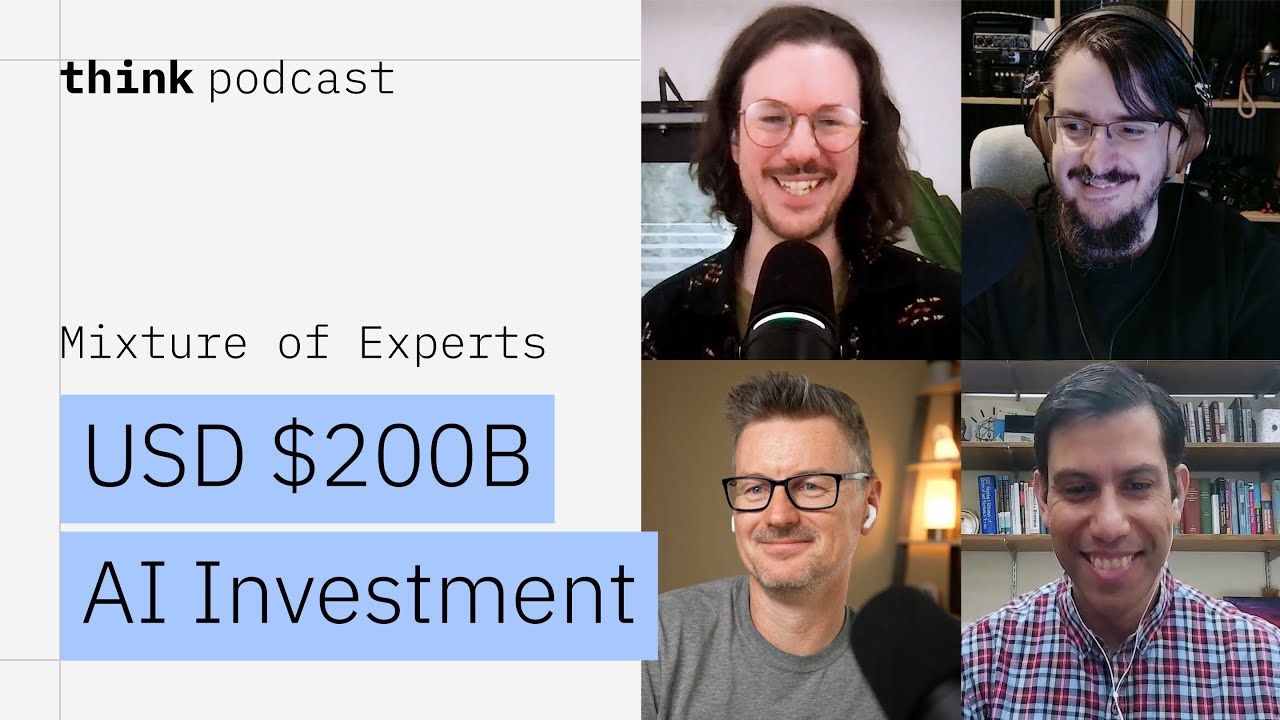
The episode of “Mixture of Experts” covers several major developments and concerns in the world of artificial intelligence, starting with India’s announcement of a $200 billion investment in AI infrastructure. This initiative, highlighted at the AI Impact Summit, aims to establish India as a global AI hub, with significant investments in data centers, undersea cabling, and clean power. The panel discusses the geopolitical and economic implications, noting that such a massive investment could shift the balance of technological power and foster greater digital sovereignty for India and the broader “global majority.” They also question whether the sheer size of the investment is as staggering as it seems, given the immense costs associated with large-scale AI operations.
The conversation then shifts to a remarkable experiment by Anthropic, where researcher Nicholas Carlini used 16 AI agents and $20,000 in API costs to build a fully functional 100,000-line C compiler in just two weeks. The panelists are both impressed and unsurprised, noting that similar agentic coding workflows have been quietly used by advanced practitioners for years. They emphasize that while AI can automate much of the coding process, human oversight remains crucial for orchestration, quality control, and ensuring the results align with project goals. The discussion also touches on the evolving role of humans in software development, with concerns about the diminishing need for junior developers and the potential for expertise erosion as AI takes over more complex tasks.
Security risks associated with AI agents and their “skills” (plug-ins or extensions) are another major topic. A recent report found that 36% of AI agent skills contain security vulnerabilities, ranging from poor credential handling to outright malicious payloads. The panel expresses significant concern, highlighting the parallels to supply chain attacks and the challenges of governing open skills marketplaces. They stress the need for robust governance, enterprise-level controls, and user education, noting that even with technical safeguards, the human element remains a persistent vulnerability. The tension between openness and security in skills marketplaces is identified as an unresolved issue, with suggestions that enterprises may need to adopt locked-down, vetted app stores for AI skills.
The episode also addresses the “AI ROI problem,” referencing a survey showing that most IT leaders are uncertain about the return on investment from their AI initiatives. Despite heavy spending, organizations struggle to measure the tangible value generated by AI, especially as costs are often fragmented across departments and shadow IT projects. The panel notes that this cycle of initial hype followed by ROI scrutiny is common with new technologies, but AI’s rapid evolution and complex impact make it particularly challenging to quantify benefits. They discuss the potential for value-based pricing models—charging for outcomes rather than usage metrics like tokens—as a future direction for the industry.
Throughout the discussion, the panelists reflect on the broader societal and existential questions raised by AI’s rapid advancement. They express both excitement and unease about the pace of change, the shifting nature of human work, and the need for new forms of governance and measurement. The episode concludes with a consensus that while AI is transforming knowledge work and business processes at an unprecedented rate, organizations and individuals must remain vigilant about security, governance, and the preservation of human expertise as they navigate this new landscape.