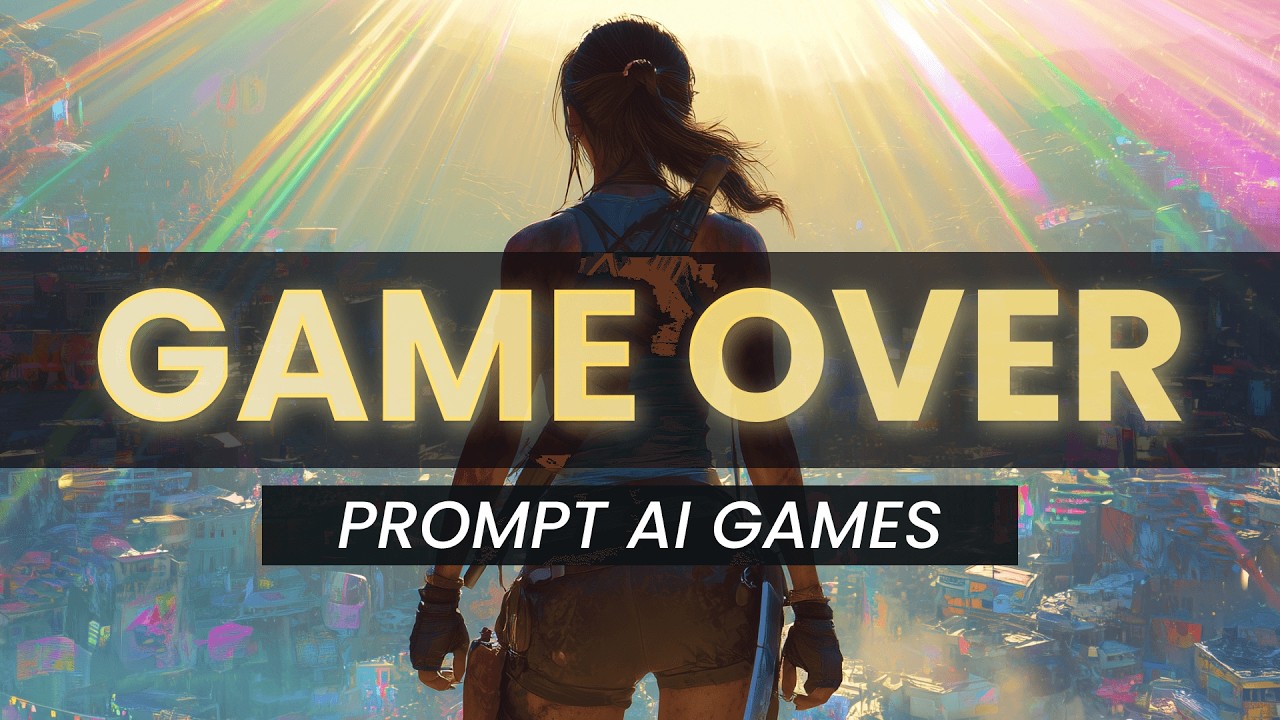
The video introduces Mirage 2, a groundbreaking free AI platform developed by Dynamic Labs that allows users to upload any image and transform it into an explorable, real-time game-like simulation. Unlike traditional games, Mirage 2 operates without a game engine or pre-coded physics; instead, it uses a neural network to generate every pixel dynamically based on user input. Players can navigate these worlds using a keyboard or game controller and influence the environment and events through text prompts, making it a highly interactive and creative experience accessible directly in a web browser.
The creator demonstrates various examples, including a Red Dead Redemption-style world, a Lara Croft-inspired environment with impressive water physics, and surreal settings like alien worlds filled with purple jellyfish or Ghibli-style anime landscapes. Users can upload personal photos, drawings, or famous paintings like Van Gogh’s Starry Night to explore these images as immersive, explorable worlds. While the platform shows impressive visual consistency and environmental cohesion, it currently has limitations such as short session durations, inconsistent character behavior, and a lack of narrative or mission objectives.
Mirage 2’s potential extends beyond entertainment, with significant implications for training, simulation, and scientific research. The video highlights how such AI-driven real-world models could revolutionize combat and disaster response training, robotics development, and hypothesis testing across disciplines like psychology, sociology, and climate science. The ability to create detailed, interactive simulations from simple prompts opens new avenues for rapid experimentation and knowledge generation, positioning this technology as a critical tool for future innovation.
The video also compares Mirage 2 to Google’s Genie 3, noting that while Genie 3 offers better environmental consistency and recursive world simulations, it remains a research preview unavailable to the public. Mirage 2, by contrast, is accessible now and free to use, though it has some rough edges like character morphing and scene inconsistencies. The creator provides a step-by-step guide on how to upload images, input prompts, and control the simulation, encouraging viewers to experiment with their own creations and explore the platform’s capabilities.
In conclusion, the video emphasizes that open-world AI simulations like Mirage 2 represent a major leap forward in AI technology, moving beyond short AI-generated clips to fully interactive, dynamic worlds. This technology promises to transform gaming, filmmaking, virtual tourism, and many other fields by enabling users to create and explore complex realities with ease. The creator invites viewers to subscribe for future updates and explore additional AI gaming projects, underscoring the exciting and rapidly evolving landscape of AI-driven interactive experiences.