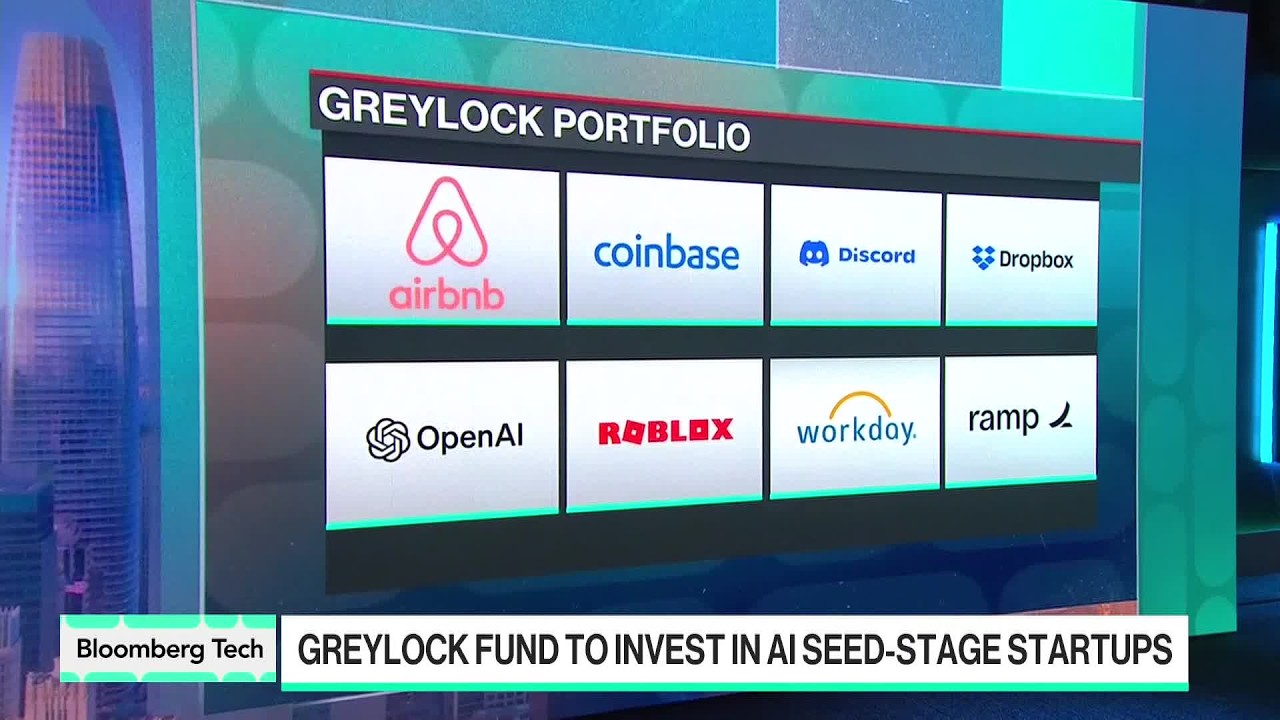
Greylock has launched its eighteenth fund, a $1.5 billion early-stage fund dedicated to AI entrepreneurs. With a six-decade history of partnering with successful companies like Airbnb and Facebook, Greylock is now focusing on backing a new generation of AI startups. The firm has a strong track record in AI, having invested early in companies such as Base Ten, Crest AI, Anthropic, and OpenAI, which are leaders in AI inference, customer service AI, and foundational AI models respectively. Greylock views the current AI wave as being in its early stages, comparable to the mobile revolution around 2008-2009, with many defining AI companies yet to emerge.
Greylock’s investment strategy targets three key layers within the AI ecosystem: the model layer, infrastructure, and applications. While continuing to invest in frontier model developers like Anthropic and OpenAI, Greylock sees significant opportunities in AI infrastructure, particularly around the development of agent-based cloud services. These new infrastructure companies will support AI workloads similarly to how cloud and hyperscaler companies evolved. On the application front, Greylock is backing startups that leverage AI agents to automate complex tasks, such as Resolve AI, which builds autonomous on-call engineer agents that handle incidents without human intervention.
The discussion also touched on recent developments in the AI model landscape, including the release of Kimi K3, a large open-weight model from China with 2.8 trillion parameters. While the model shows strong initial results and efficiency innovations, Greylock’s perspective is cautious. Benchmarks can be misleading, and real-world performance and cost-effectiveness take time to evaluate. Contrary to some narratives, Kimi K3 is reportedly more expensive per token than its predecessor and less token-efficient compared to models from OpenAI and Anthropic, suggesting that it may not immediately disrupt the current market leaders.
Regarding the valuation and competitive moat of leading AI companies like Anthropic and OpenAI, Greylock emphasizes multiple advantages beyond just model quality. These companies generate significant revenues from both API services and first-party AI products, making them full-stack AI companies. The best model does not necessarily win outright; factors such as product integration, revenue generation, and ongoing innovation play critical roles. Greylock anticipates continued advancements from these frontier labs, with new model releases expected soon that will likely maintain their competitive edge.
Finally, Greylock highlights the massive growth potential of the AI token economy. OpenAI’s API token processing has already grown 50-fold in under three years, and projections suggest the token economy could be 100 times larger by 2030. This enormous expansion will create ample opportunities for leading closed models, open-source AI, and application developers alike. Greylock cautions against underestimating the scale and impact of the AI wave, signaling a long-term, multi-faceted growth trajectory for the industry.