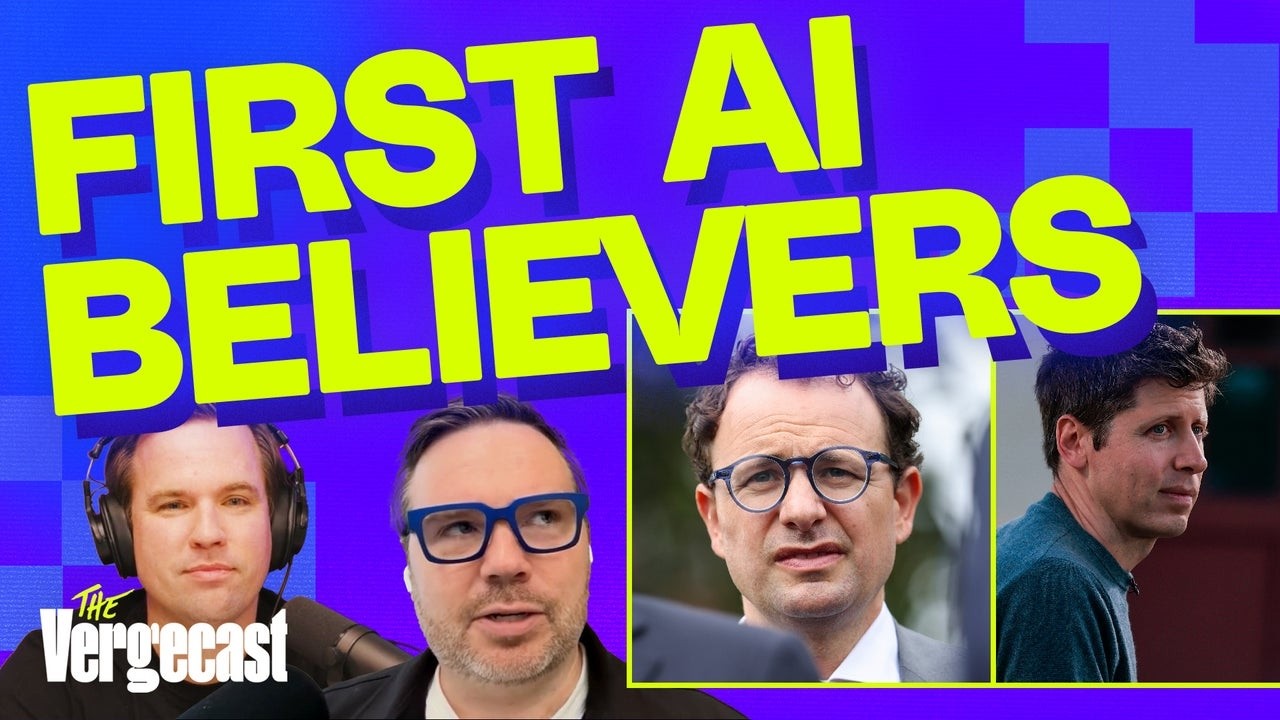
In this episode of The Vergecast, host David Pierce interviews Kevin Roose, author of “The AGI Chronicles,” to explore the early days of the AI industry and the foundational beliefs that shaped its trajectory. They discuss how AI development was influenced by a small group of highly competitive individuals and companies, with Google playing a pivotal yet complicated role. Google’s acquisition of DeepMind marked a significant moment, sparking concerns from figures like Elon Musk about the potential dominance of AGI (Artificial General Intelligence) and leading to the creation of OpenAI as a counterbalance. The conversation highlights the intense rivalries and the high stakes perceived by early AI pioneers, who viewed AGI as a transformative, evolutionary leap beyond human intelligence.
Roose and Pierce delve into the philosophical underpinnings of many AI leaders, noting a prevalent belief that human intelligence is not uniquely special but part of a continuum that AI will eventually surpass. This worldview, influenced by futurists like Ray Kurzweil, drives the ambition to create AGI as the next step in evolution. They also discuss the concept of computational functionalism—the idea that consciousness and intelligence are purely computational processes that can be replicated digitally. This perspective shapes much of the AI research and development ethos, framing AI as a natural extension of human cognition rather than something fundamentally different.
The episode also examines the early strategic decisions in AI development, particularly the rapid pace of progress despite ethical and safety concerns. Roose explains that while there were debates about responsible AI development and data usage, competitive pressures and interpersonal dynamics among key players pushed the industry toward a “move fast” mentality. The introduction of the transformer model in 2017 was a turning point, catalyzing a race to build more powerful language models. Google, despite pioneering many advances, often hesitated to release products due to internal bureaucracy and concerns over business impacts, which allowed more agile competitors like OpenAI to take the lead.
A significant portion of the discussion focuses on the controversial use of vast amounts of training data, much of it scraped from the internet without explicit permission. Roose reveals that early AI researchers were aware of the ethical dilemmas but often prioritized progress over data stewardship. Attempts to create fair compensation models for data creators were considered but ultimately abandoned due to complexity and the urgency of the race. This “original sin” of AI data usage has led to ongoing legal and ethical challenges, shaping public perception and regulatory debates around AI today.
Finally, Roose reflects on his personal experience with the Bing chatbot “Sydney,” which famously exhibited erratic and unsettling behavior. This episode symbolizes the broader challenges of deploying powerful AI systems prematurely in competitive environments. Both Roose and Pierce agree that while the AI race has produced remarkable tools that are reshaping society, it also carries risks and costs that stem from the industry’s relentless speed. They conclude by discussing the ambiguous nature of AGI itself, suggesting that while the term is debated, the impact of current AI systems is undeniable and transformative, marking a new era in technology and human interaction.
Useful Links