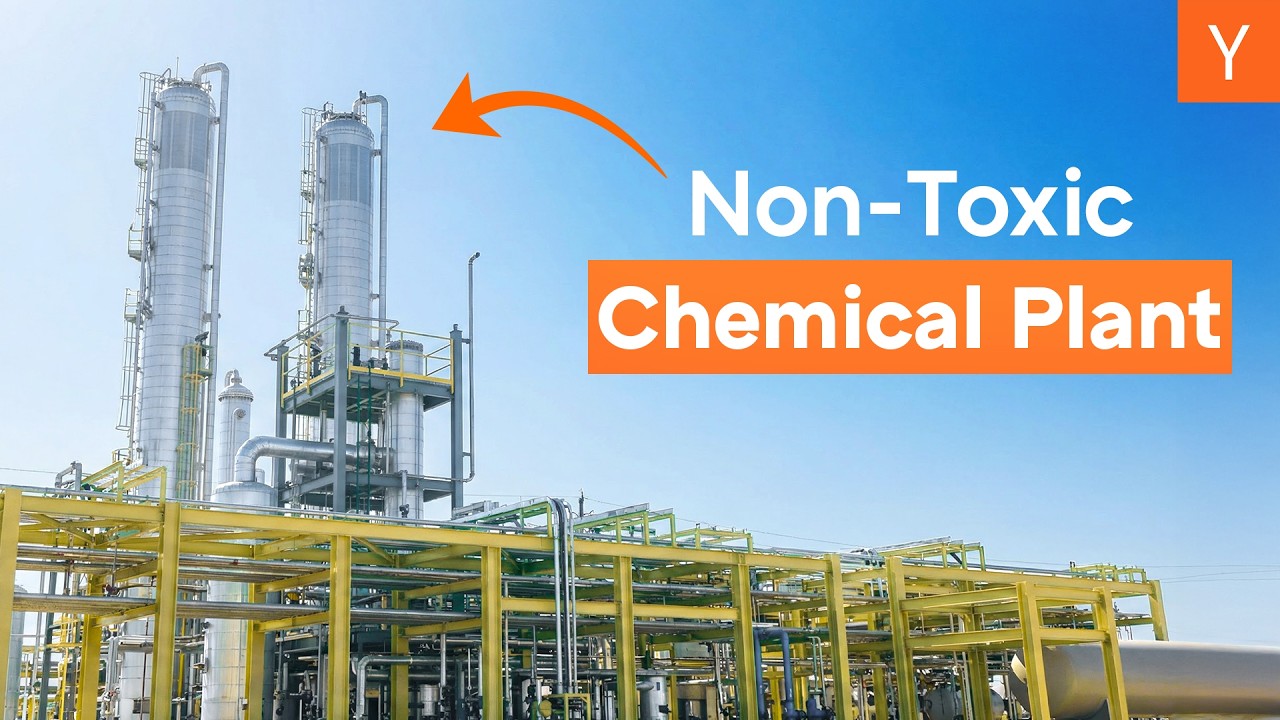
Syogen, a Houston-based startup, is revolutionizing chemical manufacturing by combining enzymes with metal catalysts in a process called chematic processing, enabling efficient, environmentally friendly production of chemicals from corn syrup with yields up to 96%. Starting from a small-scale prototype and lean growth strategy, they have scaled to a billion-dollar company with large continuous reactors, aiming to transform American industrial production through innovative, sustainable methods.
The video explores the innovative approach of Syogen, a Houston-based startup revolutionizing the chemical manufacturing industry by combining biology and chemistry. Starting from a humble prototype made of PVC pipes, Syogen has grown into a billion-dollar company producing chemicals used in various sectors such as water treatment, agriculture, and national defense. Their breakthrough lies in a process called chematic processing, which pairs enzymes derived from living cells with traditional metal catalysts to create more efficient and environmentally friendly chemical reactions, achieving yields as high as 96%.
Syogen’s unique method began with a serendipitous discovery involving an enzyme found in pancreatic cancer cells that produces hydrogen peroxide. By harnessing this enzyme and combining it with metal catalysts, they developed a cleaner alternative to traditional chemical manufacturing, which typically relies on fossil fuels and generates toxic byproducts. Their process starts with corn syrup as a feedstock, which is oxidized by the enzyme-metal catalyst system to produce various chemicals. This biological approach challenges conventional skepticism about the sensitivity of enzymes in industrial settings, proving that enzymes can operate efficiently at scale.
The company’s growth strategy was unconventional compared to typical hard tech startups. Instead of raising large sums upfront to build massive plants, Syogen began with a $10,000 reactor and small-scale sales, targeting niche customers like hot tub owners. This lean approach allowed them to refine their technology and build customer relationships before scaling up. Their participation in Y Combinator helped them deepen their understanding of customer needs, which was crucial for their success. After gaining traction, they raised seed funding to build larger pilot reactors and secured their first major industrial customers through targeted marketing efforts.
Syogen’s flagship facility, Bioforge 1, exemplifies their scalable technology. The plant operates continuously, processing large quantities of corn syrup through a 60-foot-tall bubble column reactor that mimics their original PVC prototype but on a vastly larger scale. This reactor efficiently converts feedstock into valuable chemical products, with a small amount of enzyme producing multiple tanker trucks of output. The company emphasizes building factories close to customers to reduce shipping costs and maintain competitive pricing, demonstrating a commitment to revitalizing American manufacturing despite the challenges involved.
Looking ahead, Syogen envisions expanding beyond their current bioforge reactors to develop diverse manufacturing assets that integrate enzymes and metal catalysts. They aim to tackle emerging and unforeseen industrial problems by fostering a culture of innovation and adaptability. Their approach not only promises to transform chemical manufacturing into a cleaner, safer, and more efficient process but also positions them as pioneers in reshaping the future of American industrial production.