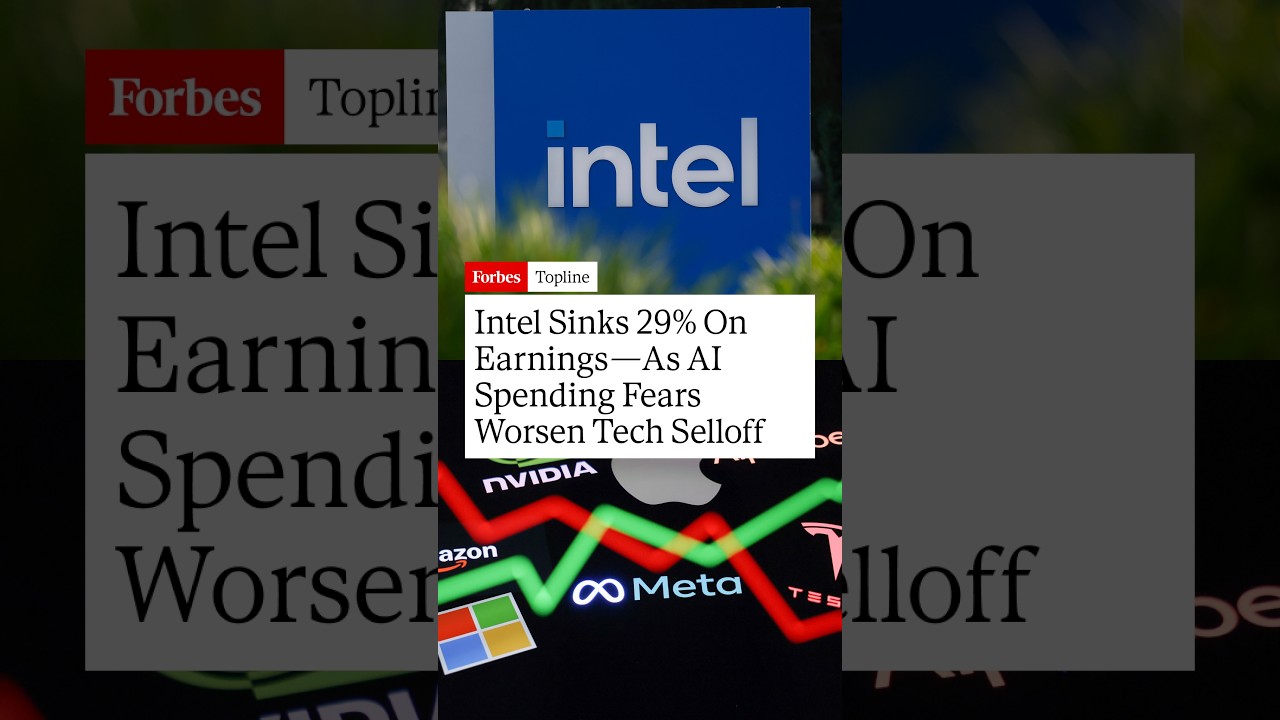
Intel and Amazon experienced significant stock declines following disappointing earnings reports, contributing to a broader selloff in the tech sector after a brief three-day rally. Intel’s shares plunged 29% at market open after forecasting revenue below expectations, while Amazon’s stock fell 7% pre-market before settling around a 3% decline post-opening bell. Both companies reported lower-than-expected revenues and substantial capital expenditures, with Amazon revealing over $77 billion in spending for the third quarter. These results intensified investor concerns about the massive investments tech giants are making in artificial intelligence (AI) infrastructure.
The tech selloff was further exacerbated by Alphabet’s poor revenue figures reported earlier in the week, which led to a nearly $500 billion loss in market value—the second-largest daily drop in stock market history. Following Alphabet’s decline, other major tech companies including Nvidia, Tesla, Meta, Apple, and Microsoft also saw their shares fall between 1% and 3%, despite some posting strong earnings. This widespread downturn reflects growing unease among investors about the sustainability and profitability of the heavy AI-related expenditures across the industry.
Intel’s earnings report highlighted the company’s forecasted revenue for the current quarter to be between $15 billion and $16 billion, falling short of the $17 billion expected by analysts. The company also emphasized its commitment to significant, long-term investments in research, development, and manufacturing facilities, acknowledging the inherent risks that these investments may not yield favorable returns. Notably, the U.S. government acquired a roughly 10% stake in Intel in August 2025, valued at approximately $32 billion, underscoring the strategic importance of the company.
Investor anxiety around AI spending has been mounting following mixed earnings reports from other tech giants. Tesla reported flat revenue and lower-than-expected capital expenditures, raising doubts about the pace of its AI and robotics initiatives. Conversely, Meta’s substantial capital expenditures of nearly $35 billion for the quarter heightened concerns about the scale of AI investments. These contrasting results illustrate the varied approaches and investor perceptions regarding AI development within the tech sector.
Overall, the tech industry’s massive AI spending—estimated at $900 billion this year according to JP Morgan Global Research—is fueling uncertainty among investors. While some companies are aggressively investing in AI infrastructure, the financial returns and timelines remain unclear, leading to volatility in tech stocks. The recent earnings reports from Intel, Amazon, Alphabet, Tesla, and Meta have collectively deepened concerns about the risks associated with these large-scale AI investments, contributing to the ongoing tech sector selloff.
Useful Links