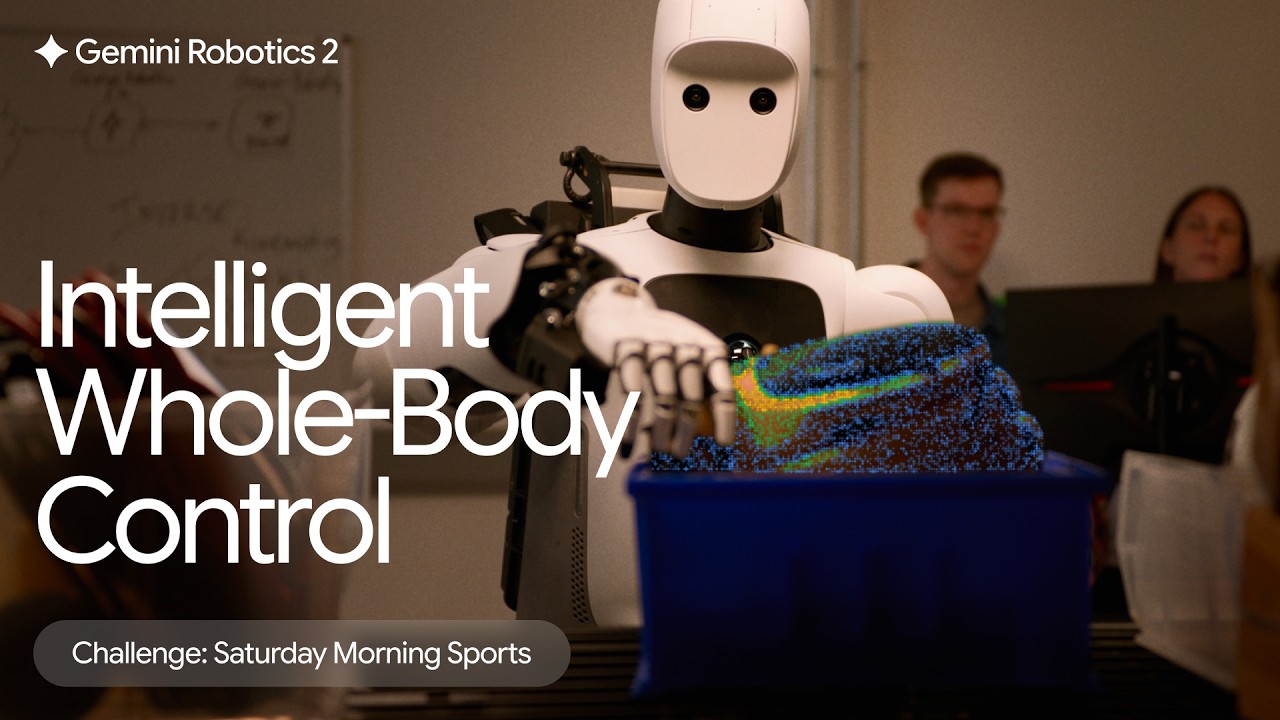
The video showcases Gemini Robotics’ advanced embodied reasoning model integrated with the VLA system, enabling robots to coordinate whole-body movements, understand natural language, and adaptively perform complex tasks in human environments. It emphasizes the importance of AI in enhancing robotic fluidity, balance, and problem-solving, demonstrating practical applications like packing sports equipment and handling challenging object manipulation.
The video introduces the complexity of human body movement, highlighting how humans naturally coordinate numerous muscles and joints to perform tasks seamlessly. In contrast, robots face significant challenges in achieving similar fluidity and coordination. The environment is designed for humans, making it even more difficult for robots to navigate and interact effectively.
Gemini Robotics presents an advanced embodied reasoning model that enables robots to understand their surroundings, interpret natural language instructions, and execute complex tasks. This model integrates with the VLA (Vision Language Action) system, which controls the robot’s movements by coordinating all joints and actuators from feet to fingertips. The robot must maintain balance and adjust its posture dynamically, such as pushing its legs backward if it leans too far forward, all within fractions of a second.
The video demonstrates the robot performing a seemingly simple task—packing sports equipment for children—by identifying objects in a cluttered environment, selecting the correct items, and placing them appropriately. The robot is capable of recognizing when it fails and can attempt the task again, showcasing adaptability and problem-solving skills. This highlights the robot’s generalist capabilities in handling real-world scenarios.
A further challenge is introduced where the robot must locate a tall bag placed on the floor, pick it up, and place it on a table. This task is designed to test the robot’s reactivity and whole-body control, emphasizing the importance of these capabilities for robots to perform a wide range of useful tasks in everyday environments. The ability to coordinate the entire body is essential for achieving practical and versatile robotic assistance.
The video concludes with enthusiasm about the rapid advancements in robotics and the critical role of artificial intelligence in overcoming existing limitations. AI is described as the missing piece that completes the robotics puzzle, enabling robots to become more intelligent, responsive, and capable of performing complex tasks autonomously in the real world.