The video provides a comprehensive introduction to integrating artificial intelligence (AI) with SQL databases to enhance intelligent projects. It begins by demystifying AI, emphasizing that AI is simply another technology stack rather than magic or a world-ending force. The speaker shares personal experiences from early IT certifications to highlight how technology stacks evolve rapidly, cautioning against viewing any single technology, like JavaScript, as the ultimate or permanent solution. The discussion then shifts to practical considerations, reassuring viewers that powerful computers are not always necessary for AI projects, especially when using lightweight tools like Python 3 and SQLite, which can run on minimal hardware such as Raspberry Pi devices.
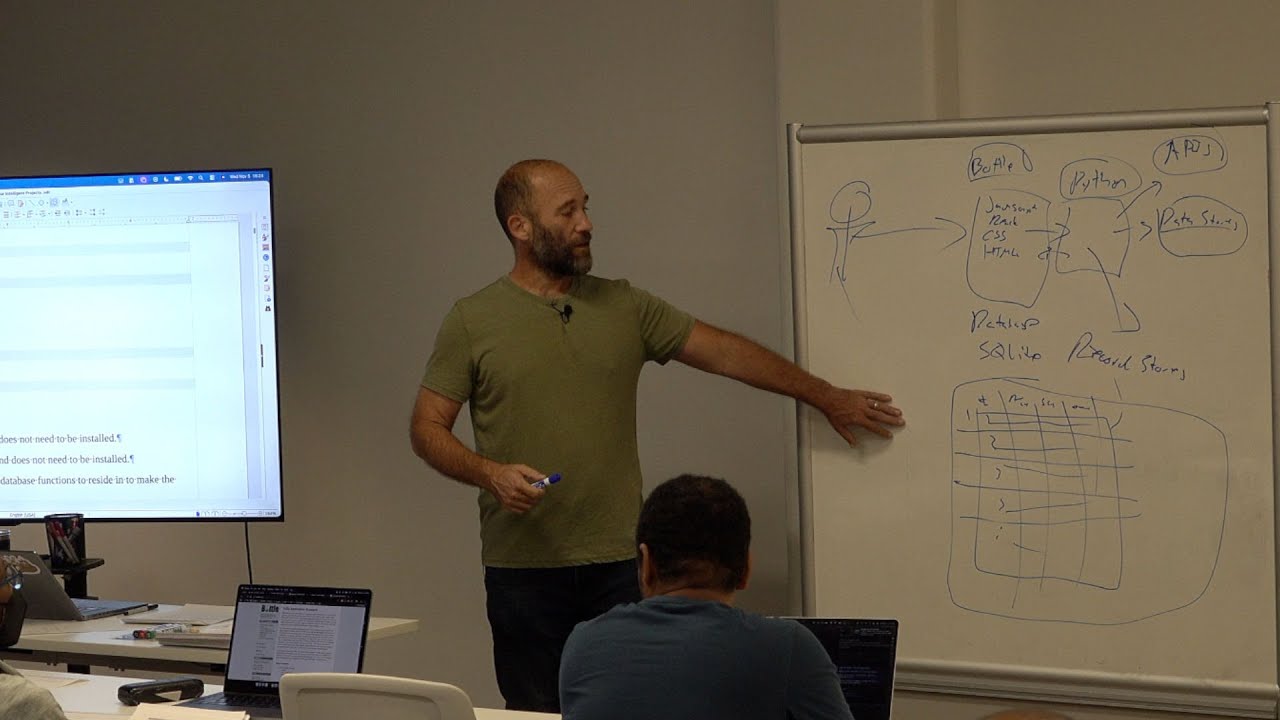
Next, the video delves into the architecture of AI systems, explaining the roles of front-end interfaces, back-end programming languages (primarily Python), APIs, and data stores. The focus is on relational databases, particularly SQLite, which is used to store records such as user queries and AI responses. The speaker explains the concept of relational databases, including tables, columns, records, and the importance of schema design. He contrasts relational databases with NoSQL databases, highlighting the benefits of planning and schema enforcement in relational systems. The video also covers basic SQL commands and SQLite-specific nuances, such as its lack of security features and flexible data typing, which make it suitable for testing but less ideal for production environments.
The tutorial then demonstrates how to use Python to interact with SQLite databases and AI models, specifically the Olama framework for local large language models (LLMs). It shows how to create tables, insert data safely to prevent SQL injection, and retrieve data for reporting purposes. The speaker emphasizes the importance of combining simple components—AI queries, database storage, and web app frameworks like Bottle—to build functional applications. Examples include logging user queries and AI responses, generating HTML reports from database records, and managing user-defined rules that influence AI behavior. The discussion also touches on prompt engineering and context windows, explaining how LLMs process tokens and how context size affects performance and accuracy.
Further, the video explores advanced features such as caching and memory in AI applications. Caching is presented as a strategy to reduce resource consumption by storing previous AI responses in the database, allowing repeated queries to be answered quickly without reprocessing. Memory is implemented by storing recent interactions to provide context for follow-up questions, enabling more natural conversations with the AI. The speaker acknowledges the challenges of managing memory and context windows, including potential confusion in responses and the trade-offs between memory size and system performance. These concepts are illustrated with Python code examples that integrate memory retrieval into AI query processing.
Finally, the video covers image-related AI applications using the Olama Lava model and OpenAI’s DALL·E API. It demonstrates how to create a searchable image gallery by automatically generating descriptions for images stored in a folder and saving these descriptions in a database. A Bottle web app is used to provide a user interface for searching and displaying images based on their AI-generated metadata. The tutorial also shows how to generate new images via OpenAI’s API, save them locally, and maintain taxonomy for easy retrieval. Throughout, the speaker stresses practical considerations such as file management, security, and the importance of designing scalable, maintainable systems. The session concludes with reflections on the evolving nature of AI technology and the value of combining multiple simple tools to build sophisticated intelligent applications.