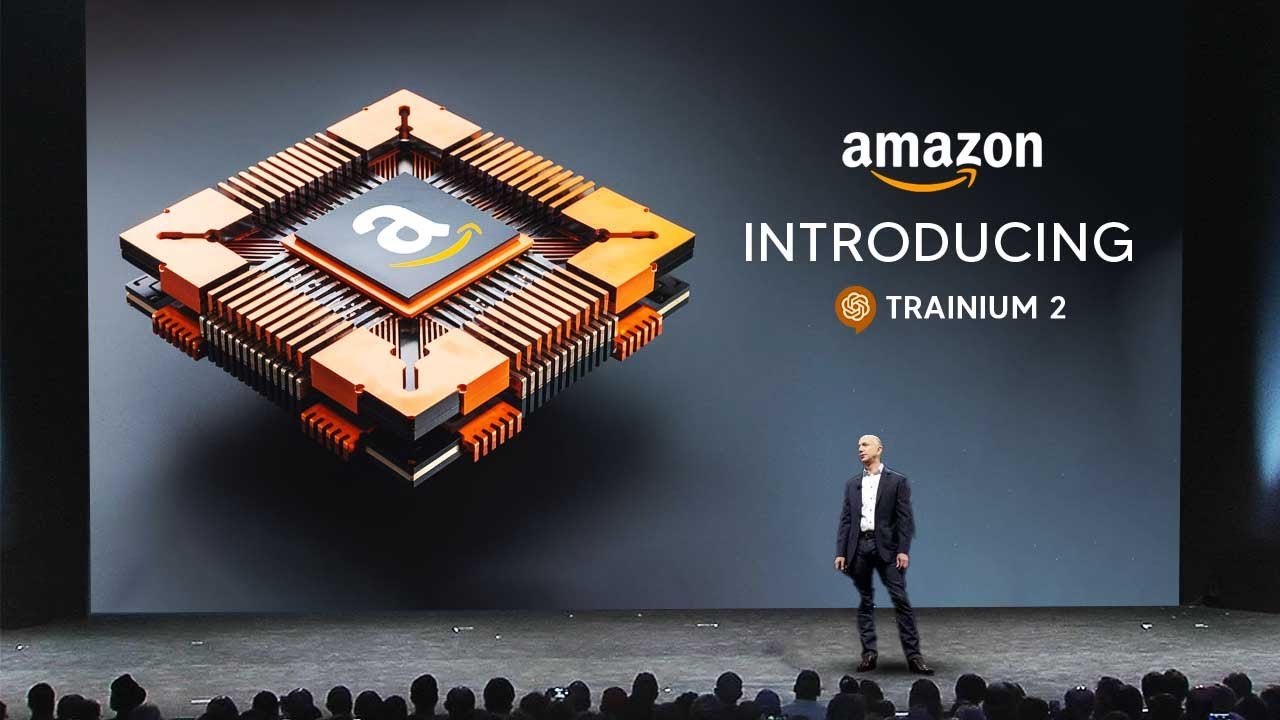
Amazon is making significant strides in the AI hardware market with the development of its new AI chip, Trainium 2, aiming to challenge Nvidia’s dominance. The company has chosen an unconventional setting for its research and development, opting for a practical and hands-on environment in North Austin, Texas, rather than a polished corporate facility. This approach fosters a scrappy, innovative culture reminiscent of early startups, allowing engineers to experiment and iterate quickly. The lab’s atmosphere, filled with scattered components and a DIY spirit, reflects Amazon’s commitment to rapid development and practical problem-solving.
Trainium 2 boasts impressive technical specifications, claiming to deliver four times the performance of its predecessor while incorporating three times more memory. Amazon plans to connect up to 100,000 of these chips, significantly enhancing computing power. The design of Trainium 2 has been simplified compared to the first generation, reducing the number of chips per box and streamlining the cooling system. This innovative design not only simplifies maintenance but also prepares for future advancements in chip technology, showcasing Amazon’s forward-thinking approach.
The competitive landscape reveals that Nvidia, once a niche chip maker, has transformed into a leading tech giant due to the AI boom. However, the company is struggling to meet the soaring demand for its high-cost AI chips, creating a sense of urgency among major cloud providers like Amazon, Microsoft, and Google to develop their own alternatives. Amazon’s history in cloud computing and its systematic reduction of dependence on major tech suppliers position it uniquely in this evolving market. The stakes are high, as the AI chip market is valued at over $100 billion, and Amazon is investing heavily to secure its place.
Amazon’s strategy with Trainium 2 is multifaceted, focusing on practical applications and partnerships. The company is initially deploying these chips for its own AI operations, allowing for real-world testing while reducing reliance on Nvidia. Partnerships with companies like Databricks and Anthropic are crucial, as they provide valuable feedback and help refine the technology. Amazon’s approach emphasizes value over speed, claiming that Trainium 2 can deliver 30% better performance for the cost compared to competitors, which could attract more users to its ecosystem.
Despite these advancements, Amazon faces a significant challenge in making its software ecosystem as robust as Nvidia’s. While Nvidia offers a comprehensive suite of tools that simplifies the development process, Amazon’s Neuron SDK is still in its early stages. This complexity poses a barrier to adoption, as companies must invest considerable time and resources to ensure compatibility with Amazon’s chips. To overcome this hurdle, Amazon is collaborating with early adopters to refine its software, recognizing that bridging the complexity gap is essential for the success of Trainium 2 in the competitive AI chip market.