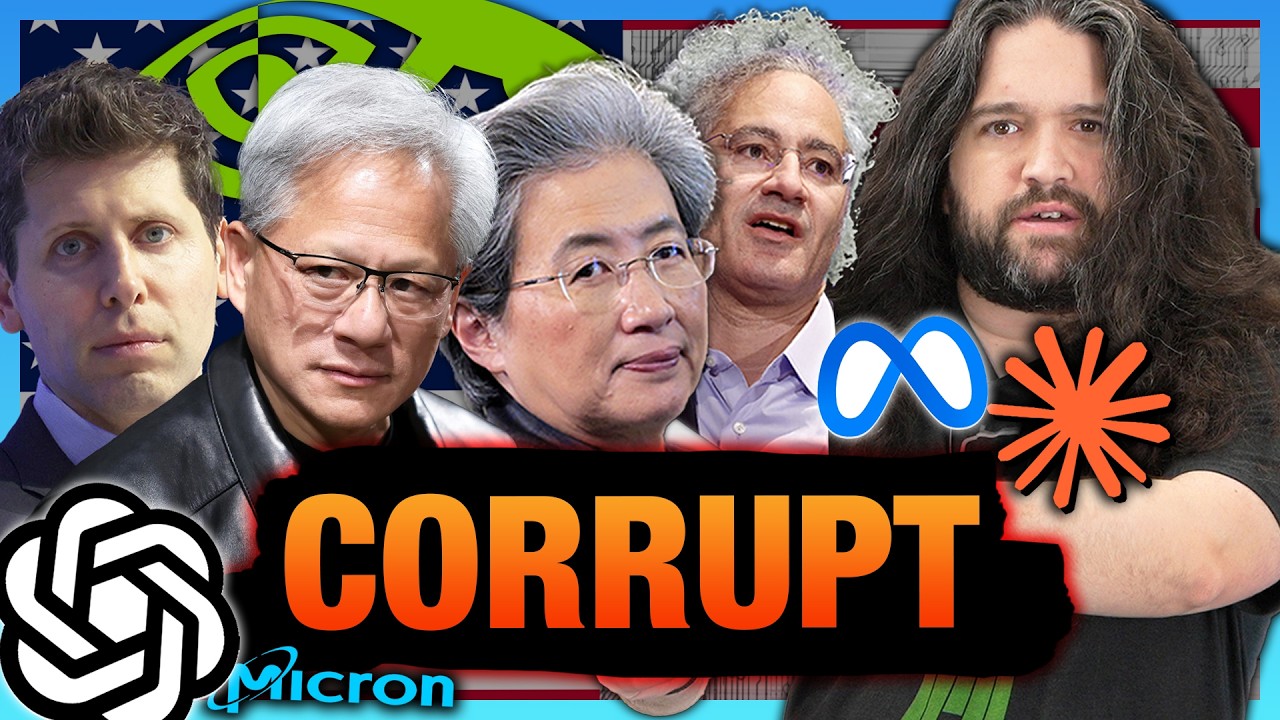
The video investigates how major tech and AI companies, including Nvidia, AMD, Intel, Micron, OpenAI, and others, are deeply intertwined with U.S. politics, particularly through substantial financial contributions, lobbying, and close relationships with government officials. These companies have donated millions to political action committees (PACs) and super PACs, such as MAGA Inc., which is closely controlled by former President Trump. This financial influence has resulted in favorable policies, including reduced export controls, tax breaks, and relaxed environmental regulations that benefit these corporations but often come at the expense of consumers and the public interest.
Key tech CEOs, such as Nvidia’s Jensen Huang, AMD’s Lisa Su, and OpenAI’s Sam Altman, maintain close personal and professional ties with political leaders, including Trump and his administration. These relationships have led to lucrative government contracts, especially in AI and military applications, and have helped shape policies that accelerate AI development with minimal regulatory oversight. The companies advocate for self-regulation of AI, promoting a voluntary “Super Intelligence Accord” where billionaires police themselves, a move criticized as insufficient given the potential risks of AI technology.
The video highlights the complex web of financial and political maneuvering, including donations to super PACs that support candidates aligned with tech interests, and the use of stock donations to programs like the Trump Accounts for Children, which may serve as tax write-offs and political favors. It also discusses how tech money influences elections, citing the example of Kentucky Representative Thomas Massie’s primary defeat, which involved significant spending from tech-aligned PACs. This dynamic illustrates how tech companies use their financial power to shape political outcomes and policy decisions in their favor.
Beyond AI and hardware companies, the video touches on the involvement of gaming companies like EA and Epic Games in political and financial dealings, further demonstrating the pervasive influence of tech across various sectors. The narrative portrays a landscape where corporate interests dominate policymaking, often sidelining consumer interests and public welfare. The video argues that this level of corporate-government collusion represents a new form of corruption, with tech companies effectively buying influence to maintain and expand their market dominance.
In conclusion, the video calls attention to the unprecedented scale of political spending and lobbying by tech and AI companies, warning of the consequences for democracy, regulation, and society. It critiques the current approach to AI oversight, which relies heavily on self-policing by the industry, and underscores the need for greater transparency and accountability. The video also promotes awareness and encourages viewers to engage with independent media and technical knowledge as a way to counterbalance the growing power of these tech giants in shaping the future.
Useful Links