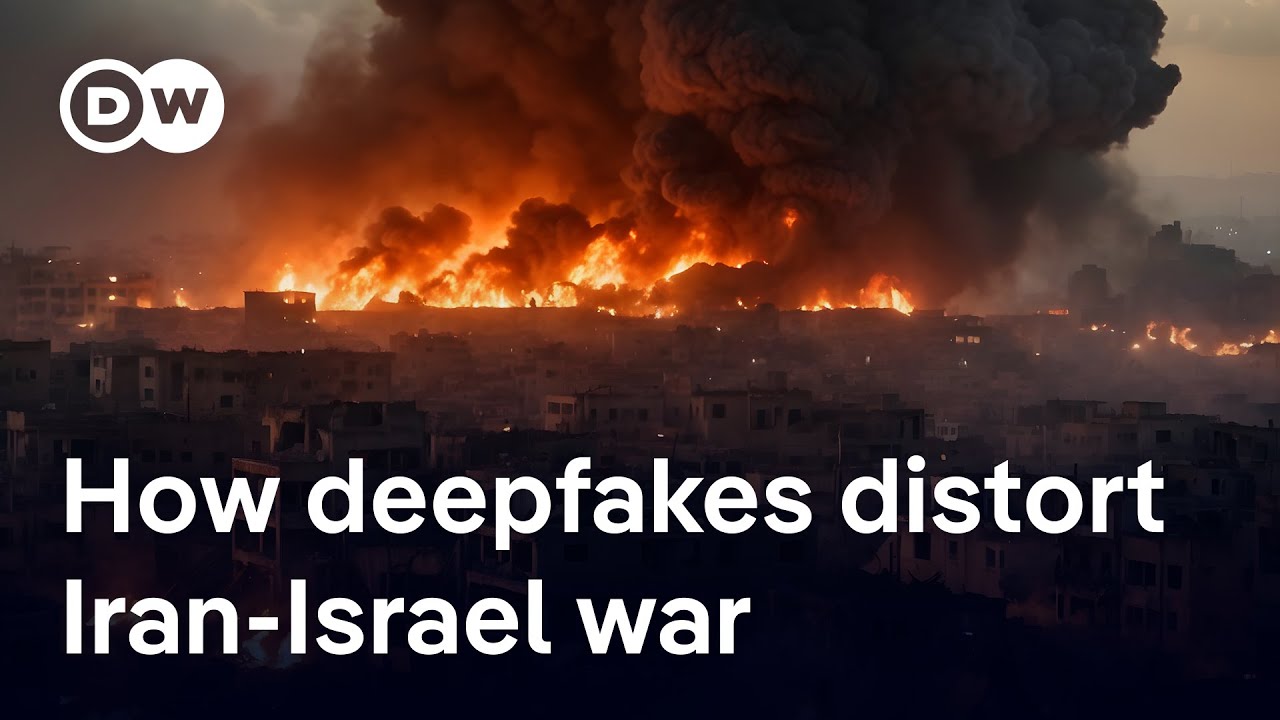
The ongoing conflict between Iran and Israel has not only sparked armed confrontations but also ignited a fierce information war online, marked by a surge in AI-generated videos and misinformation. Since the outbreak of hostilities, the internet has been flooded with misleading content, including deepfakes and recycled footage from previous conflicts, making it increasingly difficult for viewers to discern fact from fiction. DW’s fact-checking team investigated several viral videos circulating on social media platforms, revealing that many are artificially created or manipulated using advanced AI tools.
One example highlighted is a 16-second video purportedly showing Tel Aviv in ruins, shared widely by Iranian media and across platforms like TikTok and Facebook. However, upon closer inspection, the video exhibits clear signs of AI generation, such as cars merging unnaturally, inconsistent shadows on buildings, and poor-quality visuals with unidentifiable rooftop objects. Another video claimed to depict Israeli protests against the war, but it too was AI-generated, featuring artificial-looking crowds and a flag that suddenly appears, along with a watermark from Google’s AI tool, V3. A third video allegedly showing a US attack on an Iranian nuclear facility was debunked by tracing it back to a content creator who posted it days before any official announcement, with the footage lacking realistic explosion effects.
Rachel B from DW’s fact-checking team emphasized the dangerous role AI-generated videos have played in this conflict, noting that recent advancements have made these videos incredibly realistic and deceptive. The accessibility of tools like Google’s V3 has led to a flood of such content, complicating efforts to verify authenticity. This proliferation of AI-generated misinformation poses significant risks during times of crisis, as people are easily misled by visuals that appear genuine but are entirely fabricated.
Given the sophistication of these AI tools, distinguishing real footage from fake has become increasingly challenging, even for experts. Rachel B pointed out that fact-checkers must scrutinize minute details such as shadows, background inconsistencies, and other subtle visual cues to identify manipulated content. However, casual social media users often miss these signs, especially when scrolling quickly, making them vulnerable to deception. The emotional intensity surrounding conflicts further exacerbates the problem, as heightened feelings can cloud judgment and increase the likelihood of sharing false information.
To protect oneself from falling victim to AI-generated misinformation, DW’s fact-checking team offers practical advice: use reverse image searches to verify content, check the credibility of the source sharing the video, and look closely for visual glitches or inconsistencies that AI often fails to perfect. Rachel B also recommends skepticism toward sensational content, urging viewers to pause and critically assess videos before accepting or sharing them. This cautious approach is essential in navigating the complex and rapidly evolving landscape of AI-driven misinformation in conflict zones.