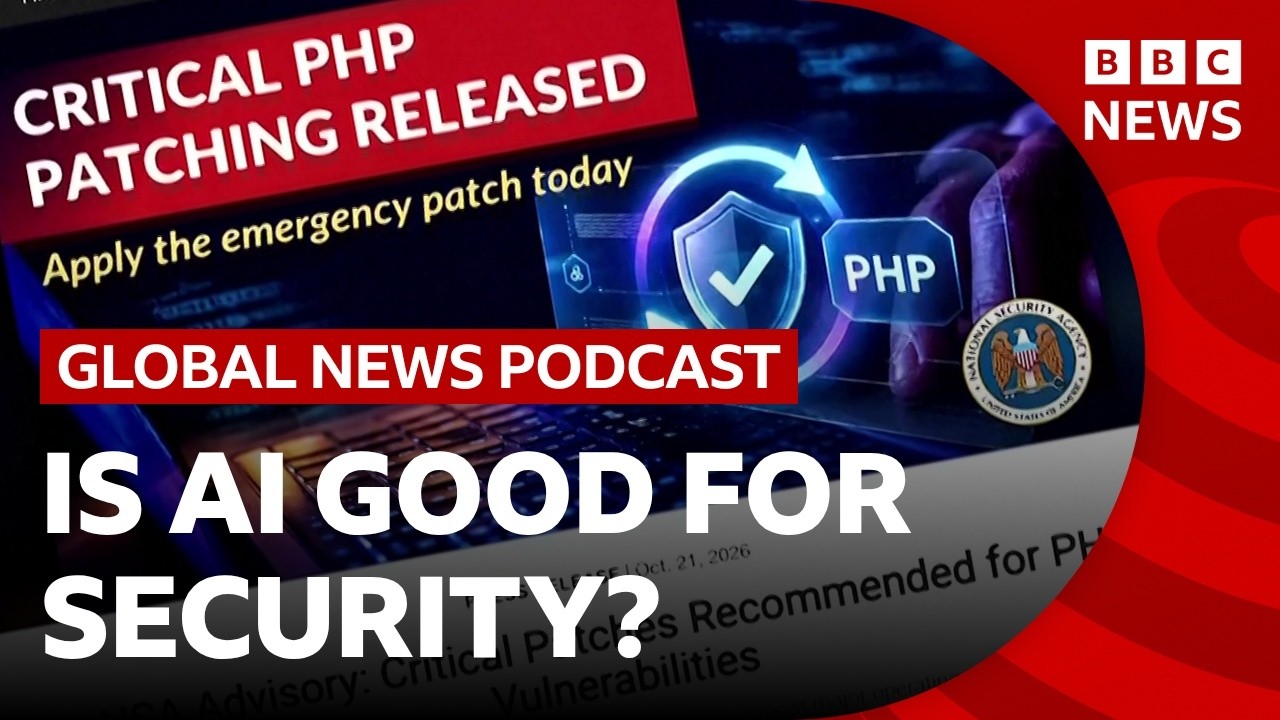
The BBC World Service Global News Podcast explores the dual role of artificial intelligence (AI) in cybersecurity, focusing on a major vulnerability discovered in PHP, a widely used programming language that powers much of the internet. Cybersecurity expert Ryan Austin, with two decades of experience in PHP security, revealed that AI was instrumental in uncovering this critical flaw, which he described as the most serious he has ever found. This vulnerability essentially allows hackers to gain unauthorized access to websites, akin to entering through the front door, potentially leading to ransomware attacks and other malicious activities. Although patches have been released to fix the flaw, the exposure has triggered a frantic global effort to secure affected systems.
The flaw in PHP led to widespread precautionary measures, including websites going offline in countries such as Japan, Belgium, France, the Netherlands, and the UK, to prevent potential cyberattacks. Cyber authorities in the UK and the US issued stark warnings about the risk, emphasizing that attackers could exploit the vulnerability to run commands on servers, thereby accessing sensitive data like medical records. The discovery was made possible by AI tools from organizations including OpenAI, which identified complex vulnerabilities that humans had not detected. However, the situation escalated when an anonymous hacker leaked information on social media, enabling criminals to use AI themselves to develop hacking methods, sparking a race between defenders and attackers.
Cyber correspondent Joe Tidy highlighted the paradoxical nature of AI in this context: while AI helped identify the security flaw, human error in leaking information allowed hackers to exploit AI for malicious purposes. This has led to a surge in probing and attacks on unpatched websites, creating a chaotic environment rather than a controlled, orderly response. The PHP Foundation, a nonprofit responsible for maintaining the language, initially underestimated the practical risk of the vulnerability, but AI-driven research proved otherwise. The incident underscores both the power and the risks of AI in cybersecurity, demonstrating how it can be a double-edged sword.
The widespread use of PHP means that organizations face significant challenges in identifying all systems that rely on it, including less obvious but critical infrastructure like engineering control systems. Tech reporter Chris Vallance compared the current situation to the Y2K crisis, noting the urgency and scale of the effort required to locate and patch vulnerable systems. The disruption caused by precautionary website shutdowns has been sporadic but noticeable, and concerns about data security remain high. The race to update and secure PHP installations is ongoing, with anxiety about potential data breaches persisting until all systems are adequately protected.
The podcast also briefly touches on the upcoming Israeli general election, highlighting the political dynamics involving Arab or Palestinian citizens of Israel, who constitute about a fifth of the population. Despite historical mistrust and political exclusion, these voters could play a decisive role in forming the next government. The election is marked by tensions and accusations of racism, with Arab parties seeking greater influence and representation. The outcome may hinge on whether Arab parties join coalitions, potentially shifting the balance of power in Israel. This story underscores broader themes of political inclusion and the struggle for representation within a complex and divided society.