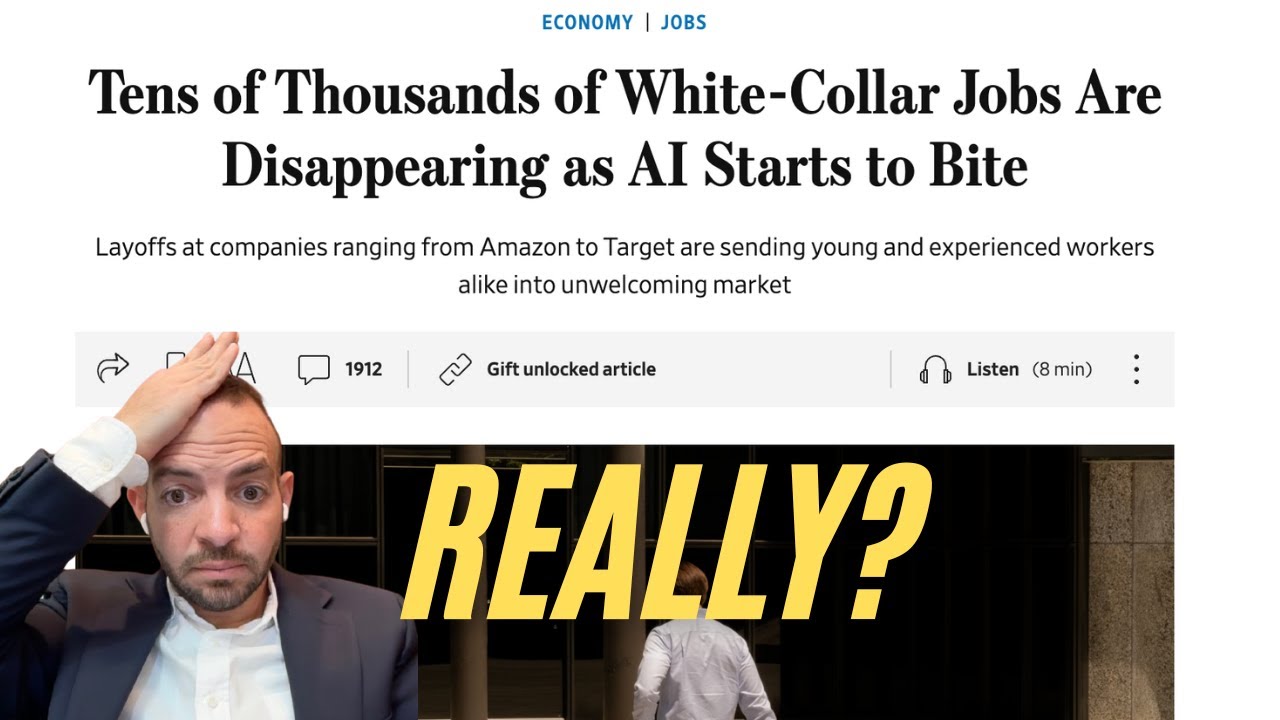
The video critiques a Wall Street Journal article for sensationalizing AI’s impact on white-collar job losses without providing concrete evidence that AI is directly causing widespread layoffs. It calls for responsible journalism that accurately distinguishes between speculative fears and the current reality of AI’s limited role in workforce automation.
The video criticizes a Wall Street Journal article that claims tens of thousands of white-collar jobs are disappearing as AI begins to impact the workforce. The speaker calls the article irresponsible journalism, arguing that the headline is misleading and not supported by the content of the article. While the article highlights significant layoffs in major companies like Amazon, UPS, and Target, it fails to provide any concrete evidence that AI is directly automating or replacing these jobs.
The speaker carefully examines the article’s body, noting that despite multiple paragraphs discussing layoffs and job cuts, there is no clear example of AI actually taking over white-collar roles. The article mentions executives hoping AI can handle some tasks and investors pushing for more efficiency, but it does not show that AI has been implemented to the extent of causing these layoffs. Instead, the article attributes slower hiring and job cuts to factors like political uncertainty and higher costs, which contradicts the headline’s implication.
The speaker emphasizes that the article’s “nut graph,” which should explain the core reason behind the layoffs, is weak and does not substantiate the claim that AI is the driving force behind the job losses. The article’s vague language about AI “starting to bite” is criticized as misleading and potentially panic-inducing for workers who might fear losing their jobs to automation. The speaker argues that responsible journalism should avoid sensational headlines that are not backed by evidence.
While the article briefly mentions some limited use of AI in coding and software development, this example is isolated and does not justify the broad claim that AI is causing widespread white-collar job displacement. The speaker acknowledges that AI may eventually impact jobs but stresses that the current technology is not yet capable of automating thousands of white-collar positions. The article’s failure to provide concrete examples undermines its credibility and misleads readers.
In conclusion, the speaker calls for a more nuanced and evidence-based conversation about AI’s impact on employment. They warn that sensational headlines like the one in the Wall Street Journal can create unnecessary fear and distract from the real issues surrounding workforce changes. The video advocates for accurate reporting that distinguishes between hopes or expectations about AI and the actual current state of job automation.