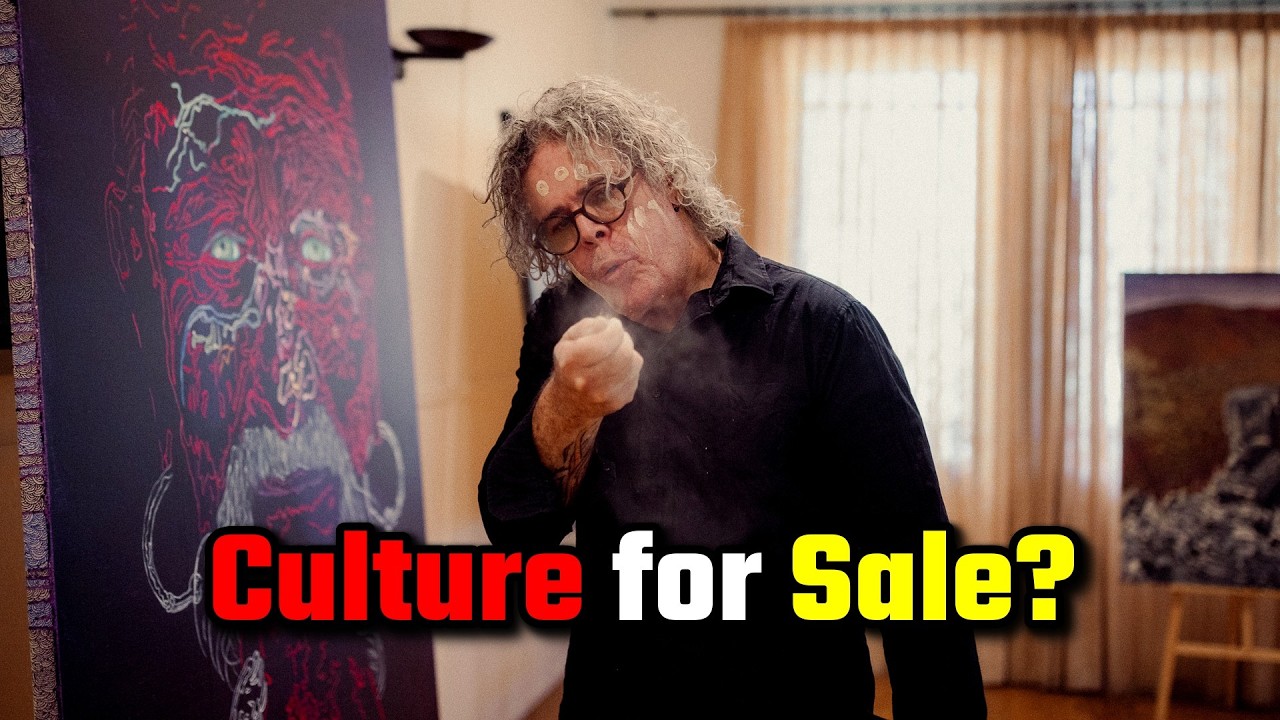
The video explores the ethical concerns surrounding AI-generated art, particularly the cultural theft of Aboriginal art, highlighting issues of consent, cultural understanding, and the impact on Indigenous communities. It also addresses broader challenges of AI’s rapid creation capabilities, job displacement, and the need for careful regulation to balance innovation with respect for cultural and intellectual property.
The video begins by comparing traditional Aboriginal art with AI-generated versions, using award-winning artist Danny Eastwood’s dot painting of Uluru and Edvard Munch’s The Scream as examples. While acknowledging that AI can produce art much faster, the creator does not claim AI art is better, but highlights the speed and ease of AI-generated works. This raises questions about the nature of art, with some arguing AI art is mere mimicry, while others suggest all art is inspired by previous works.
A major concern discussed is the issue of theft, as many artists claim AI models are trained on copyrighted material without permission, effectively stealing their work. This has led to calls for AI art auctions to be canceled, as reported by The Guardian. The video draws a parallel between AI learning from existing art and human artists being inspired by others, but notes that the scale and lack of consent in AI training is problematic.
The conversation then shifts to the cultural theft of Aboriginal art specifically. AI’s ability to quickly generate Indigenous art is seen by many as disrespectful and appropriative, as it lacks the cultural understanding and obligations that Indigenous artists hold. Dr. Terri Janke, an expert in Indigenous Cultural and Intellectual Property, emphasizes that AI cannot comprehend the cultural protocols and kinship ties essential to Aboriginal art, leading to harm and a flattening of cultural diversity.
The video also questions where the line should be drawn regarding AI’s use of cultural elements, comparing Aboriginal art to other cultural expressions like recipes, architecture, and music. It challenges the idea that every cultural reproduction by AI should require permission from the originating community, highlighting the complexity of regulating AI’s impact across various fields. The broader issue of job displacement by AI in areas like coding, translation, and proofreading is also raised, suggesting that many professions face similar challenges.
In conclusion, the video argues that AI’s impact is not limited to Aboriginal art but extends to all aspects of culture and work. It presents the debate over cultural theft and job loss as fundamentally about who benefits from AI technology and who bears the costs. The video calls attention to the need for thoughtful consideration of AI’s role in society, recognizing both its potential and the ethical dilemmas it creates.