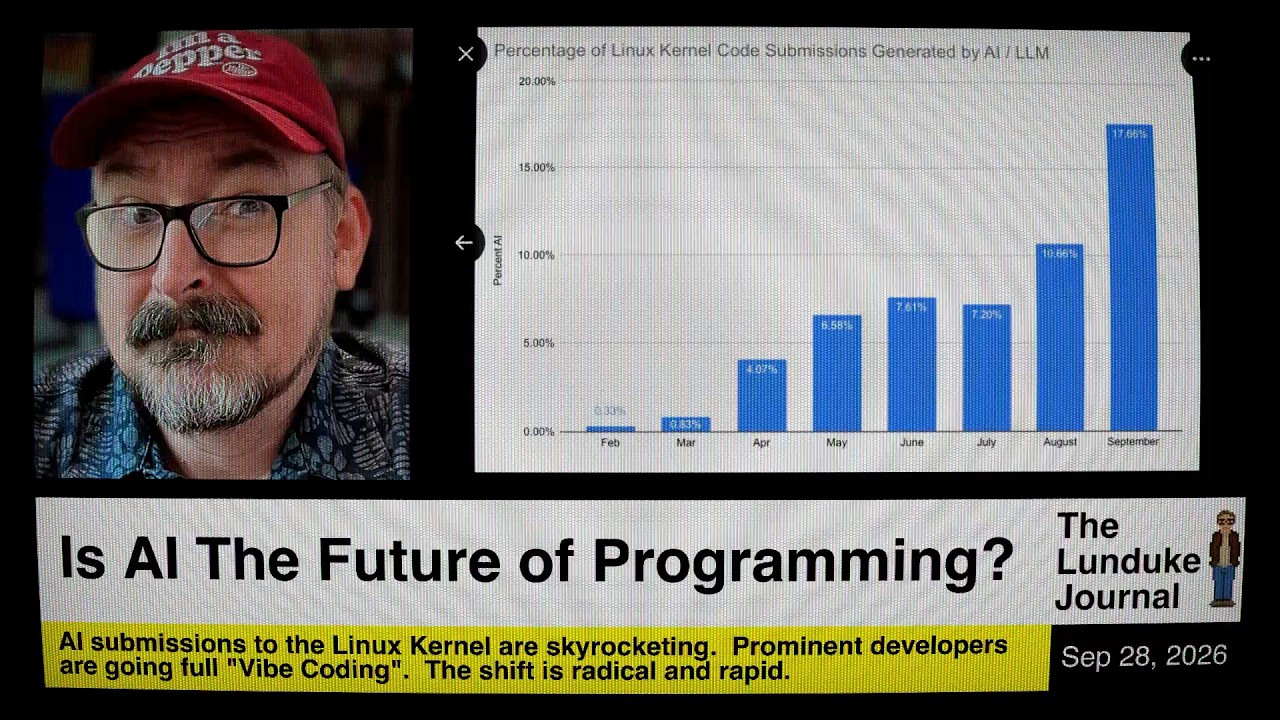
In a recent keynote at a major Ruby on Rails conference, DHH, the creator of Omarie, declared that traditional programming as we know it is effectively dead, and AI-driven “vibe coding”—where developers instruct AI to write code—is the future of software development. This paradigm shift, he argues, must be embraced or developers risk becoming obsolete. The speaker initially skeptical, acknowledges the rapid advancements and adoption of AI coding tools, especially in open-source projects like the Linux kernel, where AI-generated code contributions have surged dramatically in recent months.
The speaker shares personal experiments using AI tools, specifically Grok Bot, to develop various software projects entirely through AI without manual coding. Starting with a simple paint program, the AI produced a functional and polished application within hours, requiring only iterative feedback and testing from the speaker acting as a project manager and tester. This approach was extended to other applications like a text editor and an “about” screen, all developed quickly and to a high standard, demonstrating AI’s capability to accelerate software creation significantly.
Further pushing the boundaries, the speaker tasked AI bots with more complex projects, including forking the Linux kernel with custom modifications and modernizing the UI of Micropolis, an open-source version of Sim City. The AI successfully rewrote the UI to be more visually appealing and efficient, producing a lighter, faster, and less buggy version of the game in a fraction of the time it would traditionally take. This experiment highlighted AI’s potential not only to create new software but also to revitalize and improve legacy projects that might otherwise be neglected.
Despite the impressive results, the speaker acknowledges ongoing concerns about AI-generated code, such as licensing issues, quality control, and the difficulty of human code review at scale. To mitigate these risks, the speaker employs multiple AI models to cross-check code and uses dedicated tester bots to identify bugs and ensure quality. While trusting AI introduces new challenges, the benefits in speed, quality, and innovation appear to outweigh the downsides, signaling a transformative shift in how software will be developed going forward.
Ultimately, the speaker concludes that AI is not just the future of programming but the future of software creation itself. The rapid progress and quality of AI-generated software surpass many traditional development efforts, especially in open-source communities. While some developers resist this change, the evidence suggests that embracing AI-driven development is essential to remain relevant and productive. The speaker likens this shift to the historical adoption of cars—initially met with resistance and problems but ultimately transformative and beneficial—emphasizing that AI’s integration into software development is an inevitable and positive evolution.
Useful Links