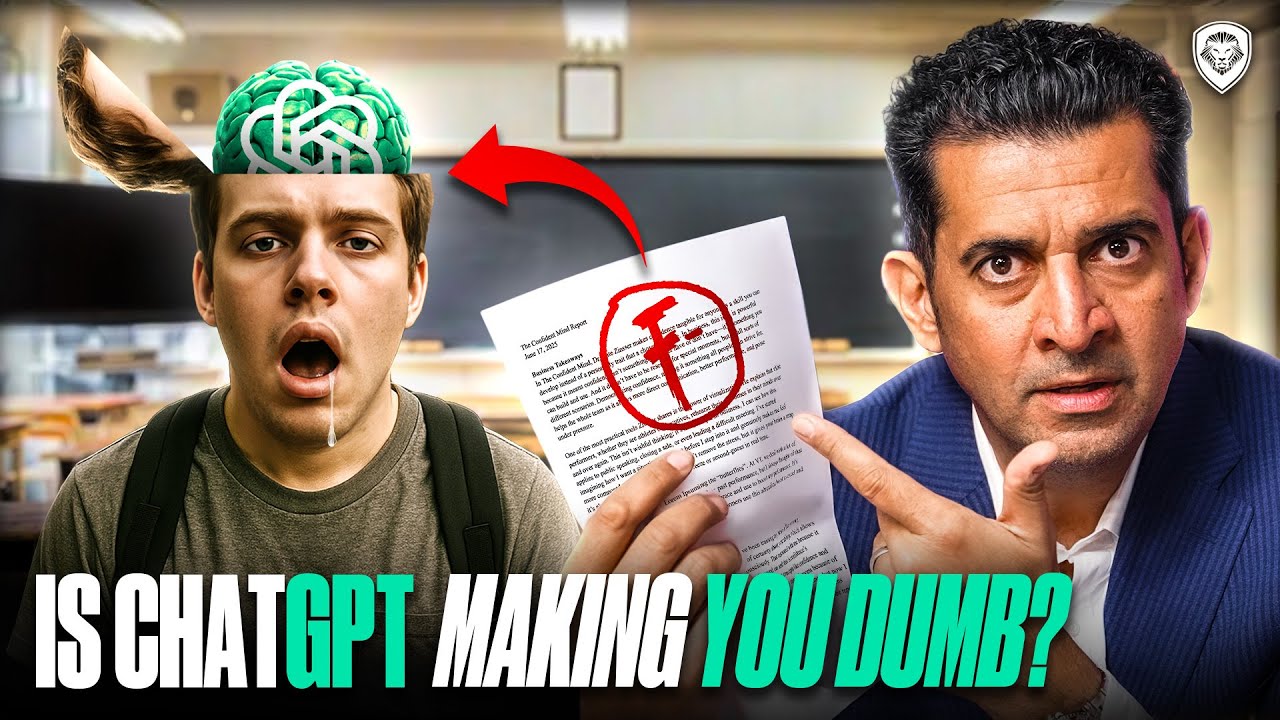
The video discusses a recent MIT study examining the cognitive effects of using ChatGPT, highlighting concerns that the AI tool may be making users mentally lazy and less engaged. Initially, teachers were wary of students using ChatGPT for homework, but now many educators themselves use it to grade assignments, often without fully reading the work. This shift illustrates how both sides rely on AI for convenience, raising questions about whether this reliance is beneficial or detrimental.
The study reveals ten key findings, starting with the observation that ChatGPT users exhibit the lowest brain engagement compared to those using Google search or no tools at all. EEG scans showed reduced activity in brain regions responsible for creativity, memory, and semantic processing. Over time, users became increasingly dependent on ChatGPT, often copying responses without personalizing or critically engaging with the content, leading to what educators describe as “soulless” writing lacking originality and emotional depth.
Further findings indicate poor memory retention among ChatGPT users, who struggled to recall their own AI-generated essays. Non-users demonstrated the highest cognitive engagement, with Google search users also outperforming ChatGPT users in mental stimulation. Additional concerns include a correlation between heavy ChatGPT use and increased loneliness, as some users substitute real human interaction with AI conversations. Programmers relying on AI tools also showed diminished problem-solving skills, and children exposed early to AI-generated content risk stunted cognitive development.
The video emphasizes the broader implications of AI reliance, comparing it to how technologies like GPS and calculators have reduced certain mental efforts. While AI offers speed and convenience, overdependence may erode critical thinking, creativity, and personal insight. The speaker advocates for conscious efforts to engage the brain actively, such as encouraging discussions without immediately turning to AI for answers, thereby preserving individual thought and originality.
In conclusion, the video acknowledges that while AI tools like ChatGPT are indispensable in today’s world, users must differentiate themselves by adding personal insight and creativity beyond AI-generated content. The key to staying competitive is not to reject AI but to use it as a tool while maintaining authentic, original thinking. The speaker encourages viewers to foster habits that prioritize human cognition and warns against becoming overly reliant on AI, which could ultimately diminish mental capabilities and individuality.