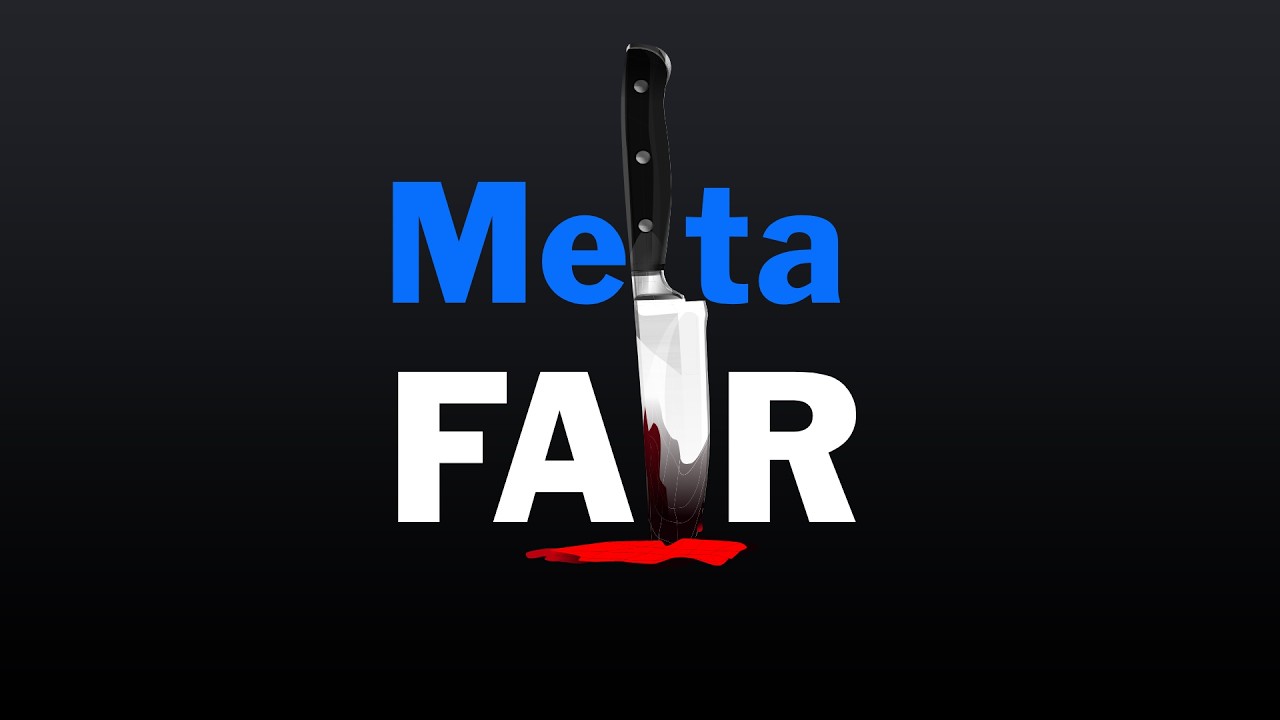
The video discusses recent news about Meta significantly reducing jobs in its AI operations, particularly impacting the Facebook AI Research (FAIR) team. FAIR, originally founded and led by Yann LeCun, has historically been a prestigious and open research lab focused on creating practical AI models rather than chasing artificial general intelligence (AGI). However, since Meta shifted its focus towards a super intelligence lab and began offering massive contracts to attract top talent, FAIR appears to have been deprioritized. This shift coincided with Meta’s investment in Scale AI and the hiring of Alexander Wang as Chief AI Officer, which led to aggressive recruitment from other AI labs, especially OpenAI.
FAIR has been responsible for many influential AI advancements and open-source models over the years. Notable contributions include the RAG paper, RoBERTa (an improved retraining of BERT), language-agnostic sentence embeddings like LASER, speech models such as wav2vec, and computer vision breakthroughs like Mask R-CNN, RetinaNet, and the recent SAM models. These models were not only published in research papers but also released with open weights and permissive licenses, enabling widespread use in both academia and industry. FAIR also played a key role in developing PyTorch, Detectron, and other foundational AI tools and frameworks.
The video raises concerns about the future openness of Meta’s AI research, especially with rumors that newer LLaMA models will not be fully open or publicly released as before. The LLaMA 4 model, for example, has not seen the release of its larger versions, which contrasts with FAIR’s previous tradition of openness. While Meta encourages laid-off FAIR researchers to apply for other roles within the company, the significant reduction in headcount and likely cuts in compute resources and budgets suggest a diminished role for FAIR. This could mark a shift away from FAIR’s open research ethos toward a more closed, proprietary approach aligned with Meta’s super intelligence ambitions.
The video’s creator also notes the absence of public comments from Yann LeCun regarding these changes, leaving uncertainty about his future with FAIR and Meta. It remains unclear whether FAIR will be fully absorbed into the super intelligence lab or continue as a distinct entity. The community is left wondering if Meta will release another impactful LLaMA model this year or if the AI ecosystem will increasingly rely on models from other regions, such as China, which are currently leading in open-weight model releases. The video suggests that U.S. tech companies may have lost their edge in open AI research compared to their Chinese counterparts.
In conclusion, the video invites viewers to reflect on Meta’s current AI strategy and its implications for the future of open AI research. It questions whether Meta’s pursuit of AGI through its super intelligence lab will come at the cost of FAIR’s legacy of open, practical AI innovation. The creator encourages discussion on whether Meta will continue to contribute openly to the AI community or shift toward a more closed, proprietary model development approach. The video ends by asking viewers to share their thoughts and to subscribe for more updates on this evolving story.