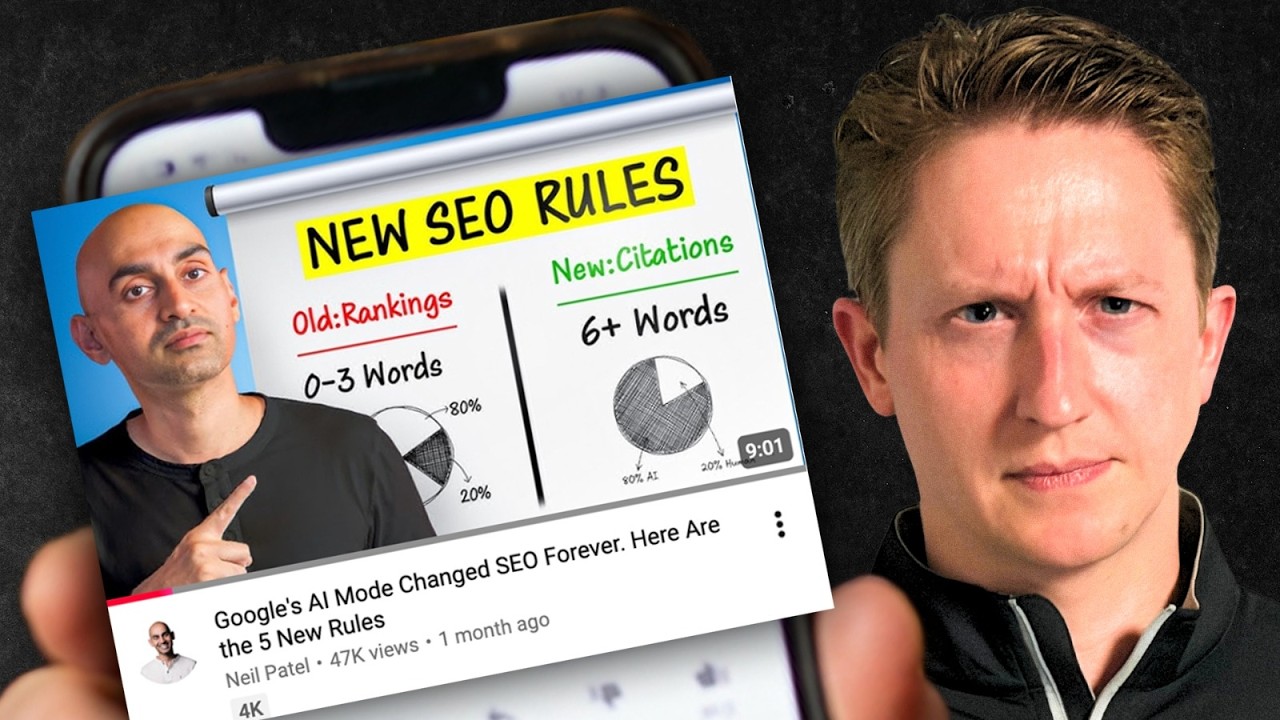
The video discusses Neil Patel’s claim that traditional search rankings are dead and that building brand authority takes a decade, contrasting this with the realities of local SEO. While Neil is correct that AI is transforming search and shifting focus from traffic to trust and authority, his advice primarily suits large enterprises rather than local service businesses. Local businesses, such as plumbers, still rely heavily on Google’s local map pack and their Google Business Profile (GBP) to generate leads quickly, often within weeks rather than years. The speaker emphasizes that Neil overlooks the importance of the local pack, the entity concept (Google recognizing a real business in a real location), and how local SEO strategies have already been adapting to AI-driven search changes.
Neil outlines several key shifts in SEO, including the move from chasing traffic to optimizing for citations, as AI now synthesizes answers and attributes sources rather than just ranking websites. This shift means businesses must focus on building recognized authority and credibility that AI systems trust and cite. While this is a significant change, the speaker notes that many of these principles, such as the importance of citations and brand mentions, have long been part of local SEO practices. The core 30 methodology, which aligns website content with GBP categories and services, effectively prepares local businesses for AI-driven search by building topical and geographic relevance.
Another important point Neil makes is the growing complexity of search queries, with AI providing direct answers for simple questions but requiring cited sources for complex, nuanced queries. The speaker agrees with this and explains how local SEO strategies should focus on creating deep, authoritative content that addresses specific, detailed customer needs rather than broad, generic keywords or shallow blog posts. This approach helps local businesses stand out in AI-powered search results by demonstrating expertise and relevance in their specific service areas.
Neil also highlights the rise of zero-click searches, where users get answers directly on the search results page without visiting websites, and the increasing importance of brand authority over traditional SEO tactics like keyword optimization and backlinks. The speaker agrees that clicks are declining but argues that local businesses can build authority much faster than the decade Neil suggests by focusing on their entity, local relevance, and consistent presence on platforms where their customers engage. Local businesses can accelerate authority building through active GBP management, local mentions, schema markup, and community involvement.
Finally, Neil discusses the “search everywhere” trend, where people search across multiple platforms beyond Google, such as Instagram, Amazon, TikTok, and app stores, all increasingly powered by AI. The speaker agrees but stresses that for local businesses, the GBP remains the central hub connecting these platforms and feeding AI systems with accurate business information. Unlike large brands that must build omni-channel authority across many platforms, local businesses should focus on locking in their entity and local presence to dominate their specific market. In conclusion, while Neil Patel’s insights on AI and authority are valid, local SEO requires a tailored approach centered on the Google Business Profile and local relevance, enabling quick and effective results rather than a decade-long brand-building effort.