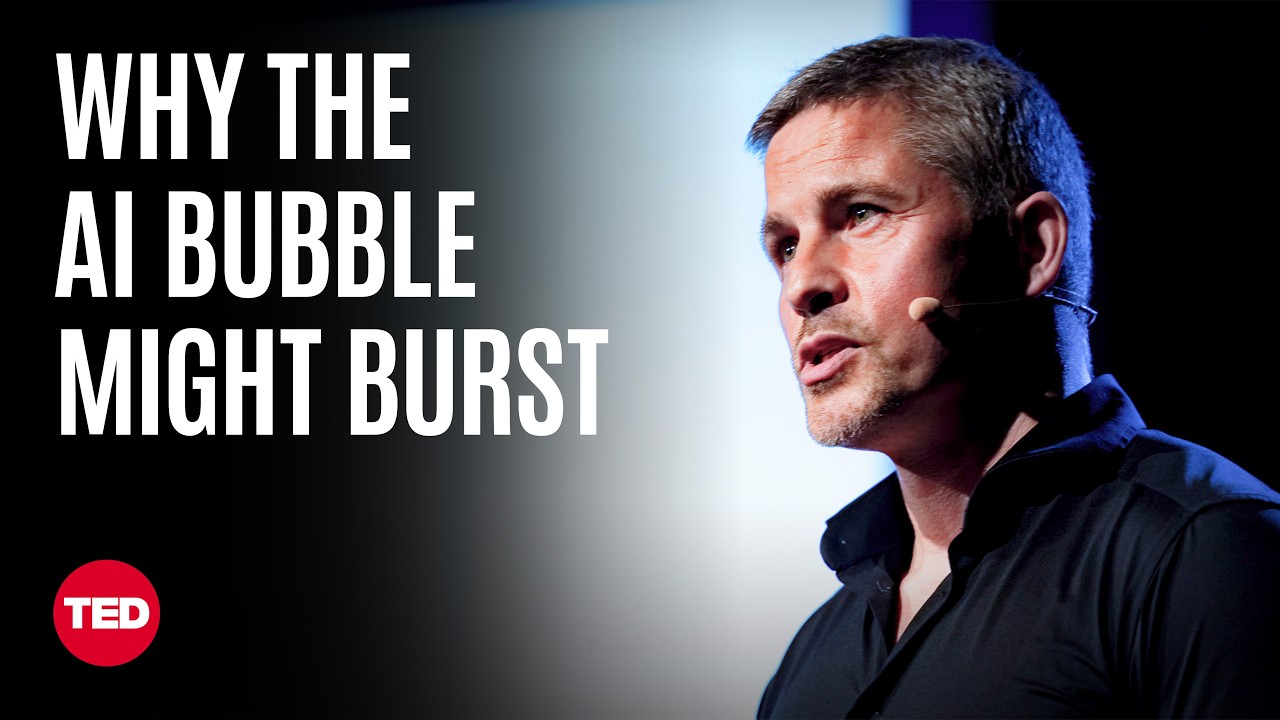
In the TED talk, Henrik Zeberg discusses the concept of financial bubbles, focusing particularly on Bitcoin and the current AI and crypto market. He begins by referencing the Law of Jante, which discourages individuals from thinking they are special or know more than others, and argues that this mindset can be dangerous. Zeberg highlights the skepticism of legendary investors like Charlie Munger and Warren Buffett, who have famously criticized Bitcoin, despite its impressive historical returns. He shares a personal anecdote about nearly investing in Bitcoin in 2016 and witnessing friends make enormous gains in cryptocurrencies like Ethereum, illustrating the powerful human emotion of FOMO (fear of missing out) that drives many to invest irrationally.
Zeberg explains that FOMO is deeply rooted in human psychology, tracing back to our hunter-gatherer ancestors where being part of the group was essential for survival. He cites historical examples of financial bubbles, such as the Tulip Mania in the 1630s, the British railway boom in the 1840s, the roaring '20s stock market bubble, and the dot-com bubble of the late 1990s. Each of these bubbles was fueled by excitement over new technologies or assets, leading to irrational exuberance and eventual crashes. These examples demonstrate how crowd dynamics and social pressure can distort rational decision-making, causing widespread financial harm.
To illustrate the dangers of groupthink and denial, Zeberg recounts the story of “The Emperor’s New Clothes,” where everyone pretends to see something that does not exist out of fear of appearing foolish, until a child innocently points out the truth. He uses this allegory to suggest that the current enthusiasm around Bitcoin and AI stocks resembles this phenomenon, where many are unwilling to acknowledge the bubble forming around these assets. Zeberg presents data showing that the market capitalization to GDP ratio today is significantly higher than during previous major bubbles, indicating an even larger financial bubble than those seen in 1929, 2000, and 2007.
Focusing on Bitcoin and AI-related stocks like Nvidia and Palantir, Zeberg points out their extraordinary price increases, which he compares to the irrational price surges seen in past bubbles. He warns that when the inevitable crash comes, Bitcoin and similar assets could lose up to 95% of their value, especially if a recession hits and the Nasdaq experiences a significant downturn. This prediction contrasts sharply with the optimistic narratives often promoted by media and some market participants, who portray these technologies as guaranteed paths to wealth.
In conclusion, Henrik Zeberg emphasizes that while the underlying technologies behind cryptocurrencies and AI are indeed transformative, this does not justify the current inflated valuations or guarantee continued financial gains. He urges caution and critical thinking, reminding the audience that financial bubbles driven by FOMO and herd mentality have historically ended in crashes. Zeberg aligns with the views of Warren Buffett and Charlie Munger, suggesting that Bitcoin and crypto resemble a dangerous speculative mania that is likely to burst in the near future, causing significant financial losses for those caught up in the hype.