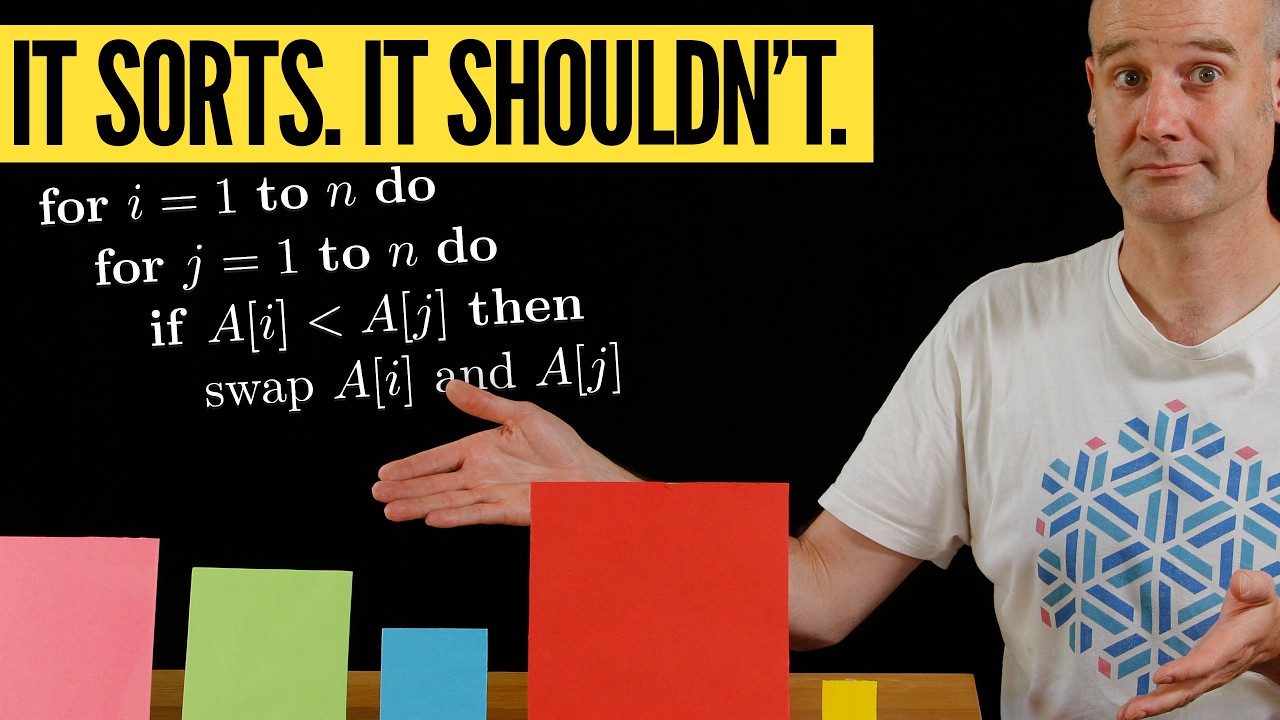
The video begins by introducing the concept of sorting algorithms, explaining their purpose in arranging data from smallest to largest. The presenter uses selection sort as an example to illustrate the basic logic behind sorting: repeatedly finding the next smallest element and placing it in the correct position. The importance of understanding sorting algorithms is emphasized, not only because they are fundamental to programming and data processing but also because they serve as excellent tools for learning algorithmic thinking and are common topics in software developer job interviews.
Next, the video explores bubble sort, a well-known but inefficient sorting algorithm. Bubble sort works by repeatedly comparing adjacent elements and swapping them if they are in the wrong order, effectively “bubbling” the largest elements to the end of the list. The presenter walks through the algorithm step-by-step and provides a simple pseudo code implementation. Despite its simplicity and educational value, bubble sort is impractical for large datasets due to its slow performance.
The core of the video focuses on a surprising discovery by a lecturer named Stanley Fung, who accidentally created a sorting algorithm that was initially thought not to work but actually does. This algorithm, humorously named “I Can’t Believe It Can Sort,” uses a counterintuitive approach where elements are swapped only if they are already in the correct order, and left alone if they are not. The presenter demonstrates how this bizarre logic still manages to sort the list correctly, albeit inefficiently, and explains the underlying reason why it works. The algorithm always moves the largest element to the front and then drags it through the list, leaving the rest in order.
The video also touches on the broader landscape of sorting algorithms, highlighting that different algorithms have different strengths depending on the data and context. For example, merge sort is praised for its efficiency and elegance, while Python’s built-in sorting methods have evolved from Tim sort to the newer power sort, which adaptively combines techniques to optimize performance. On the other end of the spectrum, the video mentions intentionally ridiculous algorithms like bogo sort and Thanos sort, which rely on random shuffling or deletion, contrasting them with the accidental yet functional “I Can’t Believe It Can Sort.”
Finally, the presenter shares a visualization of the “I Can’t Believe It Can Sort” algorithm, adapted from an open-source project that originally showcased various sorting algorithms. The video concludes with a lighthearted mention of sleep sort, another unconventional sorting method that uses timed delays to order elements. Throughout, the presenter encourages viewers to explore sorting algorithms further, highlighting their educational value and inviting them to share their favorite algorithms in the comments. The video is sponsored by boot.dev, a platform offering interactive coding courses, reinforcing the theme of learning and improving programming skills.
Useful Links