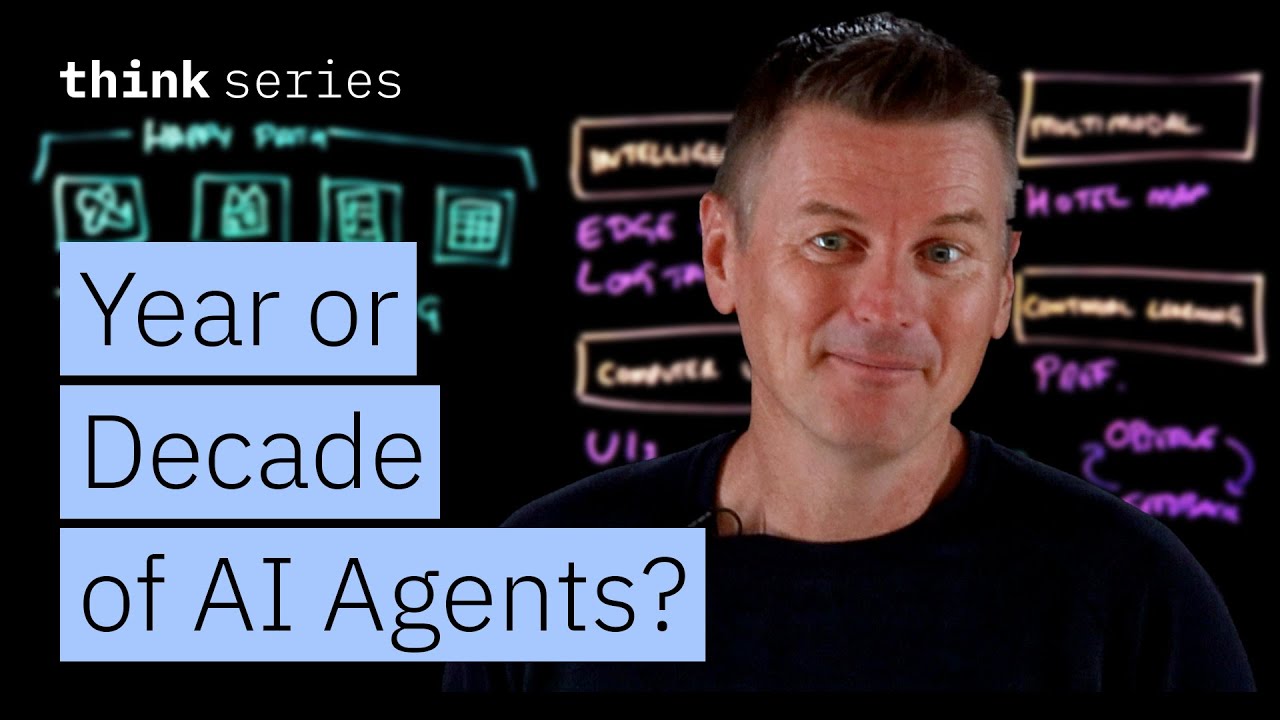
The video discusses whether the current period should be considered the year or the decade of AI agents and agentic AI. While some voices in the AI community suggest this is the year of AI agents, others like OpenAI Co-Founder Andrej Karpathy argue that it is actually the decade of AI agents. Today’s AI agents still struggle with many basic tasks due to limitations in intelligence, computer use, continual learning, and multi-modal capabilities. The video explores three use cases to illustrate where AI agents stand today and where they might be headed in the future.
The first use case is coding assistants, where AI agents are already providing significant utility. These agents assist developers by writing code, fixing bugs, generating documentation, and reviewing pull requests. Coding is a good fit for current AI capabilities because code is highly structured, has clear rules, and programming problems often have definitive right or wrong answers. Additionally, coding assistants operate within integrated development environments (IDEs), which are stable and well-defined interfaces, and they primarily work with text-based inputs and outputs, minimizing the need for multi-modal understanding or continual learning.
The second use case is travel booking, a popular demonstration for AI agents but one that currently falls short in practice. While AI agents can handle simple travel scenarios like booking direct flights and standard hotel rooms, they struggle with real-world complexities such as flight delays, visa requirements, and traveling with infants. The diversity of airline and hotel websites, with varying user interfaces and security measures like CAPTCHAs, also poses challenges. Furthermore, travel booking requires continual learning to adapt to user preferences over time, which current agents are not yet capable of doing reliably.
The third, more aspirational use case is automated IT support, where an AI agent autonomously diagnoses and fixes issues on a user’s machine. Although this seems ideal due to the repetitive and patterned nature of IT problems, it is not yet practical or trustworthy. Each user’s setup is unique, and the agent would need to navigate different operating systems and application interfaces. Multi-modal understanding is also necessary to interpret user inputs like screenshots or verbal descriptions. Moreover, continual learning is crucial for adapting to new software updates and emerging issues, but current AI agents lack the reliability and adaptability needed for this level of autonomous control.
In conclusion, the video suggests that while we are in the year of AI agents for narrow, well-defined tasks in structured environments, the broader vision of AI agents handling complex, real-world problems will unfold over the coming decade. Current AI agents excel in specific areas like coding assistance but are not yet ready for fully autonomous tasks such as travel booking or IT support without close supervision. The future of AI agents depends on advancements in intelligence, computer use, multi-modal understanding, and continual learning to meet the challenges of messy, real-world environments.