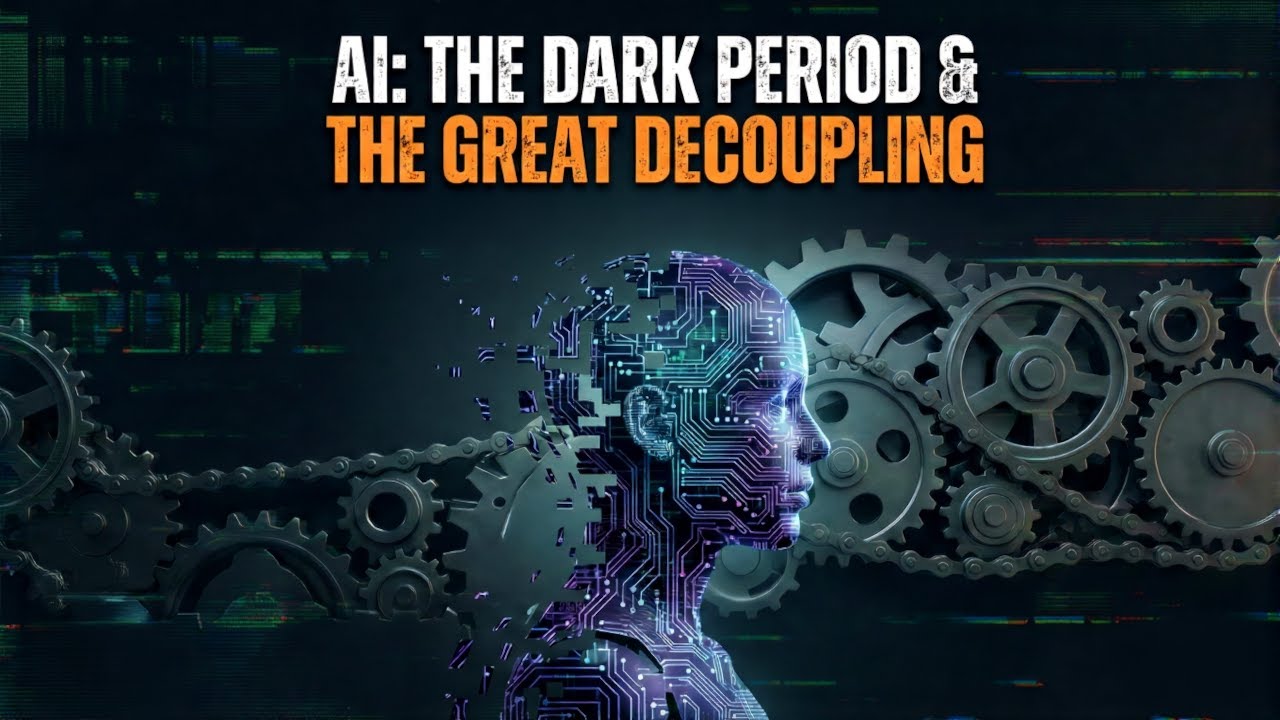
In this video, David Shapiro addresses the growing cynicism and disillusionment surrounding the progress of artificial intelligence (AI). He notes that many people, including AI enthusiasts and professionals, have become increasingly skeptical about the future of AI due to the perceived dominance of powerful elites and corporations prioritizing profit over societal benefit. Shapiro highlights that public opinion polls show a majority of Americans expect AI to cause more harm than good, but the deeper emotional responses—anger, fear, and cynicism—are not fully captured by these surveys. This widespread malaise reflects a sense that the AI revolution is not heading toward a bright, equitable future.
Shapiro shares personal anecdotes from friends and colleagues who have expressed disappointment, such as his wife’s reaction to the release of Sora, an AI-driven social media platform designed to maximize user engagement through dopamine-driven feedback loops. This example symbolizes a broader concern that AI is being used to deepen addiction and social manipulation rather than to empower individuals or improve society. He argues that the current trajectory is shaped by billionaires and corporations who are consolidating power and wealth, often at the expense of ordinary people, leading to a growing distrust in institutions and the direction of AI development.
The video also discusses the economic implications of AI, particularly the reality of job losses and the likelihood of continued “jobless recoveries,” where economic growth does not translate into widespread employment. Shapiro explains that while automation and AI have the potential to create abundance, history shows that benefits are often delayed until significant social pain forces change. He draws parallels to past industrial revolutions where labor exploitation and wage stagnation eventually led to reforms only after prolonged suffering. This historical perspective underpins his warning that the current phase of AI-driven change will likely get worse before it gets better.
Shapiro emphasizes the complexity of AI as a dual-use technology, meaning it can be used for both beneficial and harmful purposes. Unlike clear-cut historical conflicts, the challenges posed by AI are not easily framed as a battle between opposing sides, making collective action and political consensus difficult. He points out that instead of fostering transparency and empowerment, AI is sometimes enabling dystopian outcomes, such as surveillance states and centralized control through digital currencies and platforms like Palantir. This contributes to the sense that society is heading toward a “bad timeline” where technology serves the interests of the few rather than the many.
Despite the grim outlook, Shapiro maintains a cautious optimism. He acknowledges the reality of the current challenges but believes the problems are solvable if society can muster enough political will and consensus to redirect AI’s trajectory toward empowerment and equity. His forthcoming book, The Great Decoupling, explores these themes in depth, focusing on power dynamics and the need to shorten the “dark period” of disruption. Ultimately, Shapiro calls for a clear-eyed acceptance of the present situation while working toward a better future, recognizing that the path forward will be difficult but not impossible.