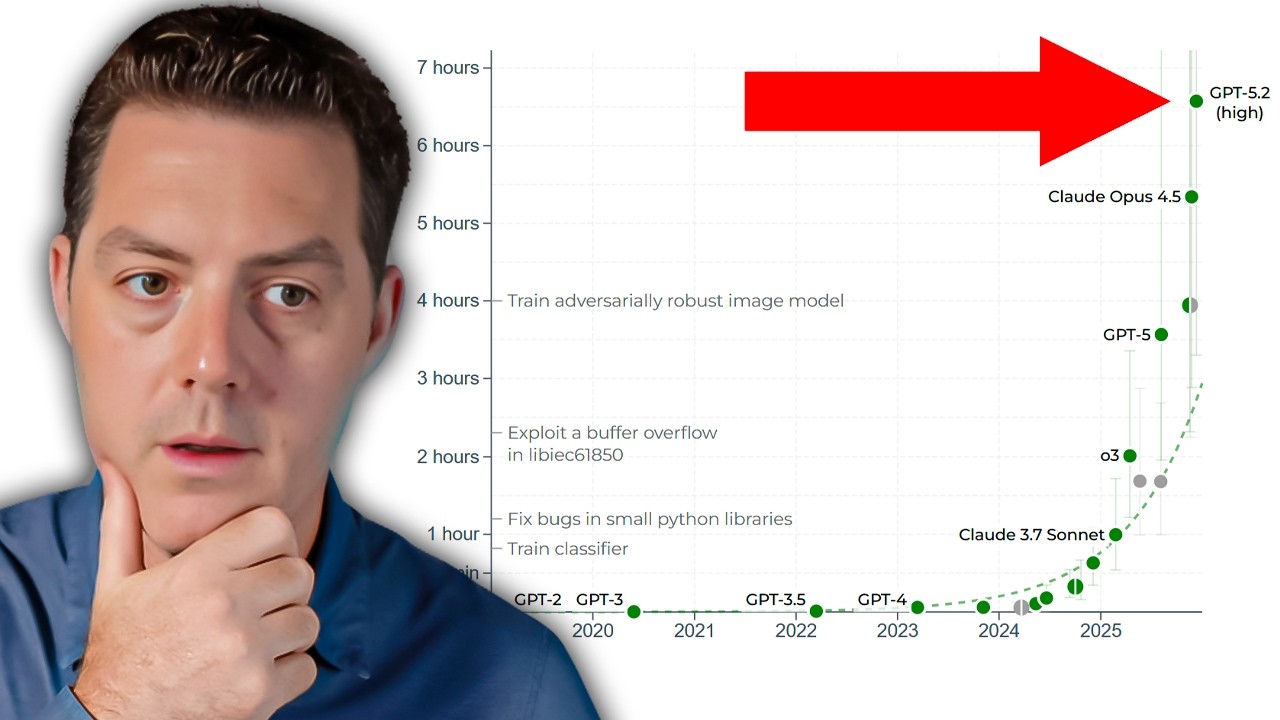
The video discusses a viral article by Matt Schumer titled “Something Big is Happening,” which captures the rapid and transformative changes occurring in the AI industry. The speaker emphasizes that recent advancements, particularly with models like OpenClaw, GPT-5.3 Codex, and Opus 4.6, represent significant leaps in AI capabilities. These models are not just incremental improvements; they are fundamentally changing how work is done, especially in white-collar professions. The speaker notes that the pace of progress has accelerated dramatically in the past few weeks, making it difficult for even industry insiders to keep up.
A key point from the article is that the future of AI is being shaped by a very small group of researchers at a handful of companies, such as OpenAI, Anthropic, and Google DeepMind. Even those deeply involved in the industry feel they have little control over the direction and speed of these developments. The speaker draws an analogy to the sudden global changes in 2020, suggesting that AI is now at a similar inflection point—what seems like gradual change can quickly become a widespread transformation.
The video highlights how AI has evolved from being a helpful assistant to autonomously completing complex tasks with minimal human input. For example, tasks that once required back-and-forth guidance now only need a clear prompt, and the AI delivers a finished product, often better than what the human could achieve alone. This shift is particularly evident in fields like software engineering, where top professionals are finding that much of their technical work can now be handled by AI agents. The speaker also notes that this trend is spreading to other areas, such as content creation, research, and workflow automation.
The speaker addresses skepticism from those who have tried AI and found it lacking, urging viewers to try the latest, paid versions of leading models, as the frontier models are where the most impressive progress is happening. The video also discusses the broader economic and societal implications, referencing studies and case examples where AI systems have autonomously completed massive projects, such as building a C compiler or a web browser from scratch. The emergence of recursive self-improvement—where AI models help improve themselves—is highlighted as a particularly significant milestone.
Finally, the speaker offers practical advice for adapting to this new reality. He encourages viewers to become proficient with AI tools, automate parts of their work and life, and focus on roles that require human qualities like taste, responsibility, and decision-making. He stresses the importance of adaptability, financial resilience, and fostering agency in children. While acknowledging the potential for disruption, the speaker also highlights the unprecedented opportunities for individuals to create value, start businesses, and pursue passions with the help of AI. The video concludes with a call to action: explore and use the latest AI tools to stay ahead of the curve.