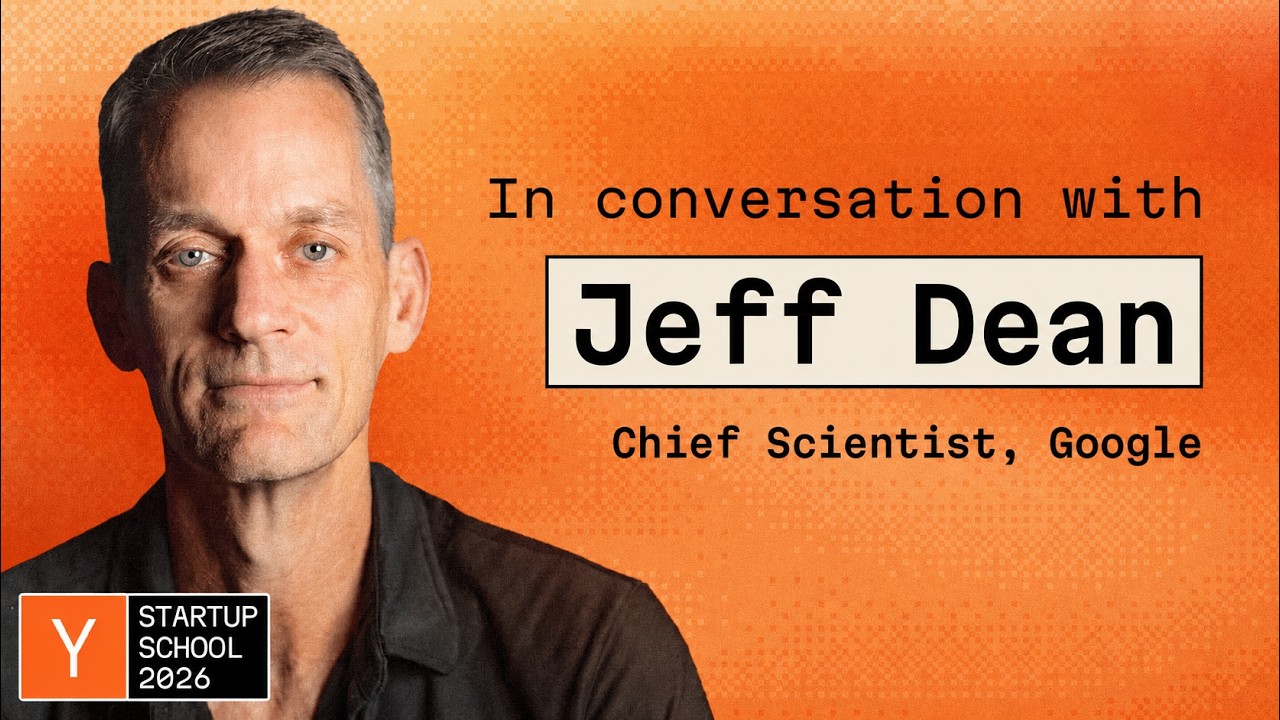
In this insightful discussion, Jeff Dean reflects on the rapid advancements in AI, noting that models have reached capabilities comparable to a junior engineer, particularly excelling in agent-based, longer-running coding tasks. He highlights the accelerating progress in handling complex tasks and anticipates that by 2027, there will be significant automation in machine learning systems themselves, with AI running tight experimentation loops to improve capabilities autonomously. This trend, he suggests, will extend beyond AI to other scientific and engineering fields where measurable objectives exist.
Dean revisits a pivotal moment in Google’s history when he and his colleague realized that the entire search index could fit into RAM, drastically improving search speed. Drawing a parallel to 2026, he emphasizes the importance of specialized, high-performance, low-energy inference hardware to reduce latency and energy consumption, which are critical for making AI more accessible and responsive. He also points out a common misconception: many underestimate the potential for agent-based systems to operate continuously over days or weeks to solve complex problems, such as rewriting software in safer or more efficient programming languages.
A key theme Dean discusses is the significance of energy efficiency and data movement in AI computation. He explains that moving data consumes vastly more energy than computation itself, shaping how models are trained and run, particularly influencing batching strategies. He also underscores the evolving nature of AI progress, which now heavily involves context engineering—designing systems that integrate retrieval, tools, memory, and multi-agent orchestration to solve complex problems. Dean encourages developers to experiment with these tools and improve AI performance by iterating on guidelines and skills that help models better utilize available resources.
Dean offers valuable advice for founders and AI practitioners, stressing the importance of choosing problems where general models currently fail or perform poorly, as these areas offer opportunities for specialized solutions. He highlights the critical skill of writing clear, detailed specifications for AI agents to follow, which enhances their effectiveness. Moreover, he emphasizes the scarcity and value of “taste”—the ability to identify promising problems and approaches—which is developed through experience, reflection, and challenging assumptions. He shares examples from his career, such as the creation of TPUs and MapReduce, where questioning conventional wisdom led to groundbreaking innovations.
Looking ahead, Dean expresses excitement about future possibilities, including more efficient inference hardware, radically new machine learning algorithms that are data-efficient and capable of continual learning, and AI systems that foster better human discourse and connections globally. He encourages the community to pursue ambitious, impactful projects and leverage AI’s growing capabilities to create transformative technologies. The conversation closes with a call to action for founders to harness AI tools creatively and thoughtfully to build the next generation of groundbreaking systems.