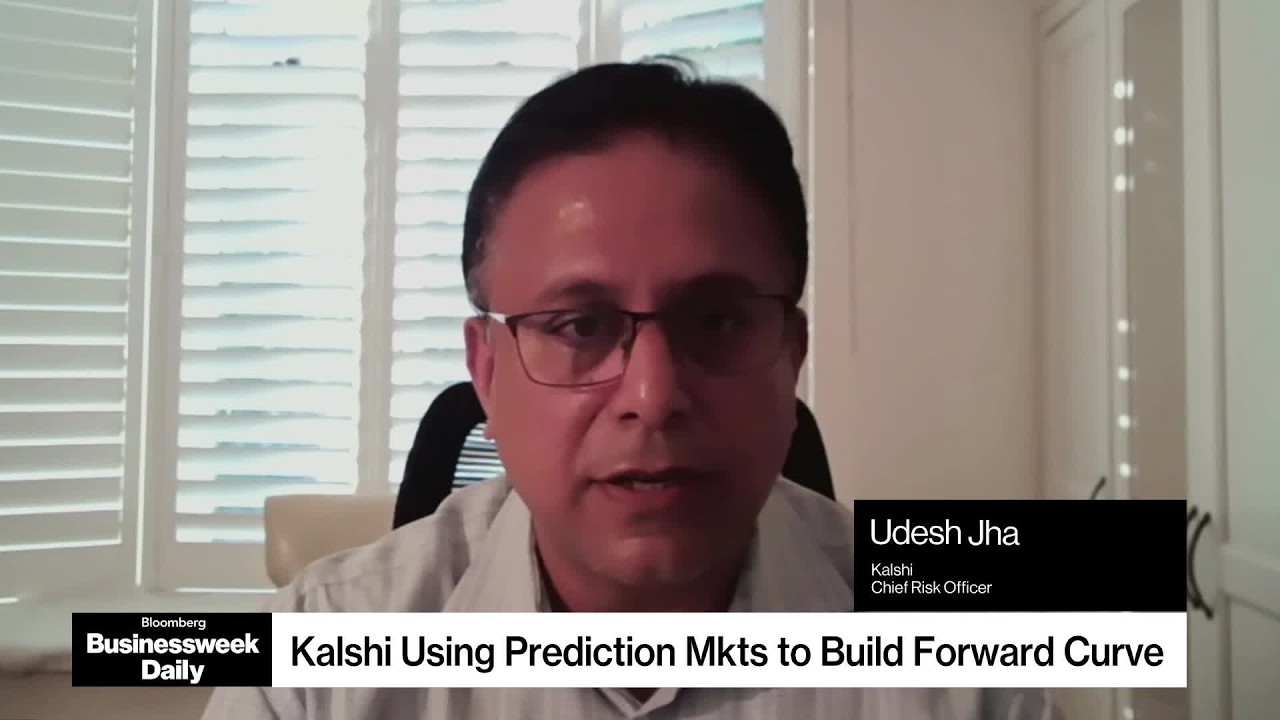
Sudesh, recently appointed Chief Risk Officer at Kalshi after 16 years at CME Group, shared his enthusiasm for Kalshi’s innovative approach to prediction markets. He noted parallels between the evolution of financial markets during his early CME days and the current excitement around prediction markets, token migration, and cloud adoption. Kalshi, known for event contracts like betting on sports outcomes, is expanding its offerings to include new products such as crypto markets, KPI markets, and notably, a compute market focused on GPU-related contracts. This expansion aims to provide institutions and retail participants with tools for risk management beyond traditional event betting.
Kalshi is pioneering a market-driven forward curve for computing power, which differs from existing indices that rely on OTC deals or bilateral contracts. This forward curve is designed to offer robust price discovery in a nascent and complex market where compute resources vary widely by chip type, location, and usage. Sudesh emphasized that prediction markets enable more accurate and dynamic pricing compared to traditional futures contracts that focus on limited indices. The goal is to create a reliable benchmark that can support hedging, trading, and other derivative products as the market matures.
The compute market presents unique challenges, such as rapid technological obsolescence and diverse product grades, unlike fungible commodities like oil. Sudesh acknowledged these complexities but drew parallels to how oil markets have evolved standardized indices and basis products over time. Kalshi expects the compute market to similarly gravitate toward representative indices, supported by their prediction market framework. The platform anticipates a broad user base including hyperscalers, neo cloud providers, inference companies, medical research firms, and retail speculators, all contributing to liquidity and market depth.
Despite competition from established players like CME and Intercontinental Exchange, Kalshi believes its focus on risk management, regulatory compliance, and innovative product design gives it a competitive edge. Sudesh highlighted Kalshi’s cautious approach, including a four-year wait for regulatory approval before launching products like perpetual futures. He also addressed concerns about liquidity and market adoption, noting the rapid growth in compute demand and the potential for diverse participants to engage in the market. Kalshi aims to build a foundational forward curve that will enable a range of investable products in the future.
Finally, Sudesh reflected on the interesting dynamic of moving from CME, which is currently litigating against Kalshi’s perpetual futures, to leading risk at Kalshi. He emphasized that Kalshi’s perpetual futures differ significantly from offshore perpetual contracts and are designed with robust risk management on a regulated exchange. The company maintains ongoing dialogue with regulators to ensure compliance as it develops new products beyond crypto assets. Overall, Kalshi is positioning itself as a pioneering force in building markets for AI computing power, leveraging prediction markets to bring transparency and efficiency to this emerging asset class.