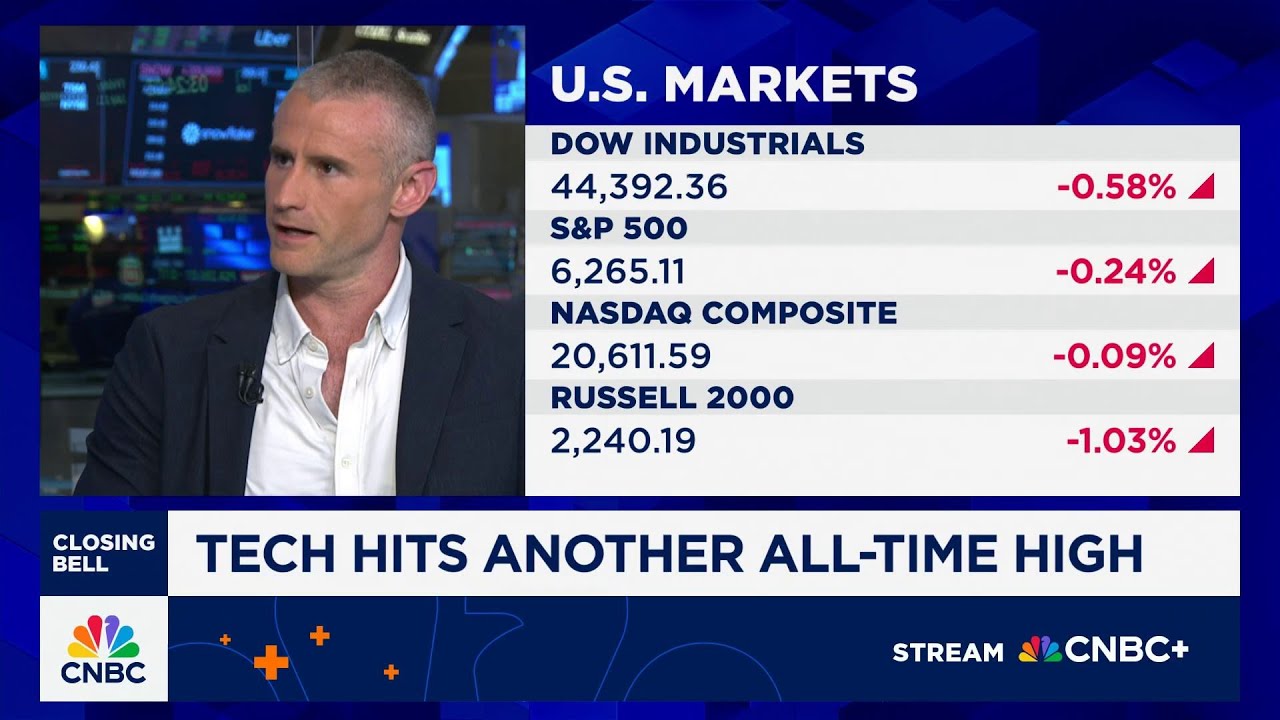
In the discussion with Intelligent Alpha founder and CEO Doug Clinton, the focus is on the ongoing AI trade and its long-term potential. Clinton likens the current stage of AI development to being in the “third inning,” suggesting that while significant progress has been made, there is still a long way to go. He highlights recent breakthroughs, such as the release of new AI models like Grok, which, although incremental, continue to push the technology forward. The market recognizes Nvidia’s critical role as the hardware backbone powering AI advancements, and companies developing AI models are expected to generate substantial cash flow in the future despite currently being in heavy investment phases.
Clinton addresses the competitive landscape among major AI players, identifying four key contenders: OpenAI, Grok, Meta, and Google. He notes that Meta appears to be struggling and is in a state of reinvention, while the other three remain closely matched. Interestingly, despite widespread skepticism about Google’s ability to maintain its dominance in AI and search, Intelligent Alpha’s models favor Google as a top holding. Clinton suggests that Google’s stock is undervalued due to market doubts about its AI strategy, but he believes the company has the potential to successfully transition its search business by integrating AI in a way that enhances user experience without sacrificing autonomy.
The conversation also touches on the challenges Google faces in evolving its search platform. Clinton emphasizes the importance of a smooth transition where users receive AI-enhanced search results alongside traditional links, preserving choice and control. This approach could differentiate Google from competitors like OpenAI by offering a more flexible and user-friendly experience. The next 12 to 18 months will be critical in determining how well Google navigates this shift and whether the market narrative around the company begins to improve.
In addition to Nvidia and Google, Clinton highlights Marvel as another intriguing player in the AI hardware space. Marvel’s stock has been relatively stagnant compared to other AI-related companies, partly due to uncertainties around its relationship with a major customer, Amazon. However, Clinton sees potential upside if Marvel can secure additional customers or clarify its long-term partnerships. This contrasts with other AI stocks that have already experienced significant gains, suggesting Marvel could be a compelling opportunity if it executes well.
Finally, Clinton explains that Intelligent Alpha’s AI-driven investment models incorporate both financial data and qualitative factors such as product developments and customer relationships. This holistic approach marks a departure from traditional quantitative trading, which primarily focused on financial metrics. The integration of large language models allows for a deeper understanding of the evolving AI landscape, enabling more informed investment decisions that consider the broader context of technological innovation and market dynamics.