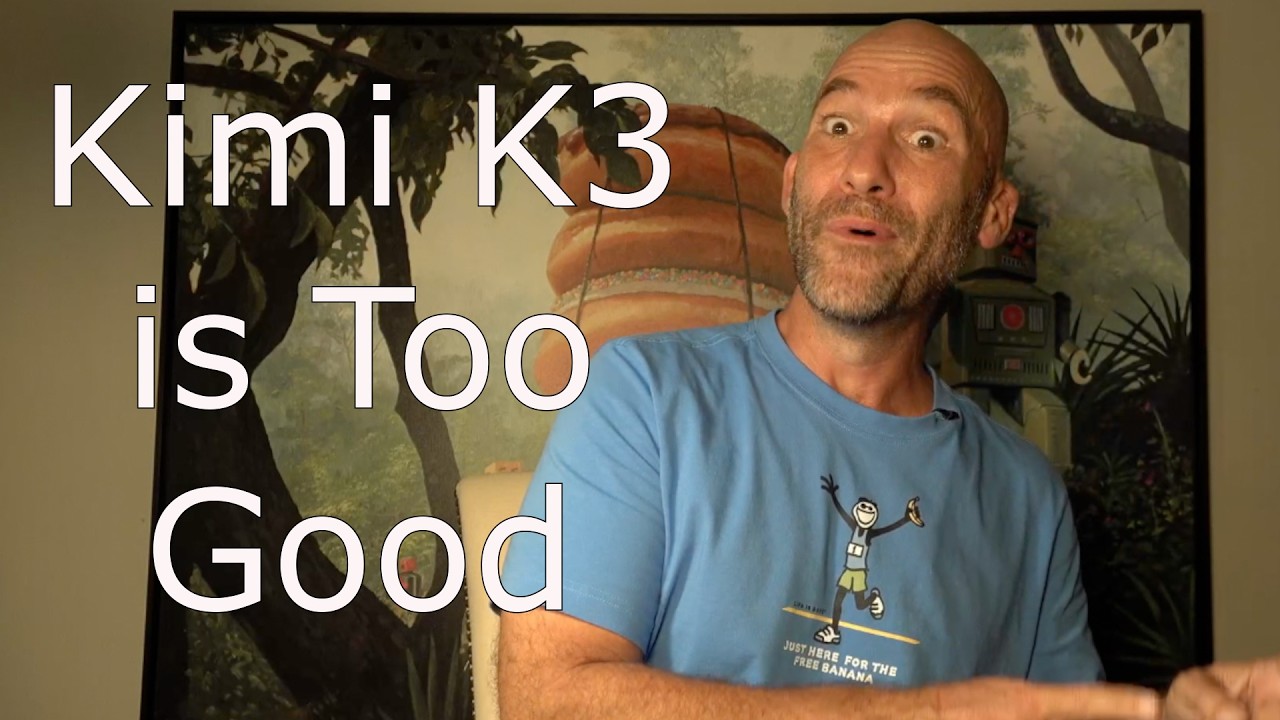
China’s AI model Kimmy K3, developed by Moonshot, has seen overwhelming demand that exceeded its capacity, highlighting China’s demand-driven scaling approach contrasted with the U.S.'s strategy of building excess infrastructure upfront. Despite capacity challenges, Kimmy K3 offers competitive performance at a significantly lower cost, reflecting broader strategic and industrial policy differences that will shape the evolving global AI competition.
China’s new AI model, Kimmy K3, developed by Moonshot (an Alibaba-owned company), has temporarily halted new subscriptions due to overwhelming demand that pushed its capacity to the limit. Kimmy K3 is a large open-source model with 2.8 trillion parameters and reportedly performs comparably to leading American AI models from OpenAI and Anthropic. While Chinese sources claim it is only slightly behind, some comparisons suggest it may even outperform these models in certain areas. However, the debate over which model is technically superior is less important than practical considerations like cost, performance, and political risks affecting access.
The surge in demand for Kimmy K3 raises questions about whether this reflects genuine widespread interest in Chinese AI models or simply the result of limited hardware resources at Moonshot. Unlike American AI companies that have heavily overbuilt their infrastructure to anticipate future demand, Chinese firms appear to scale capacity more conservatively, expanding only as demand grows. This difference in approach could impact the competitive landscape over the next several years, with the U.S. favoring readiness through excess capacity and China focusing on demand-driven growth.
The analogy of pizza ovens was used to illustrate these contrasting strategies: American companies invest in many “pizza ovens” (compute resources) upfront to meet future demand, while Chinese companies operate with fewer ovens and must quickly add more when demand spikes. Although the Chinese model may sometimes run out of capacity, it offers services at a significantly lower price—about 25% of OpenAI’s cost—making it an attractive option despite occasional shortages. This pricing dynamic could influence user preferences and market share in the AI space.
Experts note that Kimmy K3’s high compute requirements make scaling challenging and expensive, and Moonshot did not fully anticipate the rapid popularity surge. The situation highlights the broader challenges of balancing infrastructure investment with demand forecasting in the fast-evolving AI industry. It also underscores the role of national industrial policies, with China actively supporting AI development, while the U.S. currently lacks a coordinated industrial strategy, potentially affecting long-term competitiveness.
Finally, the video reflects on the fluid nature of the AI race, citing how perceptions of leaders like OpenAI and Google have shifted dramatically in just a few years. The outcome of the competition between Chinese and American AI stacks remains uncertain and will likely take years to fully unfold. The speaker encourages viewers to consider the implications of these developments and share their perspectives on which approach and propaganda they find more convincing as the global AI landscape evolves.