This week’s AI news highlights significant advancements including local AI video generation on smartphones, powerful open source models like Qwen 3.6 and Jam Packet, and innovative tools for precise image control, music deconstruction, and rapid image enhancement. Additionally, breakthroughs in humanoid robotics and adversarial AI models demonstrate the expanding capabilities and applications of AI across creative, technical, and physical domains.
This week in AI news has been nothing short of extraordinary, showcasing rapid advancements across multiple domains. Open source AI models have made significant strides, no longer lagging behind cutting-edge proprietary systems. Notably, AI video generation can now be performed locally on mobile phones, marking a major milestone in accessibility and convenience. Alongside this, powerful consumer-grade open source models like Qwen 3.6 and Jam Packet are also capable of running efficiently on smartphones, enabling sophisticated AI applications without the need for cloud computing.
Google has contributed to the open source AI landscape by releasing a model that offers precise control over heads and faces in generated images or videos. This development enhances the ability to create highly customizable and realistic digital characters. Complementing this, another open source AI tool can animate any character to dance in sync with any music input, opening up creative possibilities for entertainment and content creation.
In the realm of music, a new AI system can deconstruct entire songs into individual instrument notes, effectively reverse engineering the composition. This technology could revolutionize music production, education, and analysis by providing detailed insights into complex musical arrangements. Meanwhile, OpenAI has introduced a novel model designed to challenge and “attack” other AI systems, hinting at new directions in AI robustness and adversarial research.
Image processing tools have also seen impressive improvements. An ultra-fast image upscaler has been unveiled, capable of enhancing image resolution quickly and effectively. Additionally, a new background removal AI excels even in difficult scenarios, making it easier to isolate subjects from complex backgrounds for various applications such as photo editing and augmented reality.
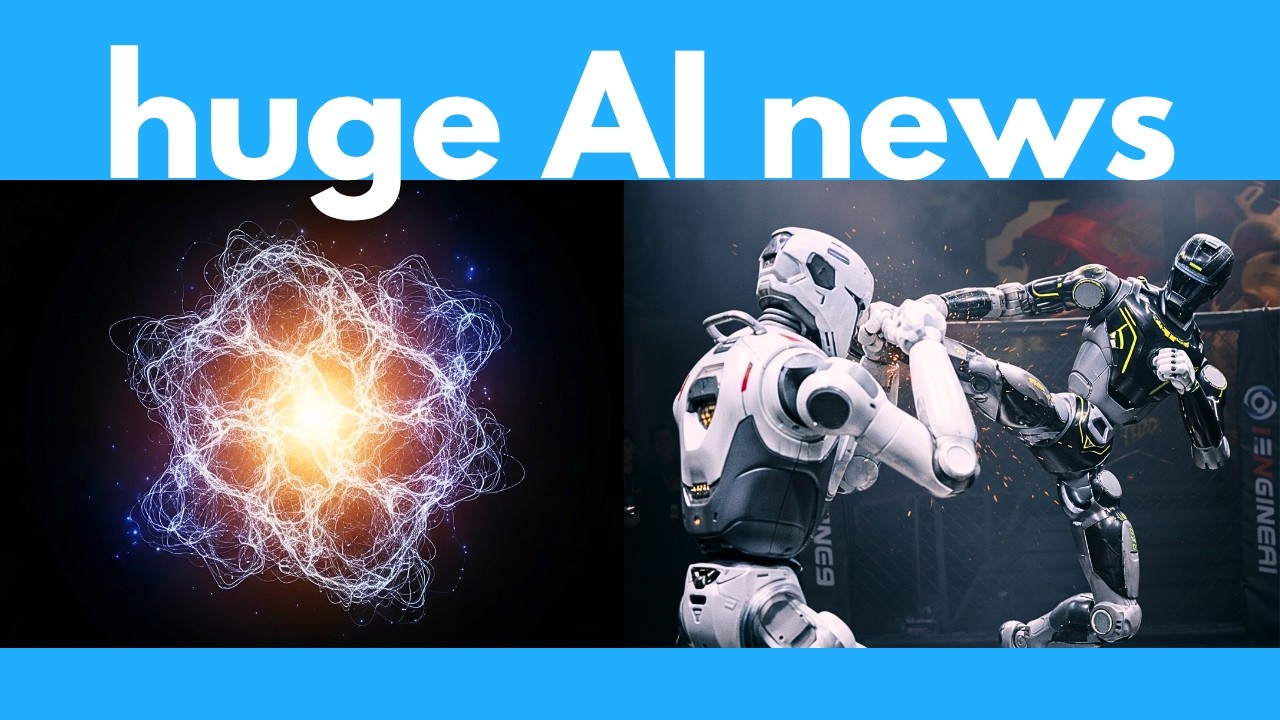
Finally, the week featured some remarkable humanoid robot demonstrations, including a humanoid cage fight, showcasing advances in robotics and AI integration. These demos highlight the growing sophistication and physical capabilities of AI-driven robots, pointing toward exciting future developments in robotics and AI collaboration. Overall, this week’s AI news underscores the rapid pace of innovation and the expanding reach of AI technologies across diverse fields.