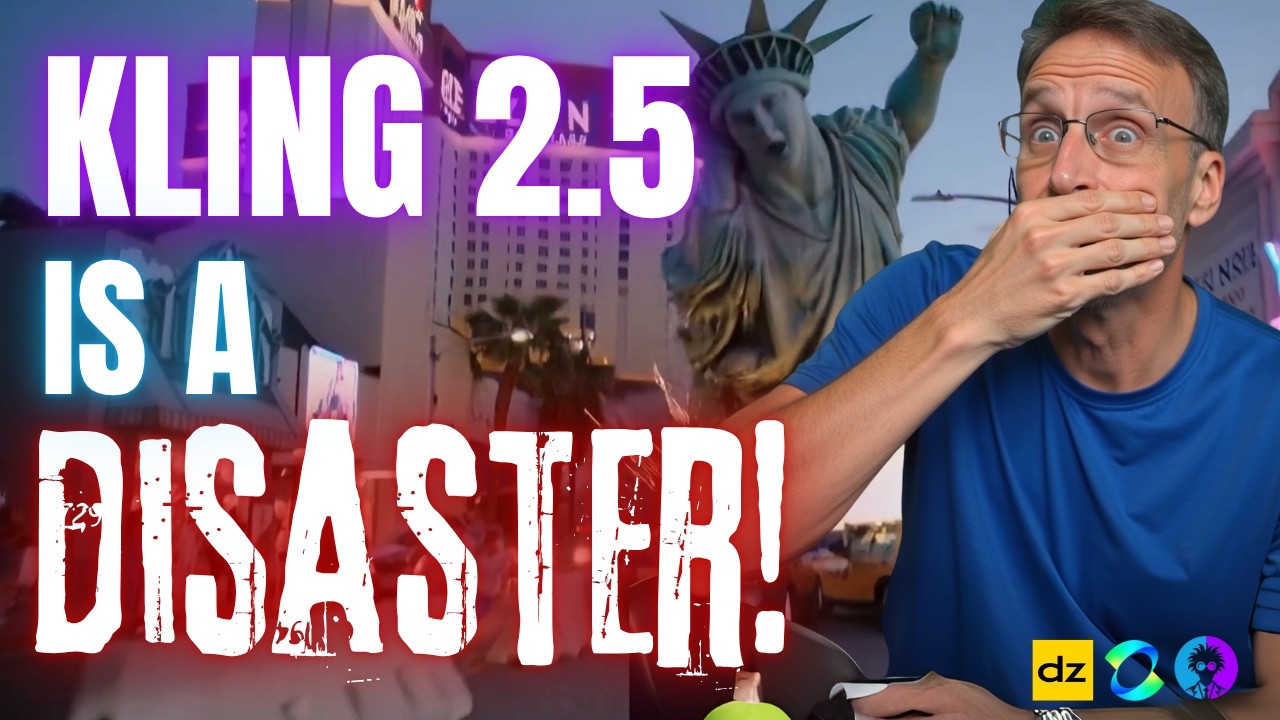
The video discusses the release and creative potential of the AI model Cling 2.5, highlighting its improvements over previous versions. Cling 2.5 is described as faster, cheaper, and more accurate, especially excelling in physics simulation, making it ideal for creating disaster-themed films or trailers. The creator uses this model to produce a disaster movie trailer set in Las Vegas, showcasing various catastrophic events like the Hoover Dam bursting and tornadoes, emphasizing the model’s ability to adhere closely to prompts and maintain consistency.
The creator explains the planning process behind the trailer, which involved using ChatGPT to help generate ideas and detailed prompts. The storyline revolves around a massive rift opening beneath the Mojave Desert due to a rogue geothermal drilling experiment, triggering a chain reaction of disasters including magnetic surges and natural calamities. ChatGPT assisted in creating specific scene prompts, such as flooding, tornadoes, and ground-level disaster shots, which were then used to generate video clips with Cling 2.5.
Using the Design platform, the creator demonstrates how to produce AI-generated video clips by inputting text or starting images, showing the flexibility of Cling 2.5 in handling both approaches. Comparisons between Cling 2.5 and the older Cling 2.1 model reveal that 2.5 better captures important visual elements like water in flooding scenes, which enhances the realism and impact of the disaster visuals. The video also highlights the automatic sound effects generation feature in the Design platform, which saved significant time during post-production by providing fitting audio for explosions and other disaster sounds.
The editing process is described as straightforward but essential for creating a cohesive and engaging trailer. The creator uses basic video editing software to arrange clips, adjust pacing, and add text overlays, emphasizing the importance of timing and flow to avoid the slow-motion default that often signals AI-generated content. While AI tools for editing exist, the creator prefers manual editing to ensure quality and narrative coherence, though they express openness to future AI advancements in this area.
Finally, the video concludes with a full playthrough of the completed disaster trailer, showcasing the capabilities of Cling 2.5 and the Design platform. The creator encourages viewers interested in AI-driven creative projects to subscribe to the channel for more in-depth explorations. The overall message is that while AI tools like Cling 2.5 greatly facilitate video creation, the real skill lies in crafting effective prompts and thoughtful editing to bring ideas to life.